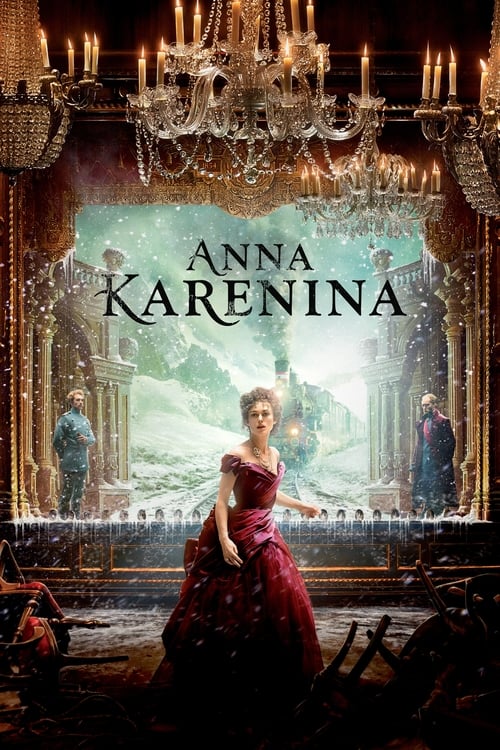
Anna Karenina
In Imperial Russia, Anna, wife of the officer Karenin, goes to Moscow to visit her brother. On the way, she meets charming cavalry officer Vronsky, to whom she's immediately attracted. But in St. Petersburg’s high society, a relationship like this could destroy a woman’s reputation.
Working with a moderate budget of $40.6M, the film achieved a modest success with $68.9M in global revenue (+70% profit margin).
1 Oscar. 33 wins & 54 nominations


Plot Structure
Story beats plotted across runtime


Narrative Arc
Emotional journey through the story's key moments
Story Circle
Blueprint 15-beat structure
Arcplot Score Breakdown
Weighted: Precision (70%) + Arc (15%) + Theme (15%)
Anna Karenina (2012) exhibits precise dramatic framework, characteristic of Joe Wright's storytelling approach. This structural analysis examines how the film's 15-point plot structure maps to proven narrative frameworks across 2 hours and 10 minutes. With an Arcplot score of 7.1, the film balances conventional beats with creative variation.
Characters
Cast & narrative archetypes

Anna Karenina
Count Alexei Vronsky
Alexei Karenin
Konstantin Levin
Princess Kitty
Princess Betsy
Oblonsky
Dolly
Main Cast & Characters
Anna Karenina
Played by Keira Knightley
A married aristocrat who enters a passionate affair with Count Vronsky, leading to her social downfall and tragic end.
Count Alexei Vronsky
Played by Aaron Taylor-Johnson
A wealthy cavalry officer who pursues Anna obsessively, disrupting both their lives.
Alexei Karenin
Played by Jude Law
Anna's cold, bureaucratic husband who values social propriety above emotional connection.
Konstantin Levin
Played by Domhnall Gleeson
A philosophical landowner seeking authentic life and true love with Kitty.
Princess Kitty
Played by Alicia Vikander
A young woman who matures from infatuation with Vronsky to genuine love with Levin.
Princess Betsy
Played by Ruth Wilson
Anna's worldly cousin who facilitates the affair while maintaining social appearances.
Oblonsky
Played by Matthew Macfadyen
Anna's charming but unfaithful brother whose indiscretions set the story in motion.
Dolly
Played by Kelly Macdonald
Oblonsky's long-suffering wife who maintains dignity despite her husband's betrayals.
Structural Analysis
The Status Quo at 1 minutes (1% through the runtime) establishes The theatrical stage opens revealing high society St. Petersburg. Anna arrives at the train station, a respected society woman in a stable but passionless marriage to Karenin, living a dutiful life of appearances.. Structural examination shows that this early placement immediately immerses viewers in the story world.
The inciting incident occurs at 15 minutes when Anna and Vronsky meet at the train station. Their eyes lock in immediate, electric attraction. A railway worker is killed—a dark omen. Anna feels something awakening in her that she cannot control.. At 12% through the film, this Disruption aligns precisely with traditional story structure. This beat shifts the emotional landscape, launching the protagonist into the central conflict.
The First Threshold at 34 minutes marks the transition into Act II, occurring at 26% of the runtime. This indicates the protagonist's commitment to At the ball, Anna and Vronsky dance together. Anna makes the choice to engage with her feelings, dancing with abandon while Kitty watches her hopes with Vronsky shatter. Anna crosses from duty into desire., moving from reaction to action.
At 64 minutes, the Midpoint arrives at 50% of the runtime—precisely centered, creating perfect narrative symmetry. Structural examination shows that this crucial beat At the horse race, Vronsky falls and his horse is destroyed. Anna publicly reveals her feelings, crying out in distress. Karenin confronts her about the scandal. The affair is now public; there is no going back. False victory of passion becomes visible defeat., fundamentally raising what's at risk. The emotional intensity shifts, dividing the narrative into clear before-and-after phases.
The Collapse moment at 98 minutes (76% through) represents the emotional nadir. Here, Anna, feverish after childbirth, nearly dies. In her delirium, she begs Karenin and Vronsky to forgive each other. Karenin forgives her—offering genuine grace—but Anna recovers and chooses to leave with Vronsky anyway, abandoning her son. She loses everything: reputation, child, and moral ground., demonstrates the protagonist at their lowest point. This beat's placement in the final quarter sets up the climactic reversal.
The Second Threshold at 107 minutes initiates the final act resolution at 83% of the runtime. Anna attempts to see her son Seryozha on his birthday but is turned away. She realizes she has lost everything and gained nothing. Vronsky seems distant. She understands that passion without foundation leads only to destruction—but cannot find a way out., demonstrating the transformation achieved throughout the journey.
Emotional Journey
Anna Karenina's emotional architecture traces a deliberate progression across 15 carefully calibrated beats.
Narrative Framework
This structural analysis employs systematic plot point analysis that identifies crucial turning points. By mapping Anna Karenina against these established plot points, we can identify how Joe Wright utilizes or subverts traditional narrative conventions. The plot point approach reveals not only adherence to structural principles but also creative choices that distinguish Anna Karenina within the drama genre.
Joe Wright's Structural Approach
Among the 6 Joe Wright films analyzed on Arcplot, the average structural score is 6.8, demonstrating varied approaches to story architecture. Anna Karenina represents one of the director's most structurally precise works. For comparative analysis, explore the complete Joe Wright filmography.
Comparative Analysis
Additional drama films include After Thomas, South Pacific and Dirty Dancing: Havana Nights. For more Joe Wright analyses, see Hanna, Darkest Hour and The Soloist.
Plot Points by Act
Act I
SetupStatus Quo
The theatrical stage opens revealing high society St. Petersburg. Anna arrives at the train station, a respected society woman in a stable but passionless marriage to Karenin, living a dutiful life of appearances.
Theme
Oblonsky discusses his infidelity crisis with Levin: "I can't help it if I'm made that way." The theme emerges: Can we choose between passion and duty, or does our nature doom us?
Worldbuilding
Setup of parallel worlds: Anna's respectable but cold marriage to Karenin; Oblonsky's marital crisis with Dolly; Levin's genuine love for Kitty; Vronsky as the dashing cavalry officer. The theatrical staging emphasizes the performative nature of society.
Disruption
Anna and Vronsky meet at the train station. Their eyes lock in immediate, electric attraction. A railway worker is killed—a dark omen. Anna feels something awakening in her that she cannot control.
Resistance
Anna resists the attraction. She counsels Dolly to forgive Oblonsky, preaching duty and family. Vronsky pursues Anna while also courting Kitty. Levin proposes to Kitty but is rejected. Anna prepares to return to her safe life in St. Petersburg.
Act II
ConfrontationFirst Threshold
At the ball, Anna and Vronsky dance together. Anna makes the choice to engage with her feelings, dancing with abandon while Kitty watches her hopes with Vronsky shatter. Anna crosses from duty into desire.
Mirror World
Levin retreats to his country estate, heartbroken. His storyline establishes the thematic mirror: genuine, patient love versus Anna's impulsive passion. His connection to the land and peasants contrasts with Anna's artificial society.
Premise
Anna and Vronsky begin their affair. The theatrical staging shows them moving through society's performance spaces—operas, races, drawing rooms. Anna experiences the intoxication of passion but growing isolation as society begins to whisper. Vronsky is fully devoted.
Midpoint
At the horse race, Vronsky falls and his horse is destroyed. Anna publicly reveals her feelings, crying out in distress. Karenin confronts her about the scandal. The affair is now public; there is no going back. False victory of passion becomes visible defeat.
Opposition
Society closes in. Karenin forbids divorce to avoid scandal, keeping Anna from her son Seryozha. Anna becomes pregnant with Vronsky's child. She's increasingly isolated, barred from society. Vronsky grows restless with their restricted life. Meanwhile, Levin and Kitty slowly reconcile and marry—authentic love thriving.
Collapse
Anna, feverish after childbirth, nearly dies. In her delirium, she begs Karenin and Vronsky to forgive each other. Karenin forgives her—offering genuine grace—but Anna recovers and chooses to leave with Vronsky anyway, abandoning her son. She loses everything: reputation, child, and moral ground.
Crisis
Anna and Vronsky live abroad in Italy, but the dream sours. Returning to Russia, Anna is completely ostracized while Vronsky still moves in society. Her jealousy and paranoia intensify. She becomes addicted to morphine, trapped between worlds, belonging nowhere.
Act III
ResolutionSecond Threshold
Anna attempts to see her son Seryozha on his birthday but is turned away. She realizes she has lost everything and gained nothing. Vronsky seems distant. She understands that passion without foundation leads only to destruction—but cannot find a way out.
Synthesis
Anna spirals into despair and jealous delusion. She sends contradictory messages to Vronsky. At a party she attends uninvited, she is publicly shunned. She wanders through Moscow, fragmented, the theatrical staging now chaotic and nightmarish. She makes her final decision.
Transformation
Anna throws herself under a train—the same setting as her first meeting with Vronsky. The transformation is tragic: from respectable society woman to destroyed outcast. Cut to Levin with Kitty and their baby, finding meaning in family and land—the path Anna rejected.