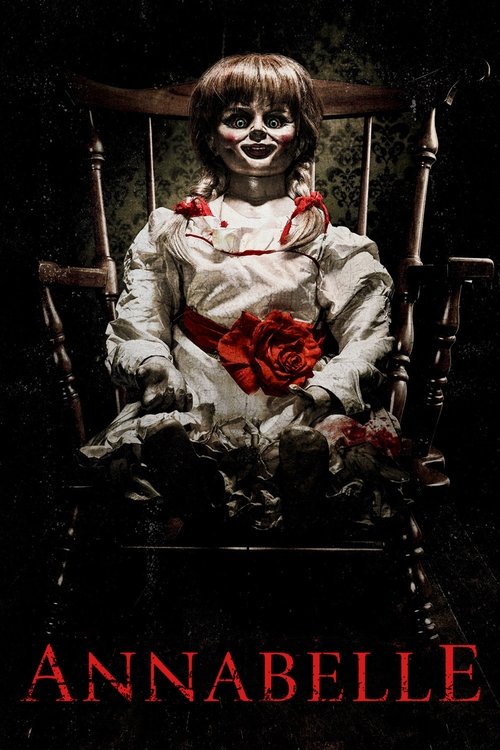
Annabelle
A couple begins to experience terrifying supernatural occurrences involving a vintage doll shortly after their home is invaded by satanic cultists.
Despite its limited budget of $6.5M, Annabelle became a runaway success, earning $257.6M worldwide—a remarkable 3863% return. The film's bold vision engaged audiences, confirming that strong storytelling can transcend budget limitations.
3 wins & 7 nominations


Plot Structure
Story beats plotted across runtime


Narrative Arc
Emotional journey through the story's key moments
Story Circle
Blueprint 15-beat structure
Arcplot Score Breakdown
Weighted: Precision (70%) + Arc (15%) + Theme (15%)
Annabelle (2014) showcases carefully calibrated narrative design, characteristic of John R. Leonetti's storytelling approach. This structural analysis examines how the film's 15-point plot structure maps to proven narrative frameworks across 1 hour and 39 minutes. With an Arcplot score of 7.4, the film balances conventional beats with creative variation.
Characters
Cast & narrative archetypes

Mia Form
John Form
Evelyn
Father Perez
Annabelle Higgins
Main Cast & Characters
Mia Form
Played by Annabelle Wallis
A pregnant woman terrorized by a demonic doll after a cult attack. She must protect her family from supernatural evil.
John Form
Played by Ward Horton
Mia's supportive husband, a medical resident who struggles to believe the supernatural threat his family faces.
Evelyn
Played by Alfre Woodard
A bookstore owner and kind neighbor who befriends Mia and provides spiritual guidance during her ordeal.
Father Perez
Played by Tony Amendola
A Catholic priest who investigates the demonic presence and warns Mia about the doll's dangerous nature.
Annabelle Higgins
Played by Tree O'Toole
A disturbed young woman who joins a satanic cult and attacks the Forms, using her death to possess the doll.
Structural Analysis
The Status Quo at 1 minutes (1% through the runtime) establishes Mia and John Form are a happy expectant couple in 1970 California. John gives Mia a rare vintage doll (Annabelle) to complete her collection. Their ordinary world is peaceful and full of hope.. Structural examination shows that this early placement immediately immerses viewers in the story world.
The inciting incident occurs at 11 minutes when Annabelle Higgins and her boyfriend, cult members, murder her parents next door and attack the Forms. Mia is stabbed while holding the doll. Blood drips into the doll's eye. The cult member dies holding the doll, cursing it.. At 12% through the film, this Disruption aligns precisely with traditional story structure. This beat shifts the emotional landscape, launching the protagonist into the central conflict.
The First Threshold at 24 minutes marks the transition into Act II, occurring at 24% of the runtime. This reveals the protagonist's commitment to The doll reappears mysteriously in a box of Leah's things after being thrown away. Despite John's protests, Mia decides they must move to a new apartment to escape. They actively choose to flee, entering a new world of supernatural pursuit., moving from reaction to action.
At 50 minutes, the Midpoint arrives at 51% of the runtime—precisely centered, creating perfect narrative symmetry. The analysis reveals that this crucial beat Father Perez attempts to take the doll to the church for sanctification, but the demon violently attacks him in his car, leaving him hospitalized and near death. The stakes raise dramatically—the church cannot save them. False defeat., fundamentally raising what's at risk. The emotional intensity shifts, dividing the narrative into clear before-and-after phases.
The Collapse moment at 73 minutes (74% through) represents the emotional nadir. Here, The demon fully manifests and attempts to make Mia jump from the apartment window with Leah, orchestrating a murder-suicide. John saves them at the last second, but Mia realizes running is futile. The demon will never stop. Whiff of death: Mia nearly dies., reveals the protagonist at their lowest point. This beat's placement in the final quarter sets up the climactic reversal.
The Second Threshold at 79 minutes initiates the final act resolution at 80% of the runtime. Evelyn arrives with the realization of what must be done. She reveals her guilt over her daughter Ruby's death and offers herself as the willing soul the demon needs. Evelyn embodies the theme—the ultimate sacrifice of maternal love synthesized with redemption., demonstrating the transformation achieved throughout the journey.
Emotional Journey
Annabelle's emotional architecture traces a deliberate progression across 15 carefully calibrated beats.
Narrative Framework
This structural analysis employs systematic plot point analysis that identifies crucial turning points. By mapping Annabelle against these established plot points, we can identify how John R. Leonetti utilizes or subverts traditional narrative conventions. The plot point approach reveals not only adherence to structural principles but also creative choices that distinguish Annabelle within the horror genre.
John R. Leonetti's Structural Approach
Among the 3 John R. Leonetti films analyzed on Arcplot, the average structural score is 7.2, reflecting strong command of classical structure. Annabelle represents one of the director's most structurally precise works. For comparative analysis, explore the complete John R. Leonetti filmography.
Comparative Analysis
Additional horror films include Thinner, A Nightmare on Elm Street and Mary Reilly. For more John R. Leonetti analyses, see Mortal Kombat: Annihilation, Wish Upon.
Plot Points by Act
Act I
SetupStatus Quo
Mia and John Form are a happy expectant couple in 1970 California. John gives Mia a rare vintage doll (Annabelle) to complete her collection. Their ordinary world is peaceful and full of hope.
Theme
Neighbor Evelyn discusses loss and love with Mia, foreshadowing the theme: "What would you give to protect those you love?" The cost of motherhood and sacrifice is introduced.
Worldbuilding
Establishment of the Forms' suburban life, Mia's pregnancy, her doll collection hobby, the neighboring Higgins family, and the era's atmosphere. Church attendance and community ties are shown.
Disruption
Annabelle Higgins and her boyfriend, cult members, murder her parents next door and attack the Forms. Mia is stabbed while holding the doll. Blood drips into the doll's eye. The cult member dies holding the doll, cursing it.
Resistance
Mia recovers in the hospital and gives birth to baby Leah. John tries to protect his family by throwing away the cursed doll. Strange occurrences begin. Mia resists believing in supernatural explanations but can't deny the escalating phenomena.
Act II
ConfrontationFirst Threshold
The doll reappears mysteriously in a box of Leah's things after being thrown away. Despite John's protests, Mia decides they must move to a new apartment to escape. They actively choose to flee, entering a new world of supernatural pursuit.
Mirror World
Mia befriends Evelyn, a bookstore owner who understands loss (she lost her daughter Ruby). Evelyn becomes the thematic mirror, representing sacrificial love and someone who has already paid the ultimate price.
Premise
Supernatural horror escalates in the new apartment. The entity haunts Mia and threatens Leah. Investigation reveals the cult sought to summon a demon. Mia researches the occult, consults Father Perez, and discovers the demon needs a soul. The promise: classic haunted doll scares.
Midpoint
Father Perez attempts to take the doll to the church for sanctification, but the demon violently attacks him in his car, leaving him hospitalized and near death. The stakes raise dramatically—the church cannot save them. False defeat.
Opposition
The demon's attacks intensify. Mia is isolated as John works. The entity directly threatens baby Leah. Mia's fear and desperation grow. She learns the demon demands a soul—either Leah's or a willing sacrifice. Every attempt to stop it fails.
Collapse
The demon fully manifests and attempts to make Mia jump from the apartment window with Leah, orchestrating a murder-suicide. John saves them at the last second, but Mia realizes running is futile. The demon will never stop. Whiff of death: Mia nearly dies.
Crisis
Mia processes the dark reality: to save Leah, a soul must be given. She contemplates the ultimate sacrifice—her own life. The family grieves the impossible choice. Mia prepares to sacrifice herself.
Act III
ResolutionSecond Threshold
Evelyn arrives with the realization of what must be done. She reveals her guilt over her daughter Ruby's death and offers herself as the willing soul the demon needs. Evelyn embodies the theme—the ultimate sacrifice of maternal love synthesized with redemption.
Synthesis
Evelyn takes the doll and jumps from the window, sacrificing herself. The demon accepts her soul. The curse is broken. Mia and John are freed. Six months pass. The Forms rebuild their lives, and the doll is gone. Peace returns.
Transformation
Final image: The Annabelle doll is sold in an antique shop. A mother buys it for her daughter (the nurses from The Conjuring). The cycle continues. Unlike the opening's innocent hope, this shows the curse persists—horror transformed but not destroyed.