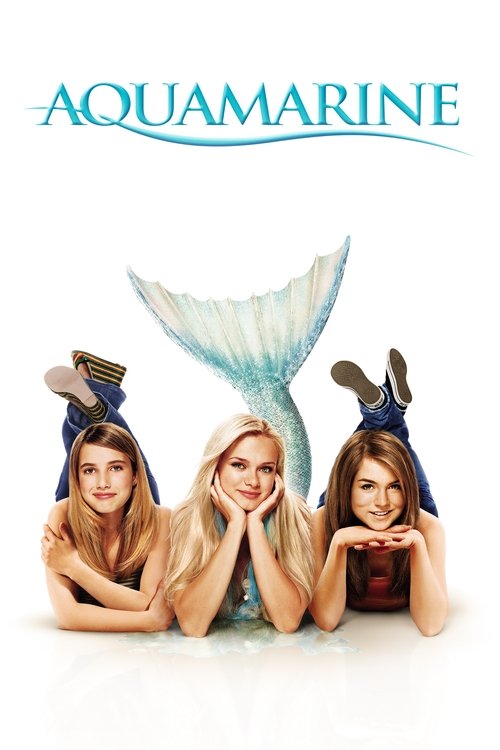
Aquamarine
Two teenage girls discover that mermaids really do exist after a violent storm washes one ashore. The mermaid, a sassy creature named Aquamarine, is determined to prove to her father that real love exists, and enlists the girls' help in winning the heart of a handsome lifeguard.
Working with a modest budget of $12.0M, the film achieved a modest success with $23.0M in global revenue (+92% profit margin).
1 win & 5 nominations


Plot Structure
Story beats plotted across runtime


Narrative Arc
Emotional journey through the story's key moments
Story Circle
Blueprint 15-beat structure
Arcplot Score Breakdown
Weighted: Precision (70%) + Arc (15%) + Theme (15%)
Aquamarine (2006) exemplifies meticulously timed narrative architecture, characteristic of Elizabeth Allen Rosenbaum's storytelling approach. This structural analysis examines how the film's 15-point plot structure maps to proven narrative frameworks across 1 hour and 43 minutes. With an Arcplot score of 8.0, the film showcases strong structural fundamentals.
Characters
Cast & narrative archetypes

Aquamarine
Claire Brown
Hailey Rogers
Raymond
Cecilia Banks
Main Cast & Characters
Aquamarine
Played by Sara Paxton
A spirited mermaid who washes ashore and befriends two girls while searching for true love to avoid an arranged marriage.
Claire Brown
Played by Emma Roberts
A shy, anxious girl struggling with her best friend's impending move to Australia and discovering her own confidence.
Hailey Rogers
Played by Joanna "JoJo" Levesque
Claire's outgoing best friend who is moving to Australia and helps Aquamarine find love while confronting her own departure.
Raymond
Played by Jake McDorman
The charming lifeguard who becomes the object of Aquamarine's affection and learns to see beyond appearances.
Cecilia Banks
Played by Arielle Kebbel
The popular, manipulative mean girl who bullies Claire and Hailey and competes for Raymond's attention.
Structural Analysis
The Status Quo at 1 minutes (1% through the runtime) establishes Hailey and Claire spend their last days of summer together at the beach club, inseparable best friends facing Hailey's imminent move to Australia in three days.. Structural examination shows that this early placement immediately immerses viewers in the story world.
The inciting incident occurs at 12 minutes when After a massive storm, the girls discover Aquamarine, a mermaid, trapped in the pool at the beach club. The supernatural enters their ordinary world.. At 12% through the film, this Disruption aligns precisely with traditional story structure. This beat shifts the emotional landscape, launching the protagonist into the central conflict.
The First Threshold at 26 minutes marks the transition into Act II, occurring at 25% of the runtime. This reveals the protagonist's commitment to The girls actively choose to help Aquamarine pursue Raymond, hoping to wish for Hailey to stay. They commit to the plan and begin Aquamarine's transformation into the human world., moving from reaction to action.
At 52 minutes, the Midpoint arrives at 50% of the runtime—precisely centered, creating perfect narrative symmetry. The analysis reveals that this crucial beat False victory: Aquamarine and Raymond connect at a beach party. He seems genuinely interested. The plan appears to be working, but the stakes raise as time runs short and Aquamarine's legs begin failing in dry conditions., fundamentally raising what's at risk. The emotional intensity shifts, dividing the narrative into clear before-and-after phases.
The Collapse moment at 77 minutes (75% through) represents the emotional nadir. Here, Aquamarine's secret is exposed at the big party. Cecilia reveals her as a mermaid to everyone. Raymond feels betrayed and deceived. The wish seems lost, and Hailey will have to move. Friendship appears to die as trust is broken., demonstrates the protagonist at their lowest point. This beat's placement in the final quarter sets up the climactic reversal.
The Second Threshold at 82 minutes initiates the final act resolution at 80% of the runtime. Realization: love isn't just romance - it's friendship. The girls understand that their bond is the real miracle, and they choose to help Aquamarine one final time, not for a wish, but because they care., demonstrating the transformation achieved throughout the journey.
Emotional Journey
Aquamarine's emotional architecture traces a deliberate progression across 15 carefully calibrated beats.
Narrative Framework
This structural analysis employs proven narrative structure principles that track dramatic progression. By mapping Aquamarine against these established plot points, we can identify how Elizabeth Allen Rosenbaum utilizes or subverts traditional narrative conventions. The plot point approach reveals not only adherence to structural principles but also creative choices that distinguish Aquamarine within the fantasy genre.
Elizabeth Allen Rosenbaum's Structural Approach
Among the 2 Elizabeth Allen Rosenbaum films analyzed on Arcplot, the average structural score is 7.7, reflecting strong command of classical structure. Aquamarine represents one of the director's most structurally precise works. For comparative analysis, explore the complete Elizabeth Allen Rosenbaum filmography.
Comparative Analysis
Additional fantasy films include Thinner, Ella Enchanted and Conan the Barbarian. For more Elizabeth Allen Rosenbaum analyses, see Ramona and Beezus.
Plot Points by Act
Act I
SetupStatus Quo
Hailey and Claire spend their last days of summer together at the beach club, inseparable best friends facing Hailey's imminent move to Australia in three days.
Theme
The girls discuss belief and miracles, establishing the theme: "If you believe in something strongly enough, it can come true." This sets up the central question about faith, friendship, and growing up.
Worldbuilding
Introduction to the girls' world: their friendship rituals, the beach club setting, Hailey's heartbreak over moving, Claire's crush on lifeguard Raymond, and the social dynamics with rival Cecilia.
Disruption
After a massive storm, the girls discover Aquamarine, a mermaid, trapped in the pool at the beach club. The supernatural enters their ordinary world.
Resistance
The girls debate whether to help Aquamarine or expose her. Aquamarine explains she has three days to prove love exists or face an arranged marriage. They negotiate a deal: help her win Raymond's love, and she'll grant them a wish.
Act II
ConfrontationFirst Threshold
The girls actively choose to help Aquamarine pursue Raymond, hoping to wish for Hailey to stay. They commit to the plan and begin Aquamarine's transformation into the human world.
Mirror World
Aquamarine's innocent perspective on love and friendship serves as a mirror to the girls. Her pure belief in love contrasts with their cynicism and fear of separation.
Premise
The fun premise: teaching a mermaid about human romance. Makeover montages, dating coaching, and comic mishaps as Aquamarine learns about legs, fashion, and flirting while pursuing Raymond.
Midpoint
False victory: Aquamarine and Raymond connect at a beach party. He seems genuinely interested. The plan appears to be working, but the stakes raise as time runs short and Aquamarine's legs begin failing in dry conditions.
Opposition
Complications mount: Cecilia grows suspicious and jealous, Aquamarine struggles with human limitations, the girls' friendship strains under pressure of the ticking clock, and Claire's own feelings for Raymond surface, creating internal conflict.
Collapse
Aquamarine's secret is exposed at the big party. Cecilia reveals her as a mermaid to everyone. Raymond feels betrayed and deceived. The wish seems lost, and Hailey will have to move. Friendship appears to die as trust is broken.
Crisis
The girls process their failure and impending separation. Aquamarine faces returning to the ocean and an unwanted marriage. They confront what really matters: their friendship, not the wish.
Act III
ResolutionSecond Threshold
Realization: love isn't just romance - it's friendship. The girls understand that their bond is the real miracle, and they choose to help Aquamarine one final time, not for a wish, but because they care.
Synthesis
Final confrontation with Aquamarine's father during a storm. The girls rescue Aquamarine and help her stand up to her father. Raymond proves love exists by caring for Aquamarine despite her deception. Farewells and acceptance of change.
Transformation
Closing image mirrors the opening: the girls at the beach, but transformed. Hailey is leaving, but they're at peace. They've learned friendship transcends distance. A starfish necklace symbolizes their eternal bond - their real wish came true.