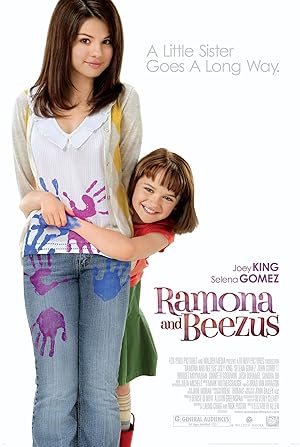
Ramona and Beezus
Ramona Quimby, is a grade-school student with a big imagination. So big, in fact, that she often clashes with her no-nonsense teacher Mrs. Meacham. When Ramona's upbeat dad Robert loses his job, the family - including her teenage sister, Beezus, and their practical-minded mother - must make major adjustments, like dad learning how to run the house. Ramona dreams up various plans to make money so that she can save their house, but because everybody in the family seems too preoccupied to help her with her own worries, she turns to the one person who always has time for her, Aunt Bea. But even Aunt Bea is distracted these days because of her ex-boyfriend - and Quimby family next-door neighbour - Hobart
Working with a mid-range budget of $15.0M, the film achieved a steady performer with $27.3M in global revenue (+82% profit margin).
1 win & 4 nominations


Plot Structure
Story beats plotted across runtime


Narrative Arc
Emotional journey through the story's key moments
Story Circle
Blueprint 15-beat structure
Arcplot Score Breakdown
Weighted: Precision (70%) + Arc (15%) + Theme (15%)
Ramona and Beezus (2010) exhibits precise narrative design, characteristic of Elizabeth Allen Rosenbaum's storytelling approach. This structural analysis examines how the film's 15-point plot structure maps to proven narrative frameworks across 1 hour and 43 minutes. With an Arcplot score of 7.4, the film balances conventional beats with creative variation.
Characters
Cast & narrative archetypes

Ramona Quimby
Beezus Quimby
Aunt Bea
Robert Quimby
Dorothy Quimby
Hobart
Henry Huggins
Main Cast & Characters
Ramona Quimby
Played by Joey King
An imaginative and spirited 9-year-old girl who creates chaos with her wild ideas while trying to help her struggling family.
Beezus Quimby
Played by Selena Gomez
Ramona's responsible older sister who struggles to balance her own adolescent challenges with managing her impulsive younger sibling.
Aunt Bea
Played by Ginnifer Goodwin
The girls' warm and understanding aunt who provides wisdom, support, and a listening ear during family challenges.
Robert Quimby
Played by John Corbett
Ramona and Beezus' father who loses his job and struggles with unemployment while trying to maintain family morale.
Dorothy Quimby
Played by Bridget Moynahan
The girls' practical and loving mother who works to support the family during financial difficulties.
Hobart
Played by Josh Duhamel
Aunt Bea's long-time boyfriend who proposes to her, creating initial tension with Beezus who worries about losing their special relationship.
Henry Huggins
Played by Hutch Dano
The neighborhood boy who becomes the object of Beezus' first crush, adding to her coming-of-age struggles.
Structural Analysis
The Status Quo at 1 minutes (1% through the runtime) establishes Ramona narrates her imaginative world on Klickitat Street, showing her creative personality and loving family. She sees herself as a hero, though her sister Beezus finds her embarrassing.. Of particular interest, this early placement immediately immerses viewers in the story world.
The inciting incident occurs at 13 minutes when Ramona's father loses his job. The family's financial security is disrupted, and Ramona overhears her parents worried about losing the house. Her carefree world is suddenly threatened.. At 12% through the film, this Disruption aligns precisely with traditional story structure. This beat shifts the emotional landscape, launching the protagonist into the central conflict.
The First Threshold at 25 minutes marks the transition into Act II, occurring at 24% of the runtime. This indicates the protagonist's commitment to Ramona decides to actively raise money for her family through a car wash business. She commits to being the hero she imagines herself to be, taking initiative rather than just worrying., moving from reaction to action.
At 52 minutes, the Midpoint arrives at 50% of the runtime—precisely centered, creating perfect narrative symmetry. Notably, this crucial beat Ramona's big car wash plan fails spectacularly when she accidentally damages a client's car. What seemed like progress turns into a major setback. Stakes raise: she's made things worse, not better., fundamentally raising what's at risk. The emotional intensity shifts, dividing the narrative into clear before-and-after phases.
The Collapse moment at 76 minutes (73% through) represents the emotional nadir. Here, The family must sell the house. Ramona's worst fear comes true. Additionally, she has a major fight with Beezus and feels she's failed everyone. Her spirit and imagination feel crushed—metaphorical death of her carefree childhood., illustrates the protagonist at their lowest point. This beat's placement in the final quarter sets up the climactic reversal.
The Second Threshold at 82 minutes initiates the final act resolution at 80% of the runtime. Ramona realizes that her imagination and spirit are gifts, not problems. Inspired by Aunt Bea following her heart, Ramona synthesizes her creativity with practical action to help save the day at Bea's wedding., demonstrating the transformation achieved throughout the journey.
Emotional Journey
Ramona and Beezus's emotional architecture traces a deliberate progression across 15 carefully calibrated beats.
Narrative Framework
This structural analysis employs proven narrative structure principles that track dramatic progression. By mapping Ramona and Beezus against these established plot points, we can identify how Elizabeth Allen Rosenbaum utilizes or subverts traditional narrative conventions. The plot point approach reveals not only adherence to structural principles but also creative choices that distinguish Ramona and Beezus within the comedy genre.
Elizabeth Allen Rosenbaum's Structural Approach
Among the 2 Elizabeth Allen Rosenbaum films analyzed on Arcplot, the average structural score is 7.7, reflecting strong command of classical structure. Ramona and Beezus takes a more unconventional approach compared to the director's typical style. For comparative analysis, explore the complete Elizabeth Allen Rosenbaum filmography.
Comparative Analysis
Additional comedy films include The Bad Guys, Ella Enchanted and The Evening Star. For more Elizabeth Allen Rosenbaum analyses, see Aquamarine.
Plot Points by Act
Act I
SetupStatus Quo
Ramona narrates her imaginative world on Klickitat Street, showing her creative personality and loving family. She sees herself as a hero, though her sister Beezus finds her embarrassing.
Theme
Aunt Bea tells Ramona about following your heart and being true to yourself, even when others don't understand. This sets up the central theme about authenticity vs. conformity.
Worldbuilding
Establishment of the Quimby family dynamics, Ramona's imaginative nature, her relationship with Beezus, school life, and the neighborhood. Shows Ramona's creativity often causes problems but comes from good intentions.
Disruption
Ramona's father loses his job. The family's financial security is disrupted, and Ramona overhears her parents worried about losing the house. Her carefree world is suddenly threatened.
Resistance
Ramona debates how to help and tries various schemes to make money. She struggles between being a kid and wanting to solve adult problems. The family adjusts to new financial reality.
Act II
ConfrontationFirst Threshold
Ramona decides to actively raise money for her family through a car wash business. She commits to being the hero she imagines herself to be, taking initiative rather than just worrying.
Mirror World
Aunt Bea's romance with Hobart begins to develop. This B-story about following your heart romantically mirrors Ramona's journey about staying true to herself despite obstacles.
Premise
Ramona pursues various money-making schemes with creativity and determination. Fun montages of her attempts, bonding with family, and watching Aunt Bea's romance develop. The promise of the premise: imaginative kid tackles real problems.
Midpoint
Ramona's big car wash plan fails spectacularly when she accidentally damages a client's car. What seemed like progress turns into a major setback. Stakes raise: she's made things worse, not better.
Opposition
Pressure intensifies as Ramona faces consequences of the car wash disaster. Family tensions increase, her relationship with Beezus deteriorates, and financial problems worsen. Ramona begins to feel her imagination causes more harm than good.
Collapse
The family must sell the house. Ramona's worst fear comes true. Additionally, she has a major fight with Beezus and feels she's failed everyone. Her spirit and imagination feel crushed—metaphorical death of her carefree childhood.
Crisis
Ramona processes her perceived failure and considers giving up her imaginative nature to be more "normal" and less of a burden. Dark night where she questions her core identity.
Act III
ResolutionSecond Threshold
Ramona realizes that her imagination and spirit are gifts, not problems. Inspired by Aunt Bea following her heart, Ramona synthesizes her creativity with practical action to help save the day at Bea's wedding.
Synthesis
Ramona uses her imagination to salvage Aunt Bea's wedding. Her creative problem-solving brings the family together. Her father gets a new job. The house is saved. Ramona reconciles with Beezus and proves her worth.
Transformation
Final image mirrors opening: Ramona narrates again, but now her family and Beezus celebrate her imagination rather than seeing it as a problem. She's still herself, but validated and appreciated. Growth without losing identity.