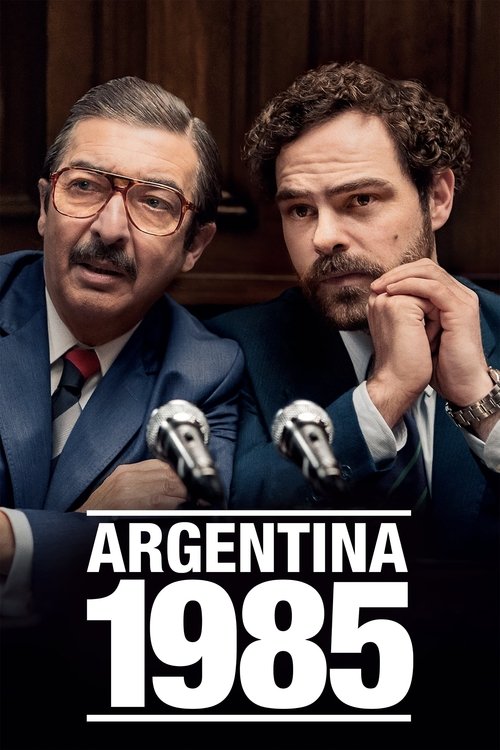
Argentina 1985
In the 1980s, a team of lawyers takes on the heads of Argentina's bloody military dictatorship in a battle against odds and a race against time.
Despite a mid-range budget of $20.0M, Argentina 1985 became a commercial success, earning $58.4M worldwide—a 192% return.
Nominated for 1 Oscar. 49 wins & 45 nominations


Plot Structure
Story beats plotted across runtime


Narrative Arc
Emotional journey through the story's key moments
Story Circle
Blueprint 15-beat structure
Arcplot Score Breakdown
Weighted: Precision (70%) + Arc (15%) + Theme (15%)
Argentina 1985 (2022) showcases precise dramatic framework, characteristic of Santiago Mitre's storytelling approach. This structural analysis examines how the film's 15-point plot structure maps to proven narrative frameworks across 2 hours and 21 minutes. With an Arcplot score of 7.0, the film balances conventional beats with creative variation.
Structural Analysis
The Status Quo at 2 minutes (1% through the runtime) establishes Strassera arrives at the federal courthouse for another ordinary day of work as a prosecutor, navigating the bureaucratic halls of Argentine justice in the post-dictatorship era.. Notably, this early placement immediately immerses viewers in the story world.
The inciting incident occurs at 16 minutes when Strassera is officially assigned to lead the prosecution of the military junta leaders, a case no one wants due to death threats and political pressure.. At 12% through the film, this Disruption aligns precisely with traditional story structure. This beat shifts the emotional landscape, launching the protagonist into the central conflict.
The First Threshold at 35 minutes marks the transition into Act II, occurring at 25% of the runtime. This reveals the protagonist's commitment to Strassera makes the active choice to fully commit to the prosecution, assembling his team of young attorneys and accepting deputy prosecutor Luis Moreno Ocampo, marking the beginning of their investigation., moving from reaction to action.
At 71 minutes, the Midpoint arrives at 50% of the runtime—precisely centered, creating perfect narrative symmetry. Notably, this crucial beat The trial officially begins with opening statements. The team feels prepared and hopeful as they present their first witnesses, achieving a false victory as the process starts smoothly., fundamentally raising what's at risk. The emotional intensity shifts, dividing the narrative into clear before-and-after phases.
The Collapse moment at 105 minutes (74% through) represents the emotional nadir. Here, A witness breaks down on the stand, the emotional toll weighs on everyone, and Strassera faces his deepest doubts about whether justice is truly possible in a country still paralyzed by fear., reveals the protagonist at their lowest point. This beat's placement in the final quarter sets up the climactic reversal.
The Second Threshold at 113 minutes initiates the final act resolution at 80% of the runtime. Strassera finds renewed conviction and prepares his closing argument, synthesizing all the evidence and testimony into a moral statement about justice, democracy, and "Nunca Más" (Never Again)., demonstrating the transformation achieved throughout the journey.
Emotional Journey
Argentina 1985's emotional architecture traces a deliberate progression across 15 carefully calibrated beats.
Narrative Framework
This structural analysis employs structural analysis methodology used to understand storytelling architecture. By mapping Argentina 1985 against these established plot points, we can identify how Santiago Mitre utilizes or subverts traditional narrative conventions. The plot point approach reveals not only adherence to structural principles but also creative choices that distinguish Argentina 1985 within the drama genre.
Santiago Mitre's Structural Approach
Among the 2 Santiago Mitre films analyzed on Arcplot, the average structural score is 6.9, demonstrating varied approaches to story architecture. Argentina 1985 represents one of the director's most structurally precise works. For comparative analysis, explore the complete Santiago Mitre filmography.
Comparative Analysis
Additional drama films include After Thomas, South Pacific and Dirty Dancing: Havana Nights. For more Santiago Mitre analyses, see The Summit.
Plot Points by Act
Act I
SetupStatus Quo
Strassera arrives at the federal courthouse for another ordinary day of work as a prosecutor, navigating the bureaucratic halls of Argentine justice in the post-dictatorship era.
Theme
A colleague warns Strassera about the dangers of taking on the junta case, stating that some things are better left in the past, establishing the central tension between justice and self-preservation.
Worldbuilding
Introduction to Strassera's family life, the political climate of post-dictatorship Argentina, the reluctance of experienced lawyers to participate, and the pervasive fear that still grips society.
Disruption
Strassera is officially assigned to lead the prosecution of the military junta leaders, a case no one wants due to death threats and political pressure.
Resistance
Strassera struggles to recruit experienced lawyers who all refuse out of fear. He faces threats, his family worries, and he debates whether to proceed. He reluctantly begins building a team of young, inexperienced lawyers.
Act II
ConfrontationFirst Threshold
Strassera makes the active choice to fully commit to the prosecution, assembling his team of young attorneys and accepting deputy prosecutor Luis Moreno Ocampo, marking the beginning of their investigation.
Mirror World
The team begins interviewing survivors and victims' families, with the human stories providing emotional weight and moral clarity about why this case matters beyond legal technicalities.
Premise
The investigation phase: gathering evidence, interviewing hundreds of witnesses, building the case file by file, and the team bonding through their shared mission despite ongoing threats and obstacles.
Midpoint
The trial officially begins with opening statements. The team feels prepared and hopeful as they present their first witnesses, achieving a false victory as the process starts smoothly.
Opposition
The defense attorneys fight back aggressively, death threats intensify, military supporters protest outside, political pressure mounts, and Strassera's family suffers the consequences. Witness testimony becomes increasingly harrowing.
Collapse
A witness breaks down on the stand, the emotional toll weighs on everyone, and Strassera faces his deepest doubts about whether justice is truly possible in a country still paralyzed by fear.
Crisis
Strassera processes the weight of responsibility, confronts his own fear, and reflects on what this trial means for Argentina's future and his family's safety.
Act III
ResolutionSecond Threshold
Strassera finds renewed conviction and prepares his closing argument, synthesizing all the evidence and testimony into a moral statement about justice, democracy, and "Nunca Más" (Never Again).
Synthesis
Strassera delivers his powerful closing argument demanding life sentences and declaring "Nunca Más," the verdicts are read convicting the junta leaders, and the historical significance unfolds.
Transformation
Strassera walks through the courthouse with quiet dignity, no longer the hesitant bureaucrat but a man who stood for justice. His transformation from fear to courage is complete.