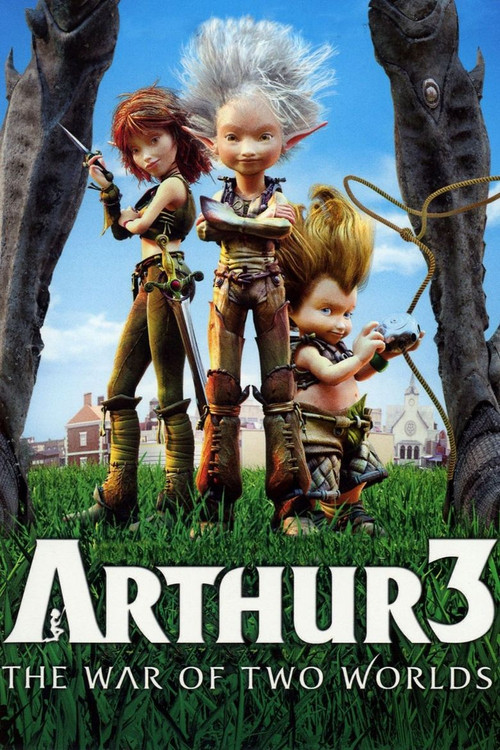
Arthur 3: The War of the Two Worlds
With Maltazard now seven feet tall and Arthur still two inches small, our hero must find a way to grow back to his normal size and stop the Evil M once and for all, with the help of Selenia and Betameche.
The film box office disappointment against its mid-range budget of $70.2M, earning $33.9M globally (-52% loss). While initial box office returns were modest, the film has gained appreciation for its compelling narrative within the animation genre.


Plot Structure
Story beats plotted across runtime


Narrative Arc
Emotional journey through the story's key moments
Story Circle
Blueprint 15-beat structure
Arcplot Score Breakdown
Weighted: Precision (70%) + Arc (15%) + Theme (15%)
Arthur 3: The War of the Two Worlds (2010) exhibits carefully calibrated plot construction, characteristic of Luc Besson's storytelling approach. This structural analysis examines how the film's 15-point plot structure maps to proven narrative frameworks across 1 hour and 41 minutes. With an Arcplot score of 7.4, the film balances conventional beats with creative variation.
Characters
Cast & narrative archetypes

Arthur
Princess Selenia
Maltazard
Betameche
Archibald
Darkos
Main Cast & Characters
Arthur
Played by Freddie Highmore
A young boy who can transform into a Minimoy and must save both worlds from Maltazard's invasion.
Princess Selenia
Played by Selena Gomez
A brave Minimoy princess and Arthur's love interest who fights alongside him against Maltazard.
Maltazard
Played by Lou Reed
The evil M the Magnificent, a power-hungry villain seeking to conquer the human world.
Betameche
Played by Jimmy Fallon
Selenia's younger brother, a loyal and comedic ally to Arthur in the Minimoy world.
Archibald
Played by Mia Farrow
Arthur's grandfather who disappeared and left behind the legacy of the Minimoy world.
Darkos
Played by Iggy Pop
Maltazard's son, a conflicted antagonist torn between his father's evil and his own conscience.
Structural Analysis
The Status Quo at 1 minutes (1% through the runtime) establishes Arthur is trapped in his Minimoy form in the underground kingdom, separated from the human world above. He's stuck at 2mm tall while Maltazard prepares to invade the human world.. The analysis reveals that this early placement immediately immerses viewers in the story world.
The inciting incident occurs at 12 minutes when Maltazard successfully grows to full human size and takes over Arthur's house, imprisoning his grandmother and friends. The villain has achieved his first major victory, making the stakes real and immediate.. At 12% through the film, this Disruption aligns precisely with traditional story structure. This beat shifts the emotional landscape, launching the protagonist into the central conflict.
The First Threshold at 25 minutes marks the transition into Act II, occurring at 25% of the runtime. This illustrates the protagonist's commitment to Arthur makes the active choice to journey to find a way back to human form so he can fight Maltazard on equal terms. He commits to the dangerous quest despite the risks, refusing to hide underground., moving from reaction to action.
At 51 minutes, the Midpoint arrives at 51% of the runtime—precisely centered, creating perfect narrative symmetry. Notably, this crucial beat Arthur discovers the passage to return to human form, but Maltazard has grown even more powerful and is now terrorizing the city. False victory: Arthur can become human again, but the stakes have raised - the threat is now global, not just personal., fundamentally raising what's at risk. The emotional intensity shifts, dividing the narrative into clear before-and-after phases.
The Collapse moment at 75 minutes (74% through) represents the emotional nadir. Here, Maltazard captures Selenia and the Minimoy forces are defeated. Arthur faces losing both worlds - the whiff of death as the Minimoy civilization faces extinction and his grandmother's home will be destroyed forever., illustrates the protagonist at their lowest point. This beat's placement in the final quarter sets up the climactic reversal.
The Second Threshold at 80 minutes initiates the final act resolution at 79% of the runtime. Arthur realizes the solution: he doesn't need to choose between worlds or fight alone. By uniting humans and Minimoys together, combining both worlds' strengths, they can defeat Maltazard. The synthesis of the Mirror World lesson with his journey., demonstrating the transformation achieved throughout the journey.
Emotional Journey
Arthur 3: The War of the Two Worlds's emotional architecture traces a deliberate progression across 15 carefully calibrated beats.
Narrative Framework
This structural analysis employs structural analysis methodology used to understand storytelling architecture. By mapping Arthur 3: The War of the Two Worlds against these established plot points, we can identify how Luc Besson utilizes or subverts traditional narrative conventions. The plot point approach reveals not only adherence to structural principles but also creative choices that distinguish Arthur 3: The War of the Two Worlds within the animation genre.
Luc Besson's Structural Approach
Among the 12 Luc Besson films analyzed on Arcplot, the average structural score is 7.0, reflecting strong command of classical structure. Arthur 3: The War of the Two Worlds represents one of the director's most structurally precise works. For comparative analysis, explore the complete Luc Besson filmography.
Comparative Analysis
Additional animation films include The Bad Guys, Puss in Boots and Violet Evergarden: Eternity and the Auto Memory Doll. For more Luc Besson analyses, see The Fifth Element, The Family and Léon: The Professional.
Plot Points by Act
Act I
SetupStatus Quo
Arthur is trapped in his Minimoy form in the underground kingdom, separated from the human world above. He's stuck at 2mm tall while Maltazard prepares to invade the human world.
Theme
Selenia tells Arthur: "It's not about how big you are, it's about how big your heart is." This establishes the film's core theme about courage and unity transcending physical size.
Worldbuilding
Establishing the parallel crisis in both worlds: Arthur trapped as a Minimoy, Maltazard growing to human size and terrorizing the house, grandmother and friends trying to stop the invasion, the Minimoy resistance forming underground.
Disruption
Maltazard successfully grows to full human size and takes over Arthur's house, imprisoning his grandmother and friends. The villain has achieved his first major victory, making the stakes real and immediate.
Resistance
Arthur debates how to fight Maltazard while being only 2mm tall. The Minimoys prepare for war. Arthur struggles with feeling powerless but receives guidance from Selenia and the King about finding another way to return to human form.
Act II
ConfrontationFirst Threshold
Arthur makes the active choice to journey to find a way back to human form so he can fight Maltazard on equal terms. He commits to the dangerous quest despite the risks, refusing to hide underground.
Mirror World
Arthur and Selenia's partnership deepens as they embark on the quest together. Their relationship represents the union of courage and wisdom, human and Minimoy worlds - the thematic core of the story.
Premise
The adventure through the seven lands to find Archibald's secret passage back to human size. Arthur experiences the "fun and games" of the Minimoy world - action, danger, creative problem-solving at tiny scale, bonding with companions.
Midpoint
Arthur discovers the passage to return to human form, but Maltazard has grown even more powerful and is now terrorizing the city. False victory: Arthur can become human again, but the stakes have raised - the threat is now global, not just personal.
Opposition
Arthur returns to human size but struggles to convince adults of the Minimoy threat. Maltazard's forces close in on both worlds. Arthur's attempts to stop the villain fail repeatedly. The two worlds remain divided and weak.
Collapse
Maltazard captures Selenia and the Minimoy forces are defeated. Arthur faces losing both worlds - the whiff of death as the Minimoy civilization faces extinction and his grandmother's home will be destroyed forever.
Crisis
Arthur's dark night of the soul. He feels he's failed both worlds, unable to bridge the gap between them. He processes the loss and doubts whether he can succeed where he's failed before.
Act III
ResolutionSecond Threshold
Arthur realizes the solution: he doesn't need to choose between worlds or fight alone. By uniting humans and Minimoys together, combining both worlds' strengths, they can defeat Maltazard. The synthesis of the Mirror World lesson with his journey.
Synthesis
The finale battle where Arthur coordinates both humans and Minimoys in a unified assault. He moves between both forms and both worlds, proving that unity and courage transcend size. Defeats Maltazard, rescues Selenia, saves both worlds.
Transformation
Arthur stands in his grandmother's garden, now able to move freely between human and Minimoy worlds. The two worlds are united and at peace. He's transformed from a boy trying to prove himself into a true bridge between worlds - courage realized through unity.