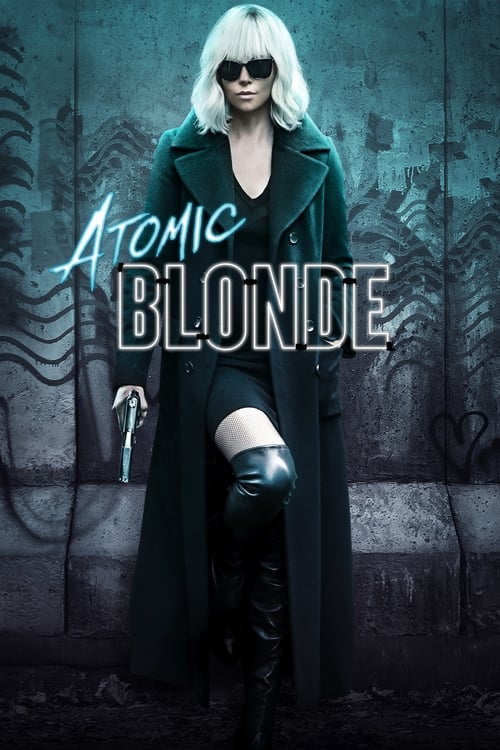
Atomic Blonde
An undercover MI6 agent is sent to Berlin during the Cold War to investigate the murder of a fellow agent and recover a missing list of double agents.
Despite a moderate budget of $30.0M, Atomic Blonde became a financial success, earning $100.0M worldwide—a 233% return.
14 wins & 20 nominations


Plot Structure
Story beats plotted across runtime


Narrative Arc
Emotional journey through the story's key moments
Story Circle
Blueprint 15-beat structure
Arcplot Score Breakdown
Weighted: Precision (70%) + Arc (15%) + Theme (15%)
Atomic Blonde (2017) demonstrates precise narrative architecture, characteristic of David Leitch's storytelling approach. This structural analysis examines how the film's 15-point plot structure maps to proven narrative frameworks across 1 hour and 55 minutes. With an Arcplot score of 6.8, the film balances conventional beats with creative variation.
Characters
Cast & narrative archetypes

Lorraine Broughton
David Percival
Delphine Lasalle
Eric Gray
Emmett Kurzfeld
Spyglass
Aleksander Bremovych
Main Cast & Characters
Lorraine Broughton
Played by Charlize Theron
An elite MI6 spy sent to Berlin during the Cold War's final days to recover a stolen list of double agents and investigate a colleague's murder.
David Percival
Played by James McAvoy
A Berlin station chief who has gone native, operating with questionable loyalty and ruthless pragmatism in the espionage underworld.
Delphine Lasalle
Played by Sofia Boutella
A naive French operative who becomes romantically involved with Lorraine while conducting her own surveillance operations.
Eric Gray
Played by Toby Jones
MI6's head of station who debriefs Lorraine after her Berlin mission, seeking the truth behind the operation's chaos.
Emmett Kurzfeld
Played by John Goodman
A CIA observer present during Lorraine's debriefing, representing American intelligence interests in the operation.
Spyglass
Played by Eddie Marsan
An East German Stasi officer who has memorized the stolen list and desperately seeks to defect to the West with his family.
Aleksander Bremovych
Played by Roland Møller
A brutal KGB agent hunting the list and eliminating anyone who threatens Soviet intelligence operations.
Structural Analysis
The Status Quo at 2 minutes (1% through the runtime) establishes Lorraine Broughton submerged in ice bath, bruised and battered, establishing her as a hardened MI6 operative in the aftermath of violence. The framing device begins with her being interrogated about a failed mission in Berlin.. Notably, this early placement immediately immerses viewers in the story world.
The inciting incident occurs at 14 minutes when MI6 Chief orders Lorraine to Berlin to retrieve the List and make contact with station chief David Percival. The mission is personal (avenging her lover Gasciogne) and professional (preventing intelligence catastrophe), pulling her into the Cold War's final deadly days.. At 12% through the film, this Disruption aligns precisely with traditional story structure. This beat shifts the emotional landscape, launching the protagonist into the central conflict.
The First Threshold at 30 minutes marks the transition into Act II, occurring at 26% of the runtime. This shows the protagonist's commitment to Lorraine fully commits to the mission by making contact with French operative Delphine Lasalle and beginning her active intelligence gathering in Berlin. She chooses to operate in the moral gray zone, using seduction and violence as tools, crossing from London's bureaucracy into Berlin's chaos., moving from reaction to action.
At 58 minutes, the Midpoint arrives at 50% of the runtime—precisely centered, creating perfect narrative symmetry. Notably, this crucial beat Lorraine makes contact with Spyglass and learns he has the List memorized. False victory: she has found the key to the mission. False defeat: KGB and other forces are closing in, and she realizes there's a double agent (Satchel) feeding information to the Soviets. The stakes escalate dramatically., fundamentally raising what's at risk. The emotional intensity shifts, dividing the narrative into clear before-and-after phases.
The Collapse moment at 87 minutes (75% through) represents the emotional nadir. Here, Delphine is murdered by Percival, who is revealed as Satchel. Spyglass was killed earlier. The "whiff of death" is literal - Lorraine loses her lover and the mission appears completely destroyed. Her capacity for trust dies with Delphine, leaving only survival instinct and vengeance., demonstrates the protagonist at their lowest point. This beat's placement in the final quarter sets up the climactic reversal.
The Second Threshold at 92 minutes initiates the final act resolution at 80% of the runtime. Armed with complete knowledge of Percival's identity as Satchel, Lorraine synthesizes her training, rage, and survival instinct. She obtains the actual List (photographed by Spyglass on microfilm) and prepares to eliminate Percival and escape Berlin. The clarity: trust no one, complete the mission alone., demonstrating the transformation achieved throughout the journey.
Emotional Journey
Atomic Blonde's emotional architecture traces a deliberate progression across 15 carefully calibrated beats.
Narrative Framework
This structural analysis employs systematic plot point analysis that identifies crucial turning points. By mapping Atomic Blonde against these established plot points, we can identify how David Leitch utilizes or subverts traditional narrative conventions. The plot point approach reveals not only adherence to structural principles but also creative choices that distinguish Atomic Blonde within the action genre.
David Leitch's Structural Approach
Among the 5 David Leitch films analyzed on Arcplot, the average structural score is 7.1, reflecting strong command of classical structure. Atomic Blonde takes a more unconventional approach compared to the director's typical style. For comparative analysis, explore the complete David Leitch filmography.
Comparative Analysis
Additional action films include The Bad Guys, Puss in Boots and Venom: The Last Dance. For more David Leitch analyses, see Once Upon a Deadpool, Fast & Furious Presents: Hobbs & Shaw and The Fall Guy.
Plot Points by Act
Act I
SetupStatus Quo
Lorraine Broughton submerged in ice bath, bruised and battered, establishing her as a hardened MI6 operative in the aftermath of violence. The framing device begins with her being interrogated about a failed mission in Berlin.
Theme
Interrogator Gray states: "In our line of work, we risk our lives for the truth." This establishes the film's central tension between truth, lies, and loyalty in the espionage world where trust is the rarest commodity.
Worldbuilding
Establishment of November 1989 Berlin on the eve of the Wall's fall. MI6 agent James Gasciogne is killed and the List (containing every active agent) is stolen. Lorraine is briefed in London, revealing her connection to Gasciogne and the high stakes of recovering the List before it's sold.
Disruption
MI6 Chief orders Lorraine to Berlin to retrieve the List and make contact with station chief David Percival. The mission is personal (avenging her lover Gasciogne) and professional (preventing intelligence catastrophe), pulling her into the Cold War's final deadly days.
Resistance
Lorraine's journey to Berlin and initial contact with the chaotic world behind the Iron Curtain. She's immediately attacked at the station, meets the unpredictable Percival, and learns about Spyglass, the KGB defector who memorized the List. The debate: can she trust Percival or anyone in this hall of mirrors?
Act II
ConfrontationFirst Threshold
Lorraine fully commits to the mission by making contact with French operative Delphine Lasalle and beginning her active intelligence gathering in Berlin. She chooses to operate in the moral gray zone, using seduction and violence as tools, crossing from London's bureaucracy into Berlin's chaos.
Mirror World
Lorraine and Delphine begin their romantic relationship, providing a stark contrast to the violence and betrayal surrounding them. Delphine represents the possibility of genuine connection and trust in a world built on lies, embodying the film's thematic question about whether intimacy is possible in espionage.
Premise
The "fun and games" of spy craft: Lorraine navigates Berlin's underground, engages in brutal fight sequences, pursues leads on Spyglass, and deepens her relationship with Delphine while growing suspicious of Percival. The promise of a stylish, violent Cold War thriller is delivered with neon-soaked action set pieces.
Midpoint
Lorraine makes contact with Spyglass and learns he has the List memorized. False victory: she has found the key to the mission. False defeat: KGB and other forces are closing in, and she realizes there's a double agent (Satchel) feeding information to the Soviets. The stakes escalate dramatically.
Opposition
The mission deteriorates as Lorraine attempts to extract Spyglass through East Berlin. The iconic stairwell fight sequence occurs where she barely survives. Percival's betrayals become clearer. The KGB closes in from all sides. Delphine is revealed to be inexperienced and in over her head, compromising operations.
Collapse
Delphine is murdered by Percival, who is revealed as Satchel. Spyglass was killed earlier. The "whiff of death" is literal - Lorraine loses her lover and the mission appears completely destroyed. Her capacity for trust dies with Delphine, leaving only survival instinct and vengeance.
Crisis
Lorraine processes the betrayal and loss. She confronts the full extent of Percival's treachery and the mission's failure. In the interrogation frame, she continues to maintain her cover story while internally preparing for final action. The dark night of realizing she truly is alone.
Act III
ResolutionSecond Threshold
Armed with complete knowledge of Percival's identity as Satchel, Lorraine synthesizes her training, rage, and survival instinct. She obtains the actual List (photographed by Spyglass on microfilm) and prepares to eliminate Percival and escape Berlin. The clarity: trust no one, complete the mission alone.
Synthesis
Lorraine confronts and kills Percival in a brutal fight on a boat. She delivers the microfilm to her MI6 handlers, seemingly completing her mission. The interrogation concludes. Then the twist: Lorraine meets with a CIA contact, revealing she's actually a triple agent working for the Americans, having manipulated everyone throughout.
Transformation
Lorraine boards a plane to the United States, having successfully played all sides. The final image mirrors the opening's isolation but transforms it: she's no longer a battered victim but a master manipulator who won the game. The ice bath of survival has become the cool confidence of ultimate control.