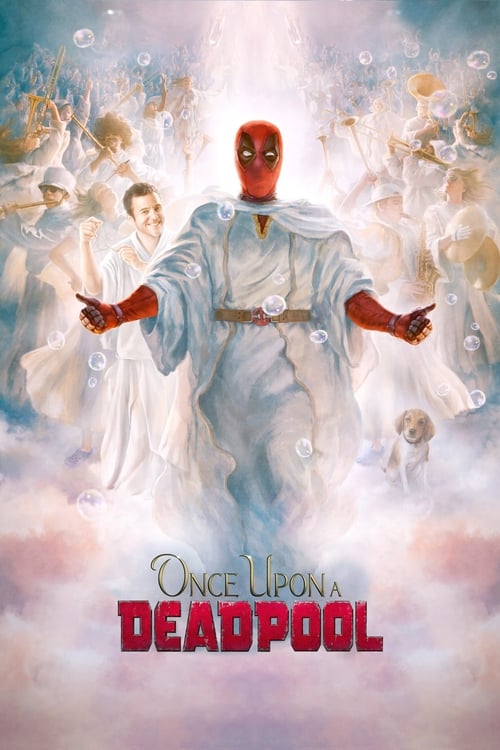
Once Upon a Deadpool
A kidnapped Fred Savage is forced to endure Deadpool's PG-13 rendition of Deadpool 2, as a Princess Bride-esque story that's full of magic, wonder, and zero Fs.
The film financial setback against its substantial budget of $110.0M, earning $51.3M globally (-53% loss). While initial box office returns were modest, the film has gained appreciation for its distinctive approach within the comedy genre.
Plot Structure
Story beats plotted across runtime


Narrative Arc
Emotional journey through the story's key moments
Story Circle
Blueprint 15-beat structure
Arcplot Score Breakdown
Weighted: Precision (70%) + Arc (15%) + Theme (15%)
Once Upon a Deadpool (2018) exemplifies meticulously timed narrative architecture, characteristic of David Leitch's storytelling approach. This structural analysis examines how the film's 15-point plot structure maps to proven narrative frameworks across 1 hour and 58 minutes. With an Arcplot score of 7.5, the film showcases strong structural fundamentals.
Characters
Cast & narrative archetypes

Wade Wilson / Deadpool
Fred Savage
Cable
Russell Collins / Firefist
Vanessa
Domino
Colossus
Negasonic Teenage Warhead
Weasel
Dopinder
Main Cast & Characters
Wade Wilson / Deadpool
Played by Ryan Reynolds
A wisecracking mercenary with accelerated healing who breaks the fourth wall constantly while narrating a bedtime story version of his adventures.
Fred Savage
Played by Fred Savage
A kidnapped adult who is forced to listen to Deadpool's story from a recreated Princess Bride bedroom setting.
Cable
Played by Josh Brolin
A cybernetic soldier from the future who travels back in time to kill a young mutant, but eventually becomes an unlikely ally to Deadpool.
Russell Collins / Firefist
Played by Julian Dennison
A troubled young mutant with pyrokinetic abilities who was abused at an orphanage and seeks revenge against his tormentors.
Vanessa
Played by Morena Baccarin
Wade's girlfriend whose death motivates his journey; she appears in visions guiding him toward protecting Russell.
Domino
Played by Zazie Beetz
A lucky mutant mercenary whose superpower is literally luck, making improbable events work in her favor during combat.
Colossus
Played by Stefan Kapicic
A metal-skinned X-Man who serves as a moral compass, constantly trying to recruit Deadpool to the X-Men and guide him toward heroism.
Negasonic Teenage Warhead
Played by Brianna Hildebrand
A young X-Men member with explosive powers and a sardonic attitude who reluctantly tolerates Deadpool.
Weasel
Played by T.J. Miller
Wade's best friend who runs a mercenary bar and provides comic relief and logistical support for X-Force recruitment.
Dopinder
Played by Karan Soni
An eager taxi driver who idolizes Deadpool and desperately wants to become a contract killer.
Structural Analysis
The Status Quo at 1 minutes (1% through the runtime) establishes Framing device opens with Deadpool kidnapping Fred Savage to recreate The Princess Bride. Wade Wilson is established as a mercenary living happily with Vanessa.. Notably, this early placement immediately immerses viewers in the story world.
The inciting incident occurs at 14 minutes when Vanessa is killed by a criminal targeting Wade. His entire world and future plans are destroyed in an instant.. At 12% through the film, this Disruption aligns precisely with traditional story structure. This beat shifts the emotional landscape, launching the protagonist into the central conflict.
The First Threshold at 30 minutes marks the transition into Act II, occurring at 25% of the runtime. This shows the protagonist's commitment to Wade agrees to join the X-Men as a trainee and help a troubled young mutant, Russell Collins, choosing to find meaning through helping others., moving from reaction to action.
At 60 minutes, the Midpoint arrives at 51% of the runtime—precisely centered, creating perfect narrative symmetry. Structural examination shows that this crucial beat The X-Force team is wiped out in a spectacular disaster, leaving only Wade and Domino. The fun and games are over; stakes become deadly serious., fundamentally raising what's at risk. The emotional intensity shifts, dividing the narrative into clear before-and-after phases.
The Collapse moment at 88 minutes (75% through) represents the emotional nadir. Here, Wade is literally torn in half by Juggernaut. His body broken, he faces complete failure as Russell prepares to commit murder and doom himself., demonstrates the protagonist at their lowest point. This beat's placement in the final quarter sets up the climactic reversal.
The Second Threshold at 94 minutes initiates the final act resolution at 80% of the runtime. Wade realizes love means sacrifice. He puts on the power-dampening collar and offers himself as a human shield for Russell, choosing true selfless love., demonstrating the transformation achieved throughout the journey.
Emotional Journey
Once Upon a Deadpool's emotional architecture traces a deliberate progression across 15 carefully calibrated beats.
Narrative Framework
This structural analysis employs a 15-point narrative structure framework that maps key story moments. By mapping Once Upon a Deadpool against these established plot points, we can identify how David Leitch utilizes or subverts traditional narrative conventions. The plot point approach reveals not only adherence to structural principles but also creative choices that distinguish Once Upon a Deadpool within the comedy genre.
David Leitch's Structural Approach
Among the 5 David Leitch films analyzed on Arcplot, the average structural score is 7.1, reflecting strong command of classical structure. Once Upon a Deadpool represents one of the director's most structurally precise works. For comparative analysis, explore the complete David Leitch filmography.
Comparative Analysis
Additional comedy films include The Bad Guys, Ella Enchanted and The Evening Star. For more David Leitch analyses, see Atomic Blonde, Fast & Furious Presents: Hobbs & Shaw and The Fall Guy.
Plot Points by Act
Act I
SetupStatus Quo
Framing device opens with Deadpool kidnapping Fred Savage to recreate The Princess Bride. Wade Wilson is established as a mercenary living happily with Vanessa.
Theme
Vanessa tells Wade about family and what matters most: "Family is not an F-word." The theme of finding one's true family is stated.
Worldbuilding
Wade's world as a mercenary-for-hire is established. His relationship with Vanessa, his rogues gallery of targets, and his desire to do good are shown.
Disruption
Vanessa is killed by a criminal targeting Wade. His entire world and future plans are destroyed in an instant.
Resistance
Wade spirals into suicidal depression, attempting to kill himself multiple times. Colossus literally drags him to the X-Mansion to recover and find purpose.
Act II
ConfrontationFirst Threshold
Wade agrees to join the X-Men as a trainee and help a troubled young mutant, Russell Collins, choosing to find meaning through helping others.
Mirror World
Russell is introduced as the mirror character - an angry, abandoned kid who will show Wade what family really means. Cable also arrives from the future.
Premise
Wade assembles X-Force to rescue Russell before Cable kills him. The promise of the premise: irreverent superhero action with found family dynamics.
Midpoint
The X-Force team is wiped out in a spectacular disaster, leaving only Wade and Domino. The fun and games are over; stakes become deadly serious.
Opposition
Russell is corrupted by the Juggernaut and turns dark. Cable hunts them both. Wade must confront that his methods aren't working and he's losing Russell.
Collapse
Wade is literally torn in half by Juggernaut. His body broken, he faces complete failure as Russell prepares to commit murder and doom himself.
Crisis
Wade confronts his failure to save Russell and realizes he's been selfish. He must sacrifice himself to truly save the boy - becoming the family Russell needs.
Act III
ResolutionSecond Threshold
Wade realizes love means sacrifice. He puts on the power-dampening collar and offers himself as a human shield for Russell, choosing true selfless love.
Synthesis
Wade takes the bullet meant for Russell. His sacrifice redeems the boy and changes the future. Cable uses his final time-travel charge to save Wade, completing the found family circle.
Transformation
Wade is reunited with his new family - Cable, Russell, Domino, and the spirit of Vanessa. The framing device concludes with Fred Savage freed, having learned about true heroism.