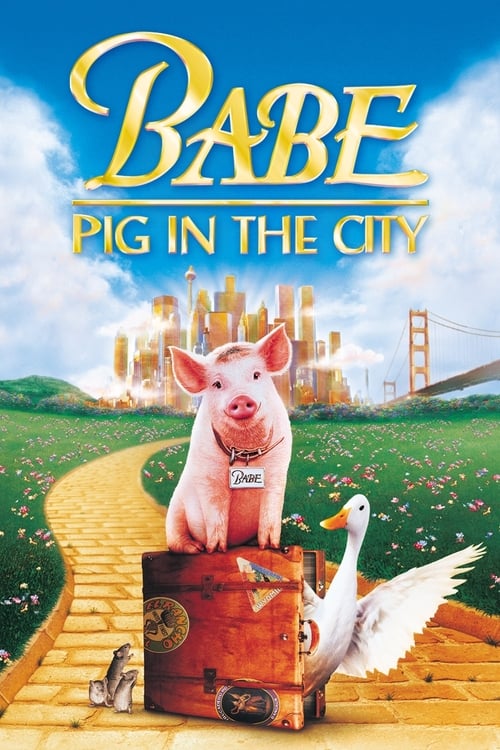
Babe: Pig in the City
Babe, fresh from his victory in the sheepherding contest, returns to Farmer Hoggett's farm, but after Farmer Hoggett is injured and unable to work, Babe has to go to the big city to save the farm.
The film struggled financially against its significant budget of $90.0M, earning $69.1M globally (-23% loss).
Nominated for 1 Oscar. 1 win & 17 nominations


Plot Structure
Story beats plotted across runtime


Narrative Arc
Emotional journey through the story's key moments
Story Circle
Blueprint 15-beat structure
Arcplot Score Breakdown
Weighted: Precision (70%) + Arc (15%) + Theme (15%)
Babe: Pig in the City (1998) showcases precise dramatic framework, characteristic of George Miller's storytelling approach. This structural analysis examines how the film's 15-point plot structure maps to proven narrative frameworks across 1 hour and 36 minutes. With an Arcplot score of 7.7, the film showcases strong structural fundamentals.
Characters
Cast & narrative archetypes

Babe
Esme Hoggett
Flealick
Fugly Floom
Ferdinand
Thelonius
Uncle Fugly
The Pink Poodle
Main Cast & Characters
Babe
Played by E.G. Daily
A kind-hearted pig who must navigate the dangerous city to save Hoggett farm, maintaining his innocence despite urban chaos.
Esme Hoggett
Played by Magda Szubanski
The farmer's determined wife who travels to the city with Babe, showing resourcefulness and maternal protection under pressure.
Flealick
Played by Steven Wright
A cynical, street-smart Jack Russell terrier who becomes Babe's guide and reluctant friend in the city.
Fugly Floom
Played by Mary Stein
An eccentric, compassionate woman who runs a makeshift animal sanctuary in her urban hotel, fiercely protective of her charges.
Ferdinand
Played by Danny Mann
The anxious, theatrical duck from the farm who joins the city adventure, providing comic relief and loyal friendship.
Thelonius
Played by James Cosmo
A wise, philosophical orangutan who speaks in riddles and becomes a mentor figure to Babe in the city.
Uncle Fugly
Played by Mickey Rooney
Fugly's wheelchair-bound uncle, a cantankerous but ultimately kind-hearted man who resides at the hotel.
The Pink Poodle
Played by Glenne Headly
An elegant, haughty poodle who initially disdains Babe but eventually recognizes his goodness.
Structural Analysis
The Status Quo at 1 minutes (1% through the runtime) establishes Babe is celebrated as a hero on Hoggett farm after his sheepdog trial victory. The farm is peaceful and prosperous with Babe content in his role.. Structural examination shows that this early placement immediately immerses viewers in the story world.
The inciting incident occurs at 10 minutes when Farmer Hoggett has a catastrophic accident in the well, sustaining severe injuries. The farm faces financial ruin as he cannot work and medical bills mount.. At 11% through the film, this Disruption aligns precisely with traditional story structure. This beat shifts the emotional landscape, launching the protagonist into the central conflict.
The First Threshold at 23 minutes marks the transition into Act II, occurring at 24% of the runtime. This reveals the protagonist's commitment to Babe and Mrs. Hoggett board the plane and leave the familiar farm behind, flying to the vast, alien metropolis - a point of no return into the unfamiliar world., moving from reaction to action.
At 47 minutes, the Midpoint arrives at 49% of the runtime—precisely centered, creating perfect narrative symmetry. Notably, this crucial beat The promotional appearance is canceled when authorities discover the illegal animals at the hotel. Mrs. Hoggett is arrested and Babe is left alone with the animals, their financial hope destroyed., fundamentally raising what's at risk. The emotional intensity shifts, dividing the narrative into clear before-and-after phases.
The Collapse moment at 71 minutes (74% through) represents the emotional nadir. Here, Babe falls into the canal and nearly drowns. He is pulled under the water in a moment of literal near-death, losing hope that he can save his friends or return home., illustrates the protagonist at their lowest point. This beat's placement in the final quarter sets up the climactic reversal.
The Second Threshold at 76 minutes initiates the final act resolution at 79% of the runtime. The Uncle (orangutan) reminds Babe that kindness and compassion matter, and all the animals resolve to help each other escape. Babe understands that family is not just those from home, but those you choose to help., demonstrating the transformation achieved throughout the journey.
Emotional Journey
Babe: Pig in the City's emotional architecture traces a deliberate progression across 15 carefully calibrated beats.
Narrative Framework
This structural analysis employs systematic plot point analysis that identifies crucial turning points. By mapping Babe: Pig in the City against these established plot points, we can identify how George Miller utilizes or subverts traditional narrative conventions. The plot point approach reveals not only adherence to structural principles but also creative choices that distinguish Babe: Pig in the City within the family genre.
George Miller's Structural Approach
Among the 10 George Miller films analyzed on Arcplot, the average structural score is 6.8, demonstrating varied approaches to story architecture. Babe: Pig in the City represents one of the director's most structurally precise works. For comparative analysis, explore the complete George Miller filmography.
Comparative Analysis
Additional family films include The Black Stallion, The Bad Guys and Ella Enchanted. For more George Miller analyses, see Mad Max 2, Furiosa: A Mad Max Saga and Happy Feet Two.
Plot Points by Act
Act I
SetupStatus Quo
Babe is celebrated as a hero on Hoggett farm after his sheepdog trial victory. The farm is peaceful and prosperous with Babe content in his role.
Theme
The narrator speaks about kindness and compassion being repaid - a theme that will be tested when Babe must show mercy to strangers in the hostile city.
Worldbuilding
Life on the farm is established with Babe as the beloved pig. Farmer Hoggett demonstrates the well to visitors, showing their modest success and happiness.
Disruption
Farmer Hoggett has a catastrophic accident in the well, sustaining severe injuries. The farm faces financial ruin as he cannot work and medical bills mount.
Resistance
Mrs. Hoggett receives notice that the farm will be repossessed unless they can make payment. She debates what to do and decides to take Babe to the city for a promotional appearance to earn money.
Act II
ConfrontationFirst Threshold
Babe and Mrs. Hoggett board the plane and leave the familiar farm behind, flying to the vast, alien metropolis - a point of no return into the unfamiliar world.
Mirror World
Babe meets the motley collection of animals at Flealands Hotel - abandoned, injured, and performing animals who represent society's outcasts and will teach him about compassion beyond his own kind.
Premise
Babe navigates the chaotic, surreal city and the strange hotel filled with eccentric animals. He befriends the dogs, monkeys, and other creatures while Mrs. Hoggett struggles with the hostile urban environment.
Midpoint
The promotional appearance is canceled when authorities discover the illegal animals at the hotel. Mrs. Hoggett is arrested and Babe is left alone with the animals, their financial hope destroyed.
Opposition
Babe and the animals face eviction and starvation. They sneak out to find food, leading to chaos at a fancy party and a chase through the city. The animals are hunted by authorities and animal control.
Collapse
Babe falls into the canal and nearly drowns. He is pulled under the water in a moment of literal near-death, losing hope that he can save his friends or return home.
Crisis
Babe is rescued by the animals working together, but they are all captured. In the dark pound, facing euthanasia, Babe despairs that his kindness and effort meant nothing in the cruel city.
Act III
ResolutionSecond Threshold
The Uncle (orangutan) reminds Babe that kindness and compassion matter, and all the animals resolve to help each other escape. Babe understands that family is not just those from home, but those you choose to help.
Synthesis
The animals execute a chaotic but successful escape from the pound. Mrs. Hoggett is freed and reunited with Babe. The hotel owner finds a way to save the hotel. Babe's compassion has created a new family and community.
Transformation
Babe returns to Hoggett Farm surrounded by his new extended family of city animals. Where he once knew only the farm, he now understands the wider world and that kindness connects all creatures, wherever they come from.