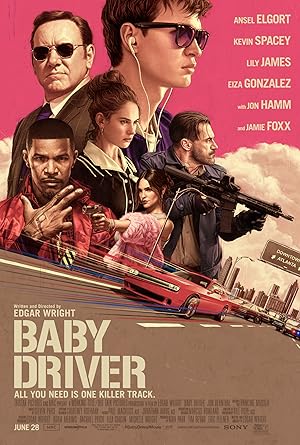
Baby Driver
Baby is a young and partially hearing impaired getaway driver who can make any wild move while in motion with the right track playing. It's a critical talent he needs to survive his indentured servitude to the crime boss, Doc, who values his role in his meticulously planned robberies. However, just when Baby thinks he is finally free and clear to have his own life with his new girlfriend, Debora, Doc coerces him back for another job. Now saddled with a crew of thugs too violently unstable to keep to Doc's plans, Baby finds himself and everything he cares for in terrible danger. To survive and escape the coming maelstrom, it will take all of Baby's skill, wits and daring, but even on the best track, can he make it when life is forcing him to face the music?
Despite a mid-range budget of $34.0M, Baby Driver became a box office phenomenon, earning $226.9M worldwide—a remarkable 567% return.
Nominated for 3 Oscars. 43 wins & 66 nominations


Plot Structure
Story beats plotted across runtime


Narrative Arc
Emotional journey through the story's key moments
Story Circle
Blueprint 15-beat structure
Arcplot Score Breakdown
Weighted: Precision (70%) + Arc (15%) + Theme (15%)
Baby Driver (2017) exemplifies meticulously timed narrative design, characteristic of Edgar Wright's storytelling approach. This structural analysis examines how the film's 15-point plot structure maps to proven narrative frameworks across 1 hour and 53 minutes. With an Arcplot score of 5.7, the film takes an unconventional approach to traditional narrative frameworks.
Characters
Cast & narrative archetypes

Baby
Debora
Doc
Bats
Buddy
Darling
Main Cast & Characters
Baby
Played by Ansel Elgort
A young, talented getaway driver with tinnitus who relies on music to drown out the ringing in his ears. He's forced to work for a crime boss to pay off a debt.
Debora
Played by Lily James
A kind-hearted diner waitress who becomes Baby's love interest and represents his hope for a normal life away from crime.
Doc
Played by Kevin Spacey
A calculating crime boss who orchestrates heists and controls Baby through manipulation and threats. He sees Baby as his good luck charm.
Bats
Played by Jamie Foxx
A violent, unpredictable criminal with a hair-trigger temper and paranoid tendencies. He distrusts Baby and escalates situations to violence.
Buddy
Played by Jon Hamm
A seasoned criminal and former Wall Street trader who initially befriends Baby but becomes his most dangerous adversary after personal tragedy.
Darling
Played by Eiza González
Buddy's girlfriend and criminal partner, a thrill-seeking woman deeply in love with Buddy who participates enthusiastically in heists.
Structural Analysis
The Status Quo at 1 minutes (1% through the runtime) establishes Baby sits in a stolen car, earbuds in, eyes closed, lost in music as he waits for his crew to rob a bank. This opening shot establishes Baby's detached, music-dependent world as a getaway driver trapped in a criminal life, isolated behind his playlist.. The analysis reveals that this early placement immediately immerses viewers in the story world.
The inciting incident occurs at 11 minutes when Doc tells Baby "One more job and you're done"—the final heist that will clear his debt. What seems like liberation is actually the disruption: it gives Baby hope for a normal life, setting up the stakes for everything that follows.. At 10% through the film, this Disruption aligns precisely with traditional story structure. This beat shifts the emotional landscape, launching the protagonist into the central conflict.
The First Threshold at 24 minutes marks the transition into Act II, occurring at 22% of the runtime. This illustrates the protagonist's commitment to Baby successfully completes his final job—the post office heist. He walks away from Doc, debt paid, believing he's free. He actively chooses to pursue a normal life with Debora, applying for pizza delivery jobs and taking her on a date. The criminal world is behind him now., moving from reaction to action.
At 51 minutes, the Midpoint arrives at 45% of the runtime—arriving early, accelerating into Act IIb complications. Significantly, this crucial beat The arms deal goes catastrophically wrong when Bats shoots the dealers. Baby realizes this crew is far more dangerous than any before—these aren't professional criminals but psychopaths. Stakes raise dramatically: the "one more job" won't be clean, and his carefully controlled world is spiraling into chaos and violence., fundamentally raising what's at risk. The emotional intensity shifts, dividing the narrative into clear before-and-after phases.
The Collapse moment at 75 minutes (66% through) represents the emotional nadir. Here, Darling dies in Baby's arms after the shootout with police, and Buddy—watching the love of his life bleed out—is transformed into a vengeful monster focused entirely on killing Baby. The "whiff of death" is literal: Darling dies, and Baby's hope for a clean escape dies with her. The violence has finally touched him directly., reveals the protagonist at their lowest point. This beat's placement in the final quarter sets up the climactic reversal.
The Second Threshold at 80 minutes initiates the final act resolution at 71% of the runtime. Baby realizes he can't outrun his past—he must face it. He confronts Doc directly to get car keys, and in that moment, synthesizes his skills (driving, thinking fast) with his newfound moral clarity (protecting Debora and Joseph at all costs). Doc, surprisingly, gives him a chance, recognizing Baby's essential decency., demonstrating the transformation achieved throughout the journey.
Emotional Journey
Baby Driver's emotional architecture traces a deliberate progression across 15 carefully calibrated beats.
Narrative Framework
This structural analysis employs proven narrative structure principles that track dramatic progression. By mapping Baby Driver against these established plot points, we can identify how Edgar Wright utilizes or subverts traditional narrative conventions. The plot point approach reveals not only adherence to structural principles but also creative choices that distinguish Baby Driver within the action genre.
Edgar Wright's Structural Approach
Among the 7 Edgar Wright films analyzed on Arcplot, the average structural score is 5.4, showcasing experimental approaches to narrative form. Baby Driver represents one of the director's most structurally precise works. For comparative analysis, explore the complete Edgar Wright filmography.
Comparative Analysis
Additional action films include The Bad Guys, Puss in Boots and Venom: The Last Dance. For more Edgar Wright analyses, see Shaun of the Dead, Last Night in Soho and A Fistful of Fingers.
Plot Points by Act
Act I
SetupStatus Quo
Baby sits in a stolen car, earbuds in, eyes closed, lost in music as he waits for his crew to rob a bank. This opening shot establishes Baby's detached, music-dependent world as a getaway driver trapped in a criminal life, isolated behind his playlist.
Theme
Doc tells Baby: "You get behind the wheel, and I'll say you're golden. But everything else is human error." The theme of fate vs. choice, control vs. chaos—can Baby drive his way out of his debts and his past, or will human complications crash his perfect plans?
Worldbuilding
Baby's setup world: he cares for his deaf foster father Joseph, creates mix tapes from found dialogue, owes a debt to crime boss Doc for a stolen car from his youth. He's a skilled driver with tinnitus who uses music to drown out the ringing, counting down jobs until he's free. We meet Doc's rotating crew of criminals.
Disruption
Doc tells Baby "One more job and you're done"—the final heist that will clear his debt. What seems like liberation is actually the disruption: it gives Baby hope for a normal life, setting up the stakes for everything that follows.
Resistance
Baby meets Debora, a waitress who shares his love of music and represents the normal life he craves. He debates whether escape is possible, dreams of running away with her. Meanwhile, he preps for his "last job," navigating the dangerous crew dynamics of Buddy, Darling, and the volatile Bats.
Act II
ConfrontationFirst Threshold
Baby successfully completes his final job—the post office heist. He walks away from Doc, debt paid, believing he's free. He actively chooses to pursue a normal life with Debora, applying for pizza delivery jobs and taking her on a date. The criminal world is behind him now.
Mirror World
Baby and Debora's first real date at Bo's Diner. Debora embodies the thematic answer: human connection, authenticity, a life beyond the soundtrack. She represents everything his isolated, controlled existence lacks. "I'm not scared of you," she says—seeing the real person beneath the music.
Premise
The promise of the premise: Baby tries to go straight, romancing Debora, envisioning their escape together. But Doc pulls him back in for "one more job," leveraging threats against Debora and Joseph. Baby navigates the escalating danger of the new crew (Buddy, Darling, Bats), trying to protect his loved ones while playing along.
Midpoint
The arms deal goes catastrophically wrong when Bats shoots the dealers. Baby realizes this crew is far more dangerous than any before—these aren't professional criminals but psychopaths. Stakes raise dramatically: the "one more job" won't be clean, and his carefully controlled world is spiraling into chaos and violence.
Opposition
Everything tightens: Buddy grows suspicious of Baby, finding his recorder and discovering he's been taping conversations. The crew learns about Debora. Baby tries to protect her while staying in the job. JD is killed. Bats threatens Joseph. The heist goes wrong, police close in, and Bats is killed. Buddy and Darling discover Baby's betrayal.
Collapse
Darling dies in Baby's arms after the shootout with police, and Buddy—watching the love of his life bleed out—is transformed into a vengeful monster focused entirely on killing Baby. The "whiff of death" is literal: Darling dies, and Baby's hope for a clean escape dies with her. The violence has finally touched him directly.
Crisis
Baby's dark night: he retrieves money and tapes to run, but realizes he can't leave Joseph vulnerable to Doc. He returns to the diner to get Debora, finding Buddy has already terrorized her. Baby kills Doc's right-hand man to protect Debora. The fantasy of escape without consequences is dead—every action has led to more violence.
Act III
ResolutionSecond Threshold
Baby realizes he can't outrun his past—he must face it. He confronts Doc directly to get car keys, and in that moment, synthesizes his skills (driving, thinking fast) with his newfound moral clarity (protecting Debora and Joseph at all costs). Doc, surprisingly, gives him a chance, recognizing Baby's essential decency.
Synthesis
The finale: Baby and Debora flee, pursued by Buddy in a destructive chase through Atlanta. Baby faces both Buddy (who he pushes to his death) and Doc (who sacrifices himself to save Baby from police). Baby turns himself in, taking responsibility. At trial, his character witnesses—Debora, Joseph, and even a woman he saved—testify to his humanity. He's sentenced to prison.
Transformation
Baby walks out of prison to find Debora waiting in her car, "Baby Driver" playing. The opening image mirrored: once again he's in a car with music playing, but transformed—no longer isolated or running, but free through accountability, loved, and finally driving toward a future he chose. His earbuds are gone; he's present in reality.