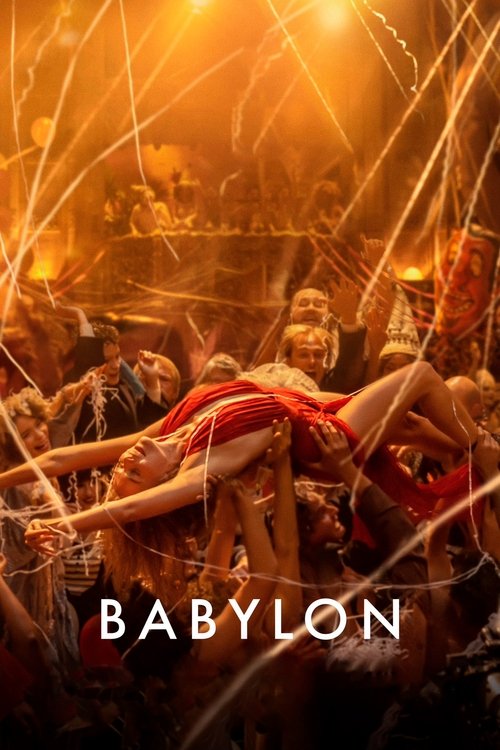
Babylon
A tale of outsized ambition and outrageous excess, tracing the rise and fall of multiple characters in an era of unbridled decadence and depravity during Hollywood's transition from silent films to sound films in the late 1920s.
The film disappointed at the box office against its substantial budget of $78.0M, earning $65.3M globally (-16% loss).
Nominated for 3 Oscars. 45 wins & 158 nominations


Plot Structure
Story beats plotted across runtime


Narrative Arc
Emotional journey through the story's key moments
Story Circle
Blueprint 15-beat structure
Arcplot Score Breakdown
Weighted: Precision (70%) + Arc (15%) + Theme (15%)
Babylon (2022) exhibits carefully calibrated narrative design, characteristic of Damien Chazelle's storytelling approach. This structural analysis examines how the film's 15-point plot structure maps to proven narrative frameworks across 3 hours and 9 minutes. With an Arcplot score of 6.8, the film balances conventional beats with creative variation.
Characters
Cast & narrative archetypes

Nellie LaRoy
Jack Conrad
Manny Torres
Lady Fay Zhu
Sidney Palmer
Elinor St. John
James McKay
Main Cast & Characters
Nellie LaRoy
Played by Margot Robbie
An ambitious, wild young woman from New Jersey who crashes Hollywood parties and becomes a star through raw charisma and uninhibited energy.
Jack Conrad
Played by Brad Pitt
A major silent film star at the peak of his career who struggles to adapt as the industry transitions to sound pictures.
Manny Torres
Played by Diego Calva
A Mexican immigrant who works his way up from studio assistant to executive, deeply in love with Nellie despite her chaos.
Lady Fay Zhu
Played by Li Jun Li
A sophisticated cabaret singer and writer who navigates Hollywood's underground with intelligence and grace.
Sidney Palmer
Played by Jovan Adepo
A talented Black jazz trumpet player who fights for recognition and artistic control in a racist industry.
Elinor St. John
Played by Jean Smart
A powerful gossip columnist who controls reputations and serves as Hollywood's truth-teller and conscience.
James McKay
Played by Tobey Maguire
A ruthless underworld figure who represents the dark, violent underbelly of 1920s Los Angeles.
Structural Analysis
The Status Quo at 1 minutes (1% through the runtime) establishes Manny Torres works as a lowly assistant hauling an elephant up a hill to a decadent Hollywood party in 1926. The chaotic, excessive party in the Hollywood hills establishes the wild, uninhibited world of silent film era excess where dreams and debauchery collide.. Structural examination shows that this early placement immediately immerses viewers in the story world.
The inciting incident occurs at 24 minutes when At dawn after the party, Manny gets an emergency call: a lead actress has overdosed and they need a replacement immediately for a film shoot. He brings Nellie, launching both their careers. This incident disrupts the status quo and opens the door to the movie industry for both characters.. At 13% through the film, this Disruption is delayed, allowing extended setup of the story world. This beat shifts the emotional landscape, launching the protagonist into the central conflict.
The First Threshold at 48 minutes marks the transition into Act II, occurring at 25% of the runtime. This demonstrates the protagonist's commitment to After the successful desert shoot, both Nellie and Manny commit fully to Hollywood. Nellie becomes an overnight sensation, Manny rises to become an executive at Kinoscope Studios, and Jack Conrad embraces his stardom. They all choose to fully enter the Hollywood machine, crossing into Act Two., moving from reaction to action.
At 95 minutes, the Midpoint arrives at 50% of the runtime—precisely centered, creating perfect narrative symmetry. Of particular interest, this crucial beat The introduction of synchronized sound technology. The Jazz Singer's success marks the beginning of the end for silent films. This is a false victory disguised as progress - while it seems like innovation, it signals the death of the world and people we've come to know. The stakes fundamentally change., fundamentally raising what's at risk. The emotional intensity shifts, dividing the narrative into clear before-and-after phases.
The Collapse moment at 143 minutes (75% through) represents the emotional nadir. Here, Jack Conrad, unable to adapt to the new Hollywood, dies by suicide. His death represents the literal "whiff of death" - the complete death of the silent film era and everything it represented. The dream has fully collapsed, and the cost of Hollywood's evolution becomes tragically clear., illustrates the protagonist at their lowest point. This beat's placement in the final quarter sets up the climactic reversal.
The Second Threshold at 152 minutes initiates the final act resolution at 80% of the runtime. After barely escaping the violent underworld with his life, Manny realizes he must make a final choice: save Nellie by helping her escape Hollywood, or stay in the system that's destroying everyone he loves. He chooses love and sacrifice over ambition, offering Nellie money to start over., demonstrating the transformation achieved throughout the journey.
Emotional Journey
Babylon's emotional architecture traces a deliberate progression across 15 carefully calibrated beats.
Narrative Framework
This structural analysis employs proven narrative structure principles that track dramatic progression. By mapping Babylon against these established plot points, we can identify how Damien Chazelle utilizes or subverts traditional narrative conventions. The plot point approach reveals not only adherence to structural principles but also creative choices that distinguish Babylon within the drama genre.
Damien Chazelle's Structural Approach
Among the 4 Damien Chazelle films analyzed on Arcplot, the average structural score is 6.2, demonstrating varied approaches to story architecture. Babylon represents one of the director's most structurally precise works. For comparative analysis, explore the complete Damien Chazelle filmography.
Comparative Analysis
Additional drama films include After Thomas, South Pacific and Dirty Dancing: Havana Nights. For more Damien Chazelle analyses, see First Man, Whiplash and La La Land.
Plot Points by Act
Act I
SetupStatus Quo
Manny Torres works as a lowly assistant hauling an elephant up a hill to a decadent Hollywood party in 1926. The chaotic, excessive party in the Hollywood hills establishes the wild, uninhibited world of silent film era excess where dreams and debauchery collide.
Theme
At the party, a journalist tells Nellie LaRoy: "The camera will capture something in you that you don't even know is there." This speaks to the film's theme about cinema's power to immortalize moments and transform ordinary people into legends, while also consuming them.
Worldbuilding
The extravagant party sequence introduces the main characters: Manny (ambitious assistant), Nellie LaRoy (wild aspiring actress), Jack Conrad (silent film star), and the anarchic world of 1920s Hollywood. We see the excess, opportunity, and chaos of the silent film era in full swing.
Disruption
At dawn after the party, Manny gets an emergency call: a lead actress has overdosed and they need a replacement immediately for a film shoot. He brings Nellie, launching both their careers. This incident disrupts the status quo and opens the door to the movie industry for both characters.
Resistance
Manny and Nellie navigate their first major film shoots in the desert. The chaotic production sequences show them learning the ropes: Manny problem-solving on Jack Conrad's set, Nellie's raw talent emerging despite her rough edges. They experience both the magic and madness of silent filmmaking.
Act II
ConfrontationFirst Threshold
After the successful desert shoot, both Nellie and Manny commit fully to Hollywood. Nellie becomes an overnight sensation, Manny rises to become an executive at Kinoscope Studios, and Jack Conrad embraces his stardom. They all choose to fully enter the Hollywood machine, crossing into Act Two.
Mirror World
Manny and Nellie share an intimate moment at a jazz club where they connect deeply, away from the Hollywood chaos. Their relationship becomes the emotional core that will carry the film's themes about authenticity, love, and the cost of fame. Nellie represents what Manny truly wants versus what he pursues.
Premise
The "promise of the premise" - the wild, excessive glory days of silent Hollywood in full swing. Lavish parties, outrageous film productions, celebrities at their peak. Nellie becomes a star, Manny becomes powerful, Jack Conrad rules Hollywood. This is the hedonistic excess the audience came to see, before the fall.
Midpoint
The introduction of synchronized sound technology. The Jazz Singer's success marks the beginning of the end for silent films. This is a false victory disguised as progress - while it seems like innovation, it signals the death of the world and people we've come to know. The stakes fundamentally change.
Opposition
The transition to sound destroys careers. Nellie struggles with her rough accent and lack of refinement. Jack Conrad's voice doesn't match his image. Manny tries desperately to save Nellie's career by reinventing her. The old Hollywood dies as talkies take over. Nellie spirals into debt and bad decisions.
Collapse
Jack Conrad, unable to adapt to the new Hollywood, dies by suicide. His death represents the literal "whiff of death" - the complete death of the silent film era and everything it represented. The dream has fully collapsed, and the cost of Hollywood's evolution becomes tragically clear.
Crisis
Manny faces the darkness of what Hollywood has cost everyone. Nellie is deeply in debt to a gangster. Manny must confront the violence and corruption underlying the glamorous surface. He processes the loss of Jack, the destruction of Nellie's career, and questions everything he's pursued.
Act III
ResolutionSecond Threshold
After barely escaping the violent underworld with his life, Manny realizes he must make a final choice: save Nellie by helping her escape Hollywood, or stay in the system that's destroying everyone he loves. He chooses love and sacrifice over ambition, offering Nellie money to start over.
Synthesis
Manny arranges Nellie's escape and pays off her debts, sacrificing his position and money. But Nellie disappears rather than meeting him, unable to leave Hollywood behind. Years pass. Manny leaves Hollywood, marries, starts a normal life. The finale resolves each character's arc: adaptation, escape, or destruction.
Transformation
1952: Manny, now older with a family, sees "Singin' in the Rain" in a theater. He weeps as a montage shows cinema's evolution and immortality - all the pain, excess, and sacrifice was for something eternal. The art survives and transforms, even as the artists are consumed. He smiles through tears, at peace.