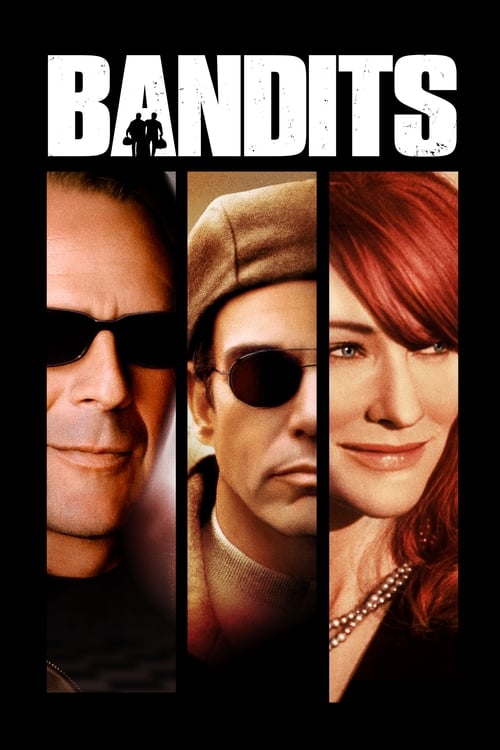
Bandits
After escaping from prison, Joe and Terry go on a crime spree, robbing banks through Oregon and California in order to finance their scheme for a new life south of the border. Unfortunately, things get more complicated when they meet Kate, who runs into them with her car. She joins the bandits on their cross-country spree, and eventually she steals something, too: their hearts.
The film struggled financially against its substantial budget of $75.0M, earning $67.6M globally (-10% loss).
5 wins & 7 nominations


Plot Structure
Story beats plotted across runtime


Narrative Arc
Emotional journey through the story's key moments
Story Circle
Blueprint 15-beat structure
Arcplot Score Breakdown
Weighted: Precision (70%) + Arc (15%) + Theme (15%)
Bandits (2001) exemplifies precise dramatic framework, characteristic of Barry Levinson's storytelling approach. This structural analysis examines how the film's 15-point plot structure maps to proven narrative frameworks across 2 hours and 3 minutes. With an Arcplot score of 6.5, the film balances conventional beats with creative variation.
Characters
Cast & narrative archetypes

Joe Blake
Terry Collins
Kate Wheeler
Harvey Pollard
Main Cast & Characters
Joe Blake
Played by Bruce Willis
A hypochondriac bank robber who plans elaborate heists and suffers from panic attacks and anxiety.
Terry Collins
Played by Billy Bob Thornton
A romantic and impulsive bank robber who believes in love and spontaneity, Joe's partner in crime.
Kate Wheeler
Played by Cate Blanchett
A bored housewife who becomes romantically involved with both bank robbers and joins their adventures.
Harvey Pollard
Played by Troy Garity
The persistent FBI agent determined to capture the Sleepover Bandits.
Structural Analysis
The Status Quo at 1 minutes (1% through the runtime) establishes Opening flash-forward: Joe and Terry surrounded by police after a bank robbery gone wrong, seemingly trapped and defeated. Establishes the "before" state of their final heist.. Structural examination shows that this early placement immediately immerses viewers in the story world.
The inciting incident occurs at 15 minutes when Joe conceives the "Sleepover Bandit" method: stay overnight with bank managers' families, treat them well, then rob the bank in the morning. This brilliant plan disrupts their aimless escape and gives them purpose and direction.. At 12% through the film, this Disruption aligns precisely with traditional story structure. This beat shifts the emotional landscape, launching the protagonist into the central conflict.
The First Threshold at 30 minutes marks the transition into Act II, occurring at 25% of the runtime. This illustrates the protagonist's commitment to Kate Wheeler crashes her car while fleeing her suffocating marriage and literally crashes into Joe and Terry's life. They actively choose to bring her along rather than leave her. This decision irrevocably changes their world from a two-man operation to a volatile triangle., moving from reaction to action.
At 61 minutes, the Midpoint arrives at 50% of the runtime—precisely centered, creating perfect narrative symmetry. Significantly, this crucial beat False defeat: Joe and Terry each discover Kate is involved with the other. The revelation of the love triangle shatters their partnership and friendship. Trust is broken. Stakes raise as personal betrayal threatens to destroy what the law couldn't - their bond and their operation., fundamentally raising what's at risk. The emotional intensity shifts, dividing the narrative into clear before-and-after phases.
The Collapse moment at 91 minutes (74% through) represents the emotional nadir. Here, The final bank robbery goes wrong. Joe and Terry are surrounded by police (the opening scene revisited). Their friendship appears dead, their dream of escape to paradise is shattered, and Kate has seemingly abandoned them. All is lost - capture is imminent, their bond is destroyed., shows the protagonist at their lowest point. This beat's placement in the final quarter sets up the climactic reversal.
The Second Threshold at 98 minutes initiates the final act resolution at 79% of the runtime. The revelation/synthesis: Kate appears and helps them escape using a stunt-person trick she learned. More importantly, Joe and Terry realize their friendship matters more than possessing Kate. They choose partnership over competition, sharing over ownership. New information enables their escape., demonstrating the transformation achieved throughout the journey.
Emotional Journey
Bandits's emotional architecture traces a deliberate progression across 15 carefully calibrated beats.
Narrative Framework
This structural analysis employs systematic plot point analysis that identifies crucial turning points. By mapping Bandits against these established plot points, we can identify how Barry Levinson utilizes or subverts traditional narrative conventions. The plot point approach reveals not only adherence to structural principles but also creative choices that distinguish Bandits within the comedy genre.
Barry Levinson's Structural Approach
Among the 14 Barry Levinson films analyzed on Arcplot, the average structural score is 7.0, reflecting strong command of classical structure. Bandits takes a more unconventional approach compared to the director's typical style. For comparative analysis, explore the complete Barry Levinson filmography.
Comparative Analysis
Additional comedy films include The Bad Guys, Ella Enchanted and The Evening Star. For more Barry Levinson analyses, see Envy, Wag the Dog and Diner.
Plot Points by Act
Act I
SetupStatus Quo
Opening flash-forward: Joe and Terry surrounded by police after a bank robbery gone wrong, seemingly trapped and defeated. Establishes the "before" state of their final heist.
Theme
Harvey Pollard tells the camera: "Success is about being free." This encapsulates the film's exploration of what freedom truly means - is it money, escape, or genuine human connection?
Worldbuilding
Flashback to prison. Joe is the confident, impulsive action-taker; Terry is the neurotic hypochondriac planner. They escape using a cement mixer, establishing their odd-couple dynamic and complementary skills. Terry's anxiety and Joe's recklessness set up future conflicts.
Disruption
Joe conceives the "Sleepover Bandit" method: stay overnight with bank managers' families, treat them well, then rob the bank in the morning. This brilliant plan disrupts their aimless escape and gives them purpose and direction.
Resistance
Joe and Terry debate and refine their method. Terry's reluctance about violence and risk clashes with Joe's confidence. They execute early robberies, developing their system. Harvey Pollard becomes their unlikely publicist/accomplice, teaching them about media management.
Act II
ConfrontationFirst Threshold
Kate Wheeler crashes her car while fleeing her suffocating marriage and literally crashes into Joe and Terry's life. They actively choose to bring her along rather than leave her. This decision irrevocably changes their world from a two-man operation to a volatile triangle.
Mirror World
Kate begins splitting time between both men, creating romantic relationships with each separately. She represents the emotional connection and spontaneity both men lack - showing them what life beyond planning and control could be. She embodies the theme of freedom vs. possession.
Premise
The fun of the premise: montage of successful "Sleepover Bandit" robberies with Kate integrated into the crew. Media fame grows, the trio bonds, and both Joe and Terry fall for Kate. The romantic comedy elements play out as Kate juggles both relationships, and they live the outlaw dream.
Midpoint
False defeat: Joe and Terry each discover Kate is involved with the other. The revelation of the love triangle shatters their partnership and friendship. Trust is broken. Stakes raise as personal betrayal threatens to destroy what the law couldn't - their bond and their operation.
Opposition
Tension escalates between Joe and Terry as they continue robberies while barely speaking. Kate becomes a wedge rather than a bridge. The police close in, their methods become sloppier due to internal conflict, and they plan one final big score in California while their partnership crumbles.
Collapse
The final bank robbery goes wrong. Joe and Terry are surrounded by police (the opening scene revisited). Their friendship appears dead, their dream of escape to paradise is shattered, and Kate has seemingly abandoned them. All is lost - capture is imminent, their bond is destroyed.
Crisis
In the standoff, Joe and Terry face their darkness. They confront what they've become and what they've lost - not just freedom, but their friendship and the woman they both love. The stakes are life and death, but the real loss is emotional connection and brotherhood.
Act III
ResolutionSecond Threshold
The revelation/synthesis: Kate appears and helps them escape using a stunt-person trick she learned. More importantly, Joe and Terry realize their friendship matters more than possessing Kate. They choose partnership over competition, sharing over ownership. New information enables their escape.
Synthesis
The finale reveals the elaborate escape plan executed perfectly. Joe and Terry fake their deaths, reunite with Kate, and escape to their paradise. They synthesize Terry's planning with Joe's boldness, and accept sharing Kate's love. They execute what they learned: trust, cooperation, and letting go of control.
Transformation
Final image: Joe, Terry, and Kate together on a tropical beach, all three in harmony. Contrast to opening defeat - they're truly free now, not through money or escape, but through genuine connection and sharing. They learned that real freedom comes from trust and love, not control or possession.