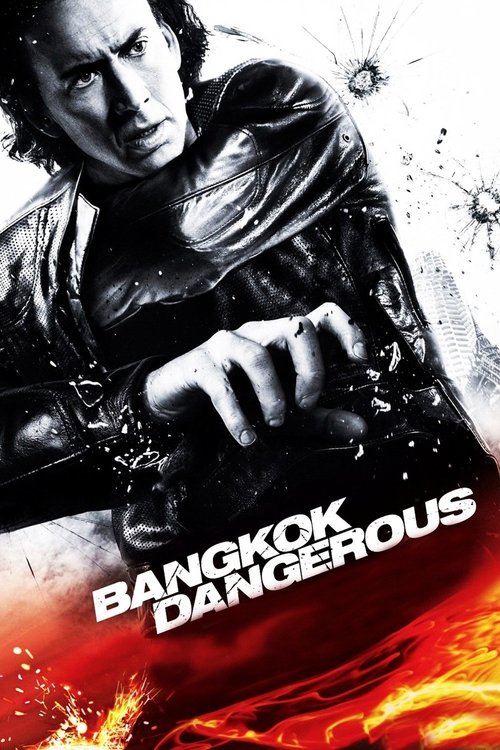
Bangkok Dangerous
When carrying out a hit, assassin Joe always makes use of the knowledge of the local population. On arriving in Bangkok, Joe meets street kid Kong and he becomes his primary aide. But when Kong is nearly killed, he asks Joe to train him up in the deadly arts and unwittingly becomes a target of a band of killers.
The film underperformed commercially against its mid-range budget of $45.0M, earning $42.5M globally (-6% loss).


Plot Structure
Story beats plotted across runtime


Narrative Arc
Emotional journey through the story's key moments
Story Circle
Blueprint 15-beat structure
Arcplot Score Breakdown
Weighted: Precision (70%) + Arc (15%) + Theme (15%)
Bangkok Dangerous (2008) reveals strategically placed story structure, characteristic of Oxide Pang Chun's storytelling approach. This structural analysis examines how the film's 15-point plot structure maps to proven narrative frameworks across 1 hour and 39 minutes. With an Arcplot score of 7.4, the film balances conventional beats with creative variation.
Characters
Cast & narrative archetypes

Joe
Kong
Fon
Aom
Surat
Main Cast & Characters
Joe
Played by Nicolas Cage
A deaf-mute hitman who lives by strict rules of isolation, hired for four assassinations in Bangkok.
Kong
Played by Shahkrit Yamnarm
A young Thai street hustler who becomes Joe's apprentice and local handler.
Fon
Played by Charlie Yeung
A deaf pharmacy worker who develops a romantic connection with Joe.
Aom
Played by Panward Hemmanee
Kong's girlfriend, a dancer who represents his dream of a better life.
Surat
Played by Nirattisai Kaljaruek
The crime boss who hired Joe and serves as the primary antagonist.
Structural Analysis
The Status Quo at 1 minutes (1% through the runtime) establishes Joe arrives in Bangkok airport, voiceover establishes his four rules for being a successful hitman: (1) Don't ask questions, (2) No friends, (3) No relationships, (4) Make it quick and disappear. He is a ghost, alone by design.. Structural examination shows that this early placement immediately immerses viewers in the story world.
The inciting incident occurs at 11 minutes when Joe accepts a four-job contract from local crime boss Surat. The stakes are higher, the targets more dangerous. This isn't a single job - it's a commitment that will keep him in Bangkok longer than usual, increasing his exposure and risk.. At 12% through the film, this Disruption aligns precisely with traditional story structure. This beat shifts the emotional landscape, launching the protagonist into the central conflict.
The First Threshold at 24 minutes marks the transition into Act II, occurring at 24% of the runtime. This reveals the protagonist's commitment to Joe breaks his second rule: he starts becoming friends with Kong, teaching him more than necessary. More significantly, he notices Fon, a deaf-mute pharmacist. He makes the active choice to enter her shop, initiating contact. He crosses the threshold from isolation into relationship., moving from reaction to action.
At 49 minutes, the Midpoint arrives at 49% of the runtime—precisely centered, creating perfect narrative symmetry. The analysis reveals that this crucial beat False defeat: Joe completes the third hit but realizes he's being set up. Surat's men are watching him. Simultaneously, he discovers that his growing attachment to Fon and Kong has made him vulnerable - he's compromised his own rules. The stakes raise dramatically; his feelings now endanger everyone., fundamentally raising what's at risk. The emotional intensity shifts, dividing the narrative into clear before-and-after phases.
The Collapse moment at 73 minutes (74% through) represents the emotional nadir. Here, Kong is killed by Surat's men - a direct consequence of Joe involving him. The whiff of death: Kong, the friend Joe should never have made, dies because Joe broke his rules. Joe's worst fear realized - connection leads to death. His fault., demonstrates the protagonist at their lowest point. This beat's placement in the final quarter sets up the climactic reversal.
The Second Threshold at 79 minutes initiates the final act resolution at 79% of the runtime. Synthesis: Joe realizes that his rules kept him alive but not human. Kong's death wasn't the failure of connection - it was the consequence of living in violence. He chooses to break all his rules to save Fon and take down Surat. He accepts he may die, but he'll die human, not a ghost., demonstrating the transformation achieved throughout the journey.
Emotional Journey
Bangkok Dangerous's emotional architecture traces a deliberate progression across 15 carefully calibrated beats.
Narrative Framework
This structural analysis employs a 15-point narrative structure framework that maps key story moments. By mapping Bangkok Dangerous against these established plot points, we can identify how Oxide Pang Chun utilizes or subverts traditional narrative conventions. The plot point approach reveals not only adherence to structural principles but also creative choices that distinguish Bangkok Dangerous within the action genre.
Oxide Pang Chun's Structural Approach
Among the 2 Oxide Pang Chun films analyzed on Arcplot, the average structural score is 7.3, reflecting strong command of classical structure. Bangkok Dangerous represents one of the director's most structurally precise works. For comparative analysis, explore the complete Oxide Pang Chun filmography.
Comparative Analysis
Additional action films include The Bad Guys, Puss in Boots and Venom: The Last Dance. For more Oxide Pang Chun analyses, see The Messengers.
Plot Points by Act
Act I
SetupStatus Quo
Joe arrives in Bangkok airport, voiceover establishes his four rules for being a successful hitman: (1) Don't ask questions, (2) No friends, (3) No relationships, (4) Make it quick and disappear. He is a ghost, alone by design.
Theme
Kong, the local street hustler Joe hires, says something about connections being important in Bangkok. The theme of isolation versus human connection is introduced - will Joe's rules protect him or destroy him?
Worldbuilding
Joe sets up his operation in Bangkok. He hires Kong as his local errand runner. Joe executes his first hit efficiently - a politician in a club. He maintains strict professional distance, follows his rules rigidly. We see his methodical, isolated existence.
Disruption
Joe accepts a four-job contract from local crime boss Surat. The stakes are higher, the targets more dangerous. This isn't a single job - it's a commitment that will keep him in Bangkok longer than usual, increasing his exposure and risk.
Resistance
Joe debates internally about staying longer in Bangkok. He begins training Kong in surveillance and tradecraft. Joe completes the second hit. Despite his reservations, he's committed now. The city begins to affect him in unexpected ways.
Act II
ConfrontationFirst Threshold
Joe breaks his second rule: he starts becoming friends with Kong, teaching him more than necessary. More significantly, he notices Fon, a deaf-mute pharmacist. He makes the active choice to enter her shop, initiating contact. He crosses the threshold from isolation into relationship.
Mirror World
Joe begins a tentative relationship with Fon. She represents everything opposite to his world - innocence, silence (ironic counterpoint to his deadly profession), connection, permanence. She is the thematic mirror showing what life could be if he broke his rules.
Premise
The promise of the premise: a hitman trying to balance his deadly profession with a growing romantic relationship. Joe continues his jobs while falling for Fon. He teaches Kong. He's living double lives - the ghost killer and the man who might have a future. The fun and games of this impossible juggling act.
Midpoint
False defeat: Joe completes the third hit but realizes he's being set up. Surat's men are watching him. Simultaneously, he discovers that his growing attachment to Fon and Kong has made him vulnerable - he's compromised his own rules. The stakes raise dramatically; his feelings now endanger everyone.
Opposition
Surat's organization closes in. Joe realizes the fourth job is a trap - they plan to eliminate him after. Kong gets deeper into danger. Joe tries to protect Fon while completing his contract. His two worlds collide catastrophically. Every connection he made becomes a liability.
Collapse
Kong is killed by Surat's men - a direct consequence of Joe involving him. The whiff of death: Kong, the friend Joe should never have made, dies because Joe broke his rules. Joe's worst fear realized - connection leads to death. His fault.
Crisis
Joe mourns Kong, questions everything. Should he run? His rules were right all along - connection kills. But now he also can't abandon Fon to Surat's retaliation. He's paralyzed between his old life (isolation/survival) and his new self (connection/sacrifice). Dark night of processing.
Act III
ResolutionSecond Threshold
Synthesis: Joe realizes that his rules kept him alive but not human. Kong's death wasn't the failure of connection - it was the consequence of living in violence. He chooses to break all his rules to save Fon and take down Surat. He accepts he may die, but he'll die human, not a ghost.
Synthesis
Joe executes his final plan: he infiltrates Surat's compound. Massive shootout. He systematically eliminates Surat's organization, saves Fon from being killed. He confronts Surat personally. The finale synthesizes his professional skills with his newfound emotional purpose - he's no longer a ghost, he's a man fighting for someone.
Transformation
Joe is mortally wounded in the final confrontation. He dies on the pier where he used to meet Fon, looking at the Bangkok skyline. Transformation complete but tragic: he broke all his rules, became human, loved and was loved - but his violent life demanded payment. He dies connected, not alone. Fon grieves. The ghost became real.