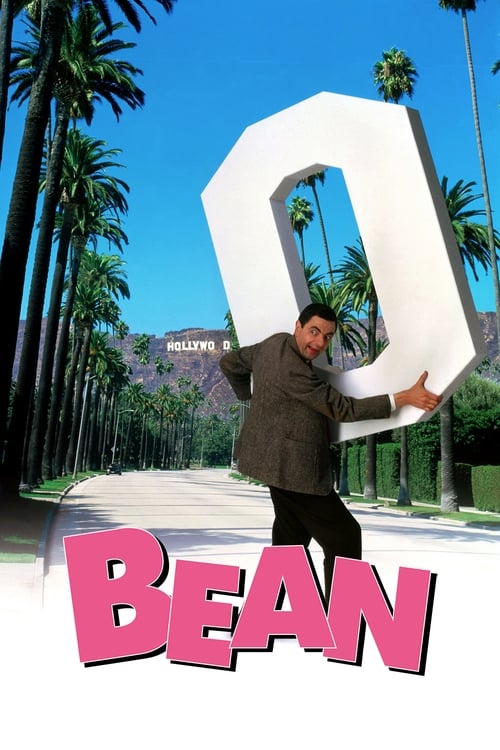
Bean
Childlike Englishman, Mr. Bean, is an incompetent watchman at the Royal National Gallery. After the museum's board of directors' attempt to have him fired is blocked by the chairman, who has taken a liking to Bean, they send him to Los Angeles to act as their ambassador for the unveiling of a historic painting to humiliate him. Fooled, Mr. Bean must now successfully unveil the painting or risk his and a hapless Los Angeles curator's termination.
Despite a mid-range budget of $18.0M, Bean became a runaway success, earning $251.2M worldwide—a remarkable 1296% return.
2 wins & 1 nomination


Plot Structure
Story beats plotted across runtime


Narrative Arc
Emotional journey through the story's key moments
Story Circle
Blueprint 15-beat structure
Arcplot Score Breakdown
Weighted: Precision (70%) + Arc (15%) + Theme (15%)
Bean (1997) exemplifies meticulously timed narrative architecture, characteristic of Mel Smith's storytelling approach. This structural analysis examines how the film's 15-point plot structure maps to proven narrative frameworks across 1 hour and 29 minutes. With an Arcplot score of 6.8, the film balances conventional beats with creative variation.
Characters
Cast & narrative archetypes

Mr. Bean
David Langley
Alison Langley
Jennifer Langley
Kevin Langley
George Grierson
Lieutenant Brutus
Main Cast & Characters
Mr. Bean
Played by Rowan Atkinson
A bumbling, childlike British museum guard sent to Los Angeles to escort a priceless painting, causing chaos wherever he goes.
David Langley
Played by Peter MacNicol
An earnest art curator who reluctantly hosts Bean and must deal with the mounting disasters that follow.
Alison Langley
Played by Pamela Reed
David's increasingly frustrated wife who watches her family life unravel thanks to Bean's presence.
Jennifer Langley
Played by Tricia Vessey
The Langleys' teenage daughter who initially finds Bean embarrassing but eventually warms to him.
Kevin Langley
Played by Andrew Lawrence
The Langleys' young son who immediately takes to Bean and enjoys his childlike antics.
George Grierson
Played by Harris Yulin
The pompous chairman of the Grierson Art Gallery who expects a distinguished scholar, not Bean.
Lieutenant Brutus
Played by Burt Reynolds
A no-nonsense LAPD detective who investigates the damaged painting incident.
Structural Analysis
The Status Quo at 1 minutes (1% through the runtime) establishes Mr. Bean works as a clueless security guard at the Royal National Gallery in London, barely competent but protected by the chairman who finds him amusing. His colleagues desperately want him gone.. Notably, this early placement immediately immerses viewers in the story world.
The inciting incident occurs at 10 minutes when Bean is told he's being sent to Los Angeles as a gallery representative, a promotion he doesn't deserve. This external event forces him out of his comfortable, albeit chaotic, routine in London.. At 11% through the film, this Disruption aligns precisely with traditional story structure. This beat shifts the emotional landscape, launching the protagonist into the central conflict.
The First Threshold at 22 minutes marks the transition into Act II, occurring at 25% of the runtime. This shows the protagonist's commitment to Bean fully moves into the Langley home and the reality of the situation sets in for both parties. Bean makes the active choice to embrace his role despite being completely unqualified, committing to the charade., moving from reaction to action.
At 44 minutes, the Midpoint arrives at 49% of the runtime—precisely centered, creating perfect narrative symmetry. The analysis reveals that this crucial beat Bean accidentally ruins Whistler's Mother with paint thinner while attempting to clean a sneeze off the priceless painting. What seemed like harmless incompetence becomes a catastrophic disaster with real consequences., fundamentally raising what's at risk. The emotional intensity shifts, dividing the narrative into clear before-and-after phases.
The Collapse moment at 65 minutes (73% through) represents the emotional nadir. Here, David's wife leaves him and takes the children. David has lost everything—his family, his career credibility, and his dignity—all because he trusted Bean. The consequences of the charade reach their lowest point., shows the protagonist at their lowest point. This beat's placement in the final quarter sets up the climactic reversal.
The Second Threshold at 71 minutes initiates the final act resolution at 80% of the runtime. Bean realizes he must take responsibility and decides to give a sincere, heartfelt speech at the unveiling rather than continue the deception. He synthesizes his genuine humanity with the situation, choosing honesty over continued fraud., demonstrating the transformation achieved throughout the journey.
Emotional Journey
Bean's emotional architecture traces a deliberate progression across 15 carefully calibrated beats.
Narrative Framework
This structural analysis employs proven narrative structure principles that track dramatic progression. By mapping Bean against these established plot points, we can identify how Mel Smith utilizes or subverts traditional narrative conventions. The plot point approach reveals not only adherence to structural principles but also creative choices that distinguish Bean within the family genre.
Comparative Analysis
Additional family films include The Black Stallion, The Bad Guys and Ella Enchanted.
Plot Points by Act
Act I
SetupStatus Quo
Mr. Bean works as a clueless security guard at the Royal National Gallery in London, barely competent but protected by the chairman who finds him amusing. His colleagues desperately want him gone.
Theme
The gallery director states "Sometimes the most unlikely people can surprise us" during the board meeting, establishing the theme that appearances can be deceiving and that incompetence can mask unexpected value.
Worldbuilding
Establishment of Bean's chaotic world at the National Gallery, his disruptive behavior, and the board's scheme to get rid of him by sending him to America as a supposed art expert to unveil Whistler's Mother.
Disruption
Bean is told he's being sent to Los Angeles as a gallery representative, a promotion he doesn't deserve. This external event forces him out of his comfortable, albeit chaotic, routine in London.
Resistance
Bean prepares for and travels to America, meets David Langley who will host him, and begins to adjust to the new environment while David and his family learn what they've gotten themselves into.
Act II
ConfrontationFirst Threshold
Bean fully moves into the Langley home and the reality of the situation sets in for both parties. Bean makes the active choice to embrace his role despite being completely unqualified, committing to the charade.
Mirror World
Bean bonds with David's family, particularly David himself and the children. David represents sincerity and genuine expertise, contrasting with Bean's fraudulent credentials but revealing Bean's capacity for human connection.
Premise
The comedic exploration of Bean wreaking havoc in American suburbia and the art museum, fish-out-of-water scenarios, cultural clashes, and escalating disasters culminating in the painting viewing preparation.
Midpoint
Bean accidentally ruins Whistler's Mother with paint thinner while attempting to clean a sneeze off the priceless painting. What seemed like harmless incompetence becomes a catastrophic disaster with real consequences.
Opposition
Bean and David desperately try to cover up the destroyed painting, creating a forgery. Meanwhile, David's marriage crumbles, the museum unveiling approaches, and the pressure intensifies from all sides.
Collapse
David's wife leaves him and takes the children. David has lost everything—his family, his career credibility, and his dignity—all because he trusted Bean. The consequences of the charade reach their lowest point.
Crisis
Bean witnesses the devastation he's caused to David's life. Both men face the emotional darkness of their situation as the unveiling ceremony looms, forcing Bean to confront his impact on others.
Act III
ResolutionSecond Threshold
Bean realizes he must take responsibility and decides to give a sincere, heartfelt speech at the unveiling rather than continue the deception. He synthesizes his genuine humanity with the situation, choosing honesty over continued fraud.
Synthesis
Bean gives an unexpectedly moving speech about art and mothers at the unveiling ceremony, the real painting is revealed (having been switched back), David is vindicated, his family returns, and Bean returns to London having grown.
Transformation
Bean returns to his guard post at the National Gallery, but he's changed—he shows a moment of genuine competence and connection with others, suggesting the journey transformed him from merely incompetent to endearingly human.