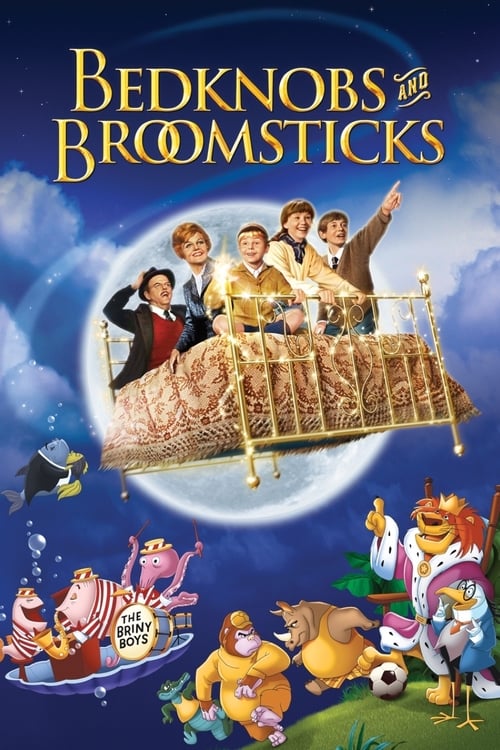
Bedknobs and Broomsticks
Three children evacuated from London during World War II are forced to stay with an eccentric spinster. The children's initial fears disappear when they find out she is in fact a trainee witch.
The film disappointed at the box office against its mid-range budget of $20.0M, earning $17.9M globally (-10% loss).
1 Oscar. 2 wins & 5 nominations


Plot Structure
Story beats plotted across runtime


Narrative Arc
Emotional journey through the story's key moments
Story Circle
Blueprint 15-beat structure
Arcplot Score Breakdown
Weighted: Precision (70%) + Arc (15%) + Theme (15%)
Bedknobs and Broomsticks (1971) reveals carefully calibrated narrative design, characteristic of Robert Stevenson's storytelling approach. This structural analysis examines how the film's 15-point plot structure maps to proven narrative frameworks across 1 hour and 57 minutes. With an Arcplot score of 6.7, the film balances conventional beats with creative variation.
Characters
Cast & narrative archetypes

Eglantine Price
Emelius Browne
Charlie Rawlins
Carrie Rawlins
Paul Rawlins
Colonel Heller
Main Cast & Characters
Eglantine Price
Played by Angela Lansbury
A spinster apprentice witch who reluctantly takes in evacuee children during WWII while pursuing her magical studies.
Emelius Browne
Played by David Tomlinson
A charming con-man and street magician who becomes involved in Eglantine's magical quest and gradually transforms into a genuine helper.
Charlie Rawlins
Played by Ian Weighill
The eldest and most cynical of the evacuee children, a street-smart Cockney boy who initially exploits Eglantine's secret but grows to help her cause.
Carrie Rawlins
Played by Cindy O'Callaghan
The practical middle child who serves as voice of reason among the siblings and helps mediate between Charlie and the adults.
Paul Rawlins
Played by Roy Snart
The youngest Rawlins child, an imaginative and trusting boy who embraces the magical adventures wholeheartedly.
Colonel Heller
Played by John Ericson
The German Nazi commander who leads the invasion force that lands on the English coast, serving as the primary antagonist.
Structural Analysis
The Status Quo at 1 minutes (1% through the runtime) establishes Miss Eglantine Price lives alone in rural England during WWII, secretly studying witchcraft by correspondence course. She is independent, solitary, and dedicated to mastering magic to help the war effort.. The analysis reveals that this early placement immediately immerses viewers in the story world.
The inciting incident occurs at 15 minutes when Eglantine receives a letter informing her that the Emelius Browne Correspondence College of Witchcraft has closed permanently. She won't receive the final spell - Substitutiary Locomotion - needed to animate objects for the war effort.. At 13% through the film, this Disruption is delayed, allowing extended setup of the story world. This beat shifts the emotional landscape, launching the protagonist into the central conflict.
The First Threshold at 29 minutes marks the transition into Act II, occurring at 25% of the runtime. This illustrates the protagonist's commitment to Eglantine and the children take flight on the enchanted bed, actively choosing to travel to London to find Professor Browne. This magical journey marks their commitment to the adventure and to working together., moving from reaction to action.
At 59 minutes, the Midpoint arrives at 50% of the runtime—precisely centered, creating perfect narrative symmetry. Of particular interest, this crucial beat They obtain the Substitutiary Locomotion spell from the King of Naboombu - a false victory. They have what they came for, but Emelius still doesn't truly believe in magic or in their mission. The stakes shift from finding the spell to making it matter., fundamentally raising what's at risk. The emotional intensity shifts, dividing the narrative into clear before-and-after phases.
The Collapse moment at 88 minutes (75% through) represents the emotional nadir. Here, Emelius leaves, giving up on magic and on their relationship. The spell book is destroyed. Eglantine believes all is lost - she cannot defend England, and the family unit falls apart. Hope for both magic and connection dies., shows the protagonist at their lowest point. This beat's placement in the final quarter sets up the climactic reversal.
The Second Threshold at 94 minutes initiates the final act resolution at 80% of the runtime. Paul reveals he memorized the Substitutiary Locomotion spell. This new information, combined with Eglantine's magical skills and the belief the children have in her, gives them a path forward. She realizes she doesn't need the book - she needs to believe in herself., demonstrating the transformation achieved throughout the journey.
Emotional Journey
Bedknobs and Broomsticks's emotional architecture traces a deliberate progression across 15 carefully calibrated beats.
Narrative Framework
This structural analysis employs a 15-point narrative structure framework that maps key story moments. By mapping Bedknobs and Broomsticks against these established plot points, we can identify how Robert Stevenson utilizes or subverts traditional narrative conventions. The plot point approach reveals not only adherence to structural principles but also creative choices that distinguish Bedknobs and Broomsticks within the adventure genre.
Robert Stevenson's Structural Approach
Among the 5 Robert Stevenson films analyzed on Arcplot, the average structural score is 7.1, reflecting strong command of classical structure. Bedknobs and Broomsticks takes a more unconventional approach compared to the director's typical style. For comparative analysis, explore the complete Robert Stevenson filmography.
Comparative Analysis
Additional adventure films include The Black Stallion, The Bad Guys and Puss in Boots. For more Robert Stevenson analyses, see That Darn Cat!, Herbie Rides Again and Mary Poppins.
Plot Points by Act
Act I
SetupStatus Quo
Miss Eglantine Price lives alone in rural England during WWII, secretly studying witchcraft by correspondence course. She is independent, solitary, and dedicated to mastering magic to help the war effort.
Theme
Charlie tells Eglantine, "We don't need nobody and nobody needs us" - establishing the film's theme about the importance of connection, community, and believing in others despite personal independence.
Worldbuilding
Three London evacuee children - Charlie, Carrie, and Paul - are billeted with Eglantine. She reluctantly takes them in. The children discover her broomstick flight and her secret witchcraft studies, establishing the magical rules and WWII context.
Disruption
Eglantine receives a letter informing her that the Emelius Browne Correspondence College of Witchcraft has closed permanently. She won't receive the final spell - Substitutiary Locomotion - needed to animate objects for the war effort.
Resistance
Eglantine debates what to do. The children blackmail her to keep her secret, then agree to help find Professor Browne. She enchants the bed to fly, and they debate whether to track him down in London.
Act II
ConfrontationFirst Threshold
Eglantine and the children take flight on the enchanted bed, actively choosing to travel to London to find Professor Browne. This magical journey marks their commitment to the adventure and to working together.
Mirror World
They find Emelius Browne, a charming con-man and stage magician. He represents the opposite of Eglantine - a faker who doesn't believe in real magic. Their relationship begins, carrying the thematic question of belief versus cynicism.
Premise
The promise of the premise: a magical adventure. Emelius joins the quest for the missing spell. They travel via enchanted bed to the Isle of Naboombu, exploring the animated animal kingdom, participating in the soccer match, and experiencing the full wonder of magic.
Midpoint
They obtain the Substitutiary Locomotion spell from the King of Naboombu - a false victory. They have what they came for, but Emelius still doesn't truly believe in magic or in their mission. The stakes shift from finding the spell to making it matter.
Opposition
Back home, Eglantine struggles to make the spell work. Emelius considers leaving. The children try to hold the makeshift family together. Romantic tension grows but Emelius's lack of belief becomes an obstacle. Nazi invasion looms closer.
Collapse
Emelius leaves, giving up on magic and on their relationship. The spell book is destroyed. Eglantine believes all is lost - she cannot defend England, and the family unit falls apart. Hope for both magic and connection dies.
Crisis
German soldiers invade the village and capture Eglantine and the children. In this dark moment, they are imprisoned and powerless. Eglantine faces her failure - without the spell or Emelius, she cannot protect those she's come to love.
Act III
ResolutionSecond Threshold
Paul reveals he memorized the Substitutiary Locomotion spell. This new information, combined with Eglantine's magical skills and the belief the children have in her, gives them a path forward. She realizes she doesn't need the book - she needs to believe in herself.
Synthesis
Eglantine casts Substitutiary Locomotion, animating the museum of armor and medieval artifacts. The enchanted army defeats the Nazi invaders in a spectacular battle. She combines her magical skill with the children's belief and Emelius's eventual return to save the village.
Transformation
Eglantine, once solitary and self-reliant, stands with the children and Emelius as a family. She has learned that magic - and life - work best when shared with others who believe. The loner witch has become part of a community.