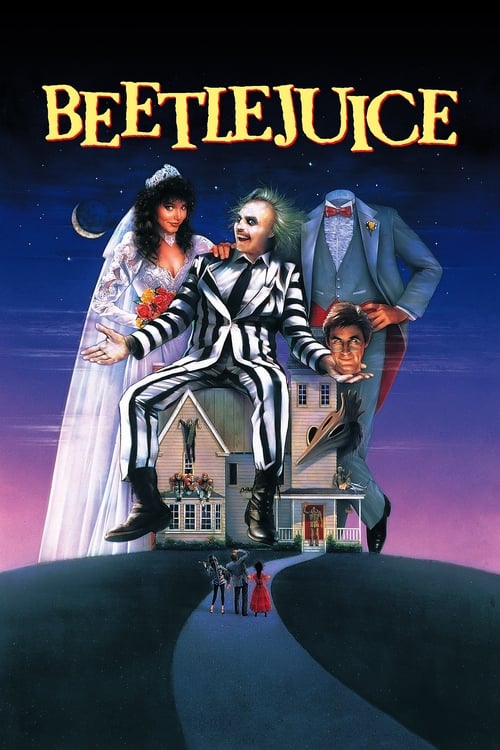
Beetlejuice
A newly dead New England couple seeks help from a deranged demon exorcist to scare an affluent New York family out of their home.
Despite a respectable budget of $15.0M, Beetlejuice became a box office success, earning $84.6M worldwide—a 464% return.
1 Oscar. 7 wins & 11 nominations


Plot Structure
Story beats plotted across runtime


Narrative Arc
Emotional journey through the story's key moments
Story Circle
Blueprint 15-beat structure
Arcplot Score Breakdown
Weighted: Precision (70%) + Arc (15%) + Theme (15%)
Beetlejuice (1988) reveals meticulously timed narrative architecture, characteristic of Tim Burton's storytelling approach. This structural analysis examines how the film's 15-point plot structure maps to proven narrative frameworks across 1 hour and 32 minutes. With an Arcplot score of 7.3, the film balances conventional beats with creative variation.
Characters
Cast & narrative archetypes

Betelgeuse
Lydia Deetz
Barbara Maitland
Adam Maitland
Delia Deetz
Charles Deetz
Otho
Main Cast & Characters
Betelgeuse
Played by Michael Keaton
A chaotic, crude "bio-exorcist" ghost who offers to help the Maitlands scare away the living but has his own agenda.
Lydia Deetz
Played by Winona Ryder
A morbid, death-obsessed teenage girl who can see ghosts and befriends the Maitlands.
Barbara Maitland
Played by Geena Davis
A kind-hearted, recently deceased ghost trying to adapt to the afterlife and protect her home.
Adam Maitland
Played by Alec Baldwin
Barbara's devoted husband, an amateur model-builder who died alongside his wife and shares her gentle nature.
Delia Deetz
Played by Catherine O'Hara
Lydia's eccentric stepmother, a pretentious New York artist obsessed with bizarre modern art and renovation.
Charles Deetz
Played by Jeffrey Jones
Lydia's father and Delia's husband, a real estate developer who moves his family to the Maitlands' former home.
Otho
Played by Glenn Shadix
Delia's flamboyant interior designer and occult dabbler who attempts a séance with dangerous consequences.
Structural Analysis
The Status Quo at 1 minutes (1% through the runtime) establishes Adam and Barbara Maitland enjoy their idyllic life in their Connecticut home, working on home improvement projects together in perfect domestic harmony.. The analysis reveals that this early placement immediately immerses viewers in the story world.
The inciting incident occurs at 10 minutes when Adam and Barbara swerve to avoid a dog on a bridge, crash through the railing, and plunge into the river below, dying instantly.. At 11% through the film, this Disruption aligns precisely with traditional story structure. This beat shifts the emotional landscape, launching the protagonist into the central conflict.
The First Threshold at 23 minutes marks the transition into Act II, occurring at 25% of the runtime. This reveals the protagonist's commitment to The Deetz family moves into the Maitlands' house. The ghosts must accept they cannot leave and must deal with these new living occupants invading their home., moving from reaction to action.
At 45 minutes, the Midpoint arrives at 49% of the runtime—precisely centered, creating perfect narrative symmetry. Structural examination shows that this crucial beat The Maitlands' dinner party possession scene backfires spectacularly—instead of scaring the Deetzes away, it makes Delia want to exploit the haunting for profit and fame, raising the stakes., fundamentally raising what's at risk. The emotional intensity shifts, dividing the narrative into clear before-and-after phases.
The Collapse moment at 67 minutes (73% through) represents the emotional nadir. Here, The exorcism ritual rapidly ages and deteriorates the Maitlands toward their second death. They are powerless, fading away, faced with permanent oblivion while Lydia watches in horror., shows the protagonist at their lowest point. This beat's placement in the final quarter sets up the climactic reversal.
The Second Threshold at 72 minutes initiates the final act resolution at 79% of the runtime. Lydia summons Betelgeuse by saying his name three times. He saves the Maitlands from the exorcism, giving them the power to fight back, but now the wedding must proceed., demonstrating the transformation achieved throughout the journey.
Emotional Journey
Beetlejuice's emotional architecture traces a deliberate progression across 15 carefully calibrated beats.
Narrative Framework
This structural analysis employs a 15-point narrative structure framework that maps key story moments. By mapping Beetlejuice against these established plot points, we can identify how Tim Burton utilizes or subverts traditional narrative conventions. The plot point approach reveals not only adherence to structural principles but also creative choices that distinguish Beetlejuice within the fantasy genre.
Tim Burton's Structural Approach
Among the 19 Tim Burton films analyzed on Arcplot, the average structural score is 6.9, demonstrating varied approaches to story architecture. Beetlejuice represents one of the director's most structurally precise works. For comparative analysis, explore the complete Tim Burton filmography.
Comparative Analysis
Additional fantasy films include Thinner, Ella Enchanted and Conan the Barbarian. For more Tim Burton analyses, see Dark Shadows, Pee-wee's Big Adventure and Big Fish.
Plot Points by Act
Act I
SetupStatus Quo
Adam and Barbara Maitland enjoy their idyllic life in their Connecticut home, working on home improvement projects together in perfect domestic harmony.
Theme
Barbara suggests they should start inviting people over more, hinting at the film's theme about connection, belonging, and what makes a house a home.
Worldbuilding
Introduction to the Maitlands' peaceful small-town life, their home, their relationship, and the community around them. Adam works on his model town while Barbara runs errands.
Disruption
Adam and Barbara swerve to avoid a dog on a bridge, crash through the railing, and plunge into the river below, dying instantly.
Resistance
The Maitlands return home confused, gradually discovering they're dead. They find the "Handbook for the Recently Deceased" and struggle to understand their new ghostly existence and limitations.
Act II
ConfrontationFirst Threshold
The Deetz family moves into the Maitlands' house. The ghosts must accept they cannot leave and must deal with these new living occupants invading their home.
Mirror World
Lydia Deetz, the morose teenage daughter, can see the Maitlands. She becomes the emotional connection that will teach them about truly living and finding purpose.
Premise
The Maitlands attempt various haunting tactics to scare away the Deetzes, failing comically. They navigate the bureaucratic afterlife, meet their caseworker Juno, and learn about Betelgeuse.
Midpoint
The Maitlands' dinner party possession scene backfires spectacularly—instead of scaring the Deetzes away, it makes Delia want to exploit the haunting for profit and fame, raising the stakes.
Opposition
Otho holds a séance to summon the Maitlands. Betelgeuse's chaos escalates. The Maitlands are being exorcised and are dying their "second death." Barbara and Adam lose control of the situation.
Collapse
The exorcism ritual rapidly ages and deteriorates the Maitlands toward their second death. They are powerless, fading away, faced with permanent oblivion while Lydia watches in horror.
Crisis
Lydia, desperate to save the Maitlands, agrees to marry Betelgeuse in exchange for his help. She faces the dark choice between losing her ghostly friends or binding herself to a demon.
Act III
ResolutionSecond Threshold
Lydia summons Betelgeuse by saying his name three times. He saves the Maitlands from the exorcism, giving them the power to fight back, but now the wedding must proceed.
Synthesis
The chaotic wedding ceremony begins. Barbara finds the Handbook solution and uses Betelgeuse's own tricks against him. The Maitlands and Deetzes work together to banish Betelgeuse to the afterlife waiting room.
Transformation
The Maitlands and Deetzes now live together in harmony in the house. Lydia dances in mid-air with the ghosts, transformed from death-obsessed loner to joyful teenager—the house is finally a home for everyone.