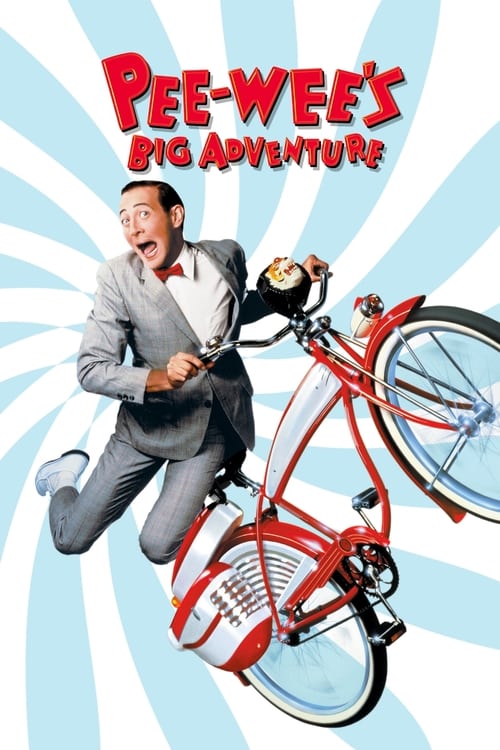
Pee-wee's Big Adventure
The eccentric and childish Pee-wee Herman embarks on a big adventure when his beloved bicycle is stolen. Armed with information from a fortune-teller and a relentless obsession with his prized possession, Pee-wee encounters a host of odd characters and bizarre situations as he treks across the country to recover his bike.
Despite its tight budget of $6.0M, Pee-wee's Big Adventure became a box office phenomenon, earning $40.9M worldwide—a remarkable 582% return. The film's fresh perspective engaged audiences, proving that strong storytelling can transcend budget limitations.


Plot Structure
Story beats plotted across runtime


Narrative Arc
Emotional journey through the story's key moments
Story Circle
Blueprint 15-beat structure
Arcplot Score Breakdown
Weighted: Precision (70%) + Arc (15%) + Theme (15%)
Pee-wee's Big Adventure (1985) exhibits deliberately positioned plot construction, characteristic of Tim Burton's storytelling approach. This structural analysis examines how the film's 15-point plot structure maps to proven narrative frameworks across 1 hour and 31 minutes. With an Arcplot score of 7.6, the film showcases strong structural fundamentals.
Characters
Cast & narrative archetypes

Pee-wee Herman
Francis Buxton
Dottie
Simone
Large Marge
Mickey
Main Cast & Characters
Pee-wee Herman
Played by Paul Reubens
An eccentric, childlike man whose beloved bicycle is stolen, sending him on a cross-country adventure to recover it.
Francis Buxton
Played by Mark Holton
Pee-wee's spoiled, wealthy neighbor and rival who covets his bicycle and orchestrates its theft.
Dottie
Played by Elizabeth Daily
A kind-hearted bicycle shop employee who has romantic feelings for Pee-wee, though he remains oblivious to her affections.
Simone
Played by Diane Salinger
A dreamy waitress at a roadside dinosaur attraction who longs to escape to Paris and pursue her dreams.
Large Marge
Played by Alice Nunn
A ghostly truck driver who gives Pee-wee a ride and recounts the tale of her own death in a terrifying accident.
Mickey
Played by Judd Omen
Simone's jealous and possessive boyfriend who works at the dinosaur attraction and threatens Pee-wee.
Structural Analysis
The Status Quo at 1 minutes (1% through the runtime) establishes Pee-wee wakes up in his whimsical house, excitedly prepares breakfast with Rube Goldberg contraptions, and rushes outside to his prized possession: his beloved red bicycle. This establishes his childlike, self-absorbed world where his bike is the center of his universe.. Significantly, this early placement immediately immerses viewers in the story world.
The inciting incident occurs at 10 minutes when Pee-wee emerges from the mall to discover his bike has been stolen from outside. He frantically searches, panics, and realizes his most precious possession is gone. His entire world collapses in this moment.. At 11% through the film, this Disruption aligns precisely with traditional story structure. This beat shifts the emotional landscape, launching the protagonist into the central conflict.
The First Threshold at 23 minutes marks the transition into Act II, occurring at 25% of the runtime. This demonstrates the protagonist's commitment to Pee-wee makes the active choice to leave his safe, controlled world and hitchhike to Texas. He packs a bag and hits the road, crossing into the unpredictable adventure of Act 2., moving from reaction to action.
At 46 minutes, the Midpoint arrives at 50% of the runtime—precisely centered, creating perfect narrative symmetry. Notably, this crucial beat Pee-wee arrives at the Alamo and learns there IS no basement at the Alamo. False defeat: his entire quest was based on a lie. The stakes raise as he realizes he has no leads and is stranded in San Antonio with no plan. The fun is over., fundamentally raising what's at risk. The emotional intensity shifts, dividing the narrative into clear before-and-after phases.
The Collapse moment at 68 minutes (75% through) represents the emotional nadir. Here, Pee-wee is cornered by studio security and police. He crashes through sets, causing massive destruction. In a moment of metaphorical death, he sacrifices his chance to escape with his bike to save pet shop animals from a burning building, letting go of his selfish obsession., demonstrates the protagonist at their lowest point. This beat's placement in the final quarter sets up the climactic reversal.
The Second Threshold at 72 minutes initiates the final act resolution at 80% of the runtime. A Warner Brothers executive visits Pee-wee in the hospital with unexpected news: they want to make a movie about his story. This revelation synthesizes everything—his adventure has value beyond just recovering his bike. He gains a new perspective., demonstrating the transformation achieved throughout the journey.
Emotional Journey
Pee-wee's Big Adventure's emotional architecture traces a deliberate progression across 15 carefully calibrated beats.
Narrative Framework
This structural analysis employs a 15-point narrative structure framework that maps key story moments. By mapping Pee-wee's Big Adventure against these established plot points, we can identify how Tim Burton utilizes or subverts traditional narrative conventions. The plot point approach reveals not only adherence to structural principles but also creative choices that distinguish Pee-wee's Big Adventure within the comedy genre.
Tim Burton's Structural Approach
Among the 19 Tim Burton films analyzed on Arcplot, the average structural score is 6.9, demonstrating varied approaches to story architecture. Pee-wee's Big Adventure represents one of the director's most structurally precise works. For comparative analysis, explore the complete Tim Burton filmography.
Comparative Analysis
Additional comedy films include The Bad Guys, Ella Enchanted and The Evening Star. For more Tim Burton analyses, see Beetlejuice, Dark Shadows and Big Fish.
Plot Points by Act
Act I
SetupStatus Quo
Pee-wee wakes up in his whimsical house, excitedly prepares breakfast with Rube Goldberg contraptions, and rushes outside to his prized possession: his beloved red bicycle. This establishes his childlike, self-absorbed world where his bike is the center of his universe.
Theme
At the bicycle shop, Chuck the mechanic tells Pee-wee, "You don't need a new horn, Pee-wee. Your bike is perfect just the way it is." This foreshadows the theme: Pee-wee must learn that what he has (relationships, experiences) is already valuable without obsessive control.
Worldbuilding
Pee-wee shows off his bike to neighborhood kids, outsmarts Francis (his spoiled rival), and demonstrates elaborate security measures to protect his bike. We see his mansion-like playhouse, his childish routines, and his obsessive attachment to material things.
Disruption
Pee-wee emerges from the mall to discover his bike has been stolen from outside. He frantically searches, panics, and realizes his most precious possession is gone. His entire world collapses in this moment.
Resistance
Pee-wee resists accepting the loss. He accuses Francis, calls the police (who don't help), offers a reward, and visits a fraudulent psychic, Madam Ruby, who tells him his bike is in the basement of the Alamo. He debates whether to undertake this crazy quest.
Act II
ConfrontationFirst Threshold
Pee-wee makes the active choice to leave his safe, controlled world and hitchhike to Texas. He packs a bag and hits the road, crossing into the unpredictable adventure of Act 2.
Mirror World
Pee-wee meets Simone, a waitress at a dinosaur-themed truck stop who dreams of going to Paris. She represents someone who wants more from life, mirroring Pee-wee's need to expand beyond his narrow obsessions. Their conversation about dreams plants the seed of his transformation.
Premise
The "fun and games" of Pee-wee's road trip: escaping Simone's boyfriend Mickey, getting picked up by an escaped convict, encountering Large Marge (the ghost trucker), riding with hobos, and experiencing the chaos of the open road. Pee-wee explores a world beyond his control.
Midpoint
Pee-wee arrives at the Alamo and learns there IS no basement at the Alamo. False defeat: his entire quest was based on a lie. The stakes raise as he realizes he has no leads and is stranded in San Antonio with no plan. The fun is over.
Opposition
Pressure intensifies: Pee-wee has a breakdown at the Alamo tour, wanders aimlessly, and accidentally causes chaos. He eventually spots his bike in a movie studio lot in Burbank and infiltrates Warner Brothers. As he tries to steal it back from the set, he triggers alarms and becomes a fugitive.
Collapse
Pee-wee is cornered by studio security and police. He crashes through sets, causing massive destruction. In a moment of metaphorical death, he sacrifices his chance to escape with his bike to save pet shop animals from a burning building, letting go of his selfish obsession.
Crisis
Pee-wee recovers in the hospital, expecting to be arrested. He's in his darkest emotional moment, having lost his bike again and facing consequences. But he's also transformed by his heroic act.
Act III
ResolutionSecond Threshold
A Warner Brothers executive visits Pee-wee in the hospital with unexpected news: they want to make a movie about his story. This revelation synthesizes everything—his adventure has value beyond just recovering his bike. He gains a new perspective.
Synthesis
The finale: Pee-wee consults on the Hollywood production of his adventure (hilariously distorted with James Brolin as "Pee-wee"). He attends the premiere, reunites with all the friends he made on his journey (Simone, Mickey, hobos, etc.), and celebrates. His bike becomes a studio prop, no longer his sole focus.
Transformation
At the drive-in movie premiere, Pee-wee sits surrounded by friends, watching the movie of his adventure. He's moved from isolated bike-obsession to community connection. Final shot shows him riding away on his bike with Dottie, now sharing his prized possession—the opposite of his opening isolation.