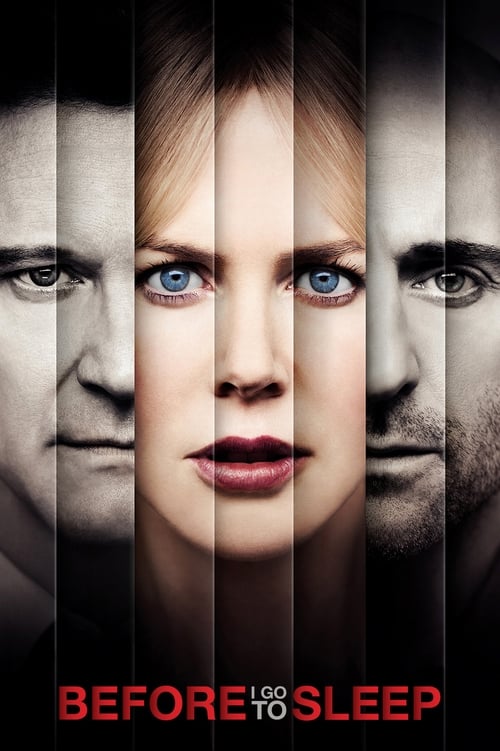
Before I Go to Sleep
A woman wakes up every day, remembering nothing as a result of a traumatic accident in her past. One day, new terrifying truths emerge that force her to question everyone around her.
The film disappointed at the box office against its respectable budget of $22.0M, earning $17.7M globally (-20% loss).


Plot Structure
Story beats plotted across runtime


Narrative Arc
Emotional journey through the story's key moments
Story Circle
Blueprint 15-beat structure
Arcplot Score Breakdown
Weighted: Precision (70%) + Arc (15%) + Theme (15%)
Before I Go to Sleep (2014) reveals meticulously timed narrative design, characteristic of Rowan Joffé's storytelling approach. This structural analysis examines how the film's 15-point plot structure maps to proven narrative frameworks across 1 hour and 32 minutes. With an Arcplot score of 7.1, the film balances conventional beats with creative variation.
Characters
Cast & narrative archetypes

Christine Lucas
Ben Lucas
Dr. Nash
Claire
Main Cast & Characters
Christine Lucas
Played by Nicole Kidman
A woman suffering from anterograde amnesia who wakes each day with no memory, trying to piece together her identity and uncover the truth about her past.
Ben Lucas
Played by Colin Firth
Christine's husband who appears devoted to caring for her daily, reminding her of their life together each morning.
Dr. Nash
Played by Mark Strong
A neuropsychologist treating Christine in secret, encouraging her to keep a video diary to track her memories and progress.
Claire
Played by Anne-Marie Duff
Christine's best friend who provides crucial information about her past that contradicts what Ben has told her.
Structural Analysis
The Status Quo at 1 minutes (1% through the runtime) establishes Christine wakes in bed next to a stranger, terrified and disoriented. She doesn't recognize herself in the mirror, revealing her profound memory loss and vulnerable existence trapped in confusion each morning.. The analysis reveals that this early placement immediately immerses viewers in the story world.
The inciting incident occurs at 11 minutes when Dr. Nash calls Christine and reveals he has been secretly treating her—and that she has been recording video diaries on a hidden camera. This shatters her fragile trust in Ben's curated reality.. At 11% through the film, this Disruption aligns precisely with traditional story structure. This beat shifts the emotional landscape, launching the protagonist into the central conflict.
The First Threshold at 22 minutes marks the transition into Act II, occurring at 24% of the runtime. This shows the protagonist's commitment to Christine actively chooses to continue recording her video diary and investigating her past despite Ben's warnings to avoid stress. She commits to uncovering the truth herself rather than accepting the life presented to her., moving from reaction to action.
At 45 minutes, the Midpoint arrives at 49% of the runtime—precisely centered, creating perfect narrative symmetry. Notably, this crucial beat Christine discovers through her recordings that Ben has lied about key details—she was not in a car accident but was brutally attacked. The false narrative she's been living begins to crumble, transforming her investigation from curiosity to survival., fundamentally raising what's at risk. The emotional intensity shifts, dividing the narrative into clear before-and-after phases.
The Collapse moment at 69 minutes (75% through) represents the emotional nadir. Here, Christine discovers the devastating truth: the man posing as Ben is actually Mike, her former lover who attacked her and caused her amnesia. She realizes she has been living with her would-be murderer, completely helpless and alone., reveals the protagonist at their lowest point. This beat's placement in the final quarter sets up the climactic reversal.
The Second Threshold at 74 minutes initiates the final act resolution at 80% of the runtime. Christine finds the camera hidden in her bag and watches her own warning message. Despite Mike's discovery of her investigation, she chooses to fight back rather than submit, trusting the evidence she gathered about her own identity., demonstrating the transformation achieved throughout the journey.
Emotional Journey
Before I Go to Sleep's emotional architecture traces a deliberate progression across 15 carefully calibrated beats.
Narrative Framework
This structural analysis employs proven narrative structure principles that track dramatic progression. By mapping Before I Go to Sleep against these established plot points, we can identify how Rowan Joffé utilizes or subverts traditional narrative conventions. The plot point approach reveals not only adherence to structural principles but also creative choices that distinguish Before I Go to Sleep within the thriller genre.
Comparative Analysis
Additional thriller films include The Warriors, Thunderball and Rustom.
Plot Points by Act
Act I
SetupStatus Quo
Christine wakes in bed next to a stranger, terrified and disoriented. She doesn't recognize herself in the mirror, revealing her profound memory loss and vulnerable existence trapped in confusion each morning.
Theme
Dr. Nash tells Christine on their first secret phone call that her memories are like pieces of a puzzle she must assemble herself—suggesting that reclaiming her identity requires trusting her own investigation despite what others tell her.
Worldbuilding
Christine's disorienting daily reality is established: waking with no memory, being reintroduced to her life by Ben, seeing photos and explanations, and the claustrophobic domestic world that defines her amnesia-bound existence.
Disruption
Dr. Nash calls Christine and reveals he has been secretly treating her—and that she has been recording video diaries on a hidden camera. This shatters her fragile trust in Ben's curated reality.
Resistance
Christine begins secretly meeting with Dr. Nash and recording daily video messages to herself. She debates whether to trust this stranger over her husband, while learning the basics of her condition and past through fragmented revelations.
Act II
ConfrontationFirst Threshold
Christine actively chooses to continue recording her video diary and investigating her past despite Ben's warnings to avoid stress. She commits to uncovering the truth herself rather than accepting the life presented to her.
Mirror World
Dr. Nash becomes Christine's trusted ally and guide, representing the external support she needs to piece together her identity. Their relationship embodies the theme of trust—he asks nothing of her but to remember herself.
Premise
Christine investigates her past through video diaries, triggering memories and discovering disturbing inconsistencies in Ben's stories. She learns she was attacked, had an affair, and that details about her son Adam don't add up.
Midpoint
Christine discovers through her recordings that Ben has lied about key details—she was not in a car accident but was brutally attacked. The false narrative she's been living begins to crumble, transforming her investigation from curiosity to survival.
Opposition
Christine's investigation intensifies as she uncovers more lies. She learns her son Adam is alive, visits her friend Claire who reveals Ben looks different, and realizes the man she lives with may not be her husband at all.
Collapse
Christine discovers the devastating truth: the man posing as Ben is actually Mike, her former lover who attacked her and caused her amnesia. She realizes she has been living with her would-be murderer, completely helpless and alone.
Crisis
Christine must process the horrifying reality that she's been a prisoner to her attacker. She desperately tries to reach Dr. Nash but cannot, and must decide whether to confront Mike or flee while knowing she'll forget everything by morning.
Act III
ResolutionSecond Threshold
Christine finds the camera hidden in her bag and watches her own warning message. Despite Mike's discovery of her investigation, she chooses to fight back rather than submit, trusting the evidence she gathered about her own identity.
Synthesis
Mike confronts Christine at the hotel where he originally attacked her, forcing her to relive the trauma. She fights back and survives his murder attempt. In the hospital, her memories begin returning, and she reunites with her real husband Ben and son Adam.
Transformation
Christine wakes in the hospital and remembers—truly remembers—her son Adam and her real husband Ben. The cycle of forgetting is broken. She has reclaimed her identity and her family, transformed from perpetual victim to survivor.