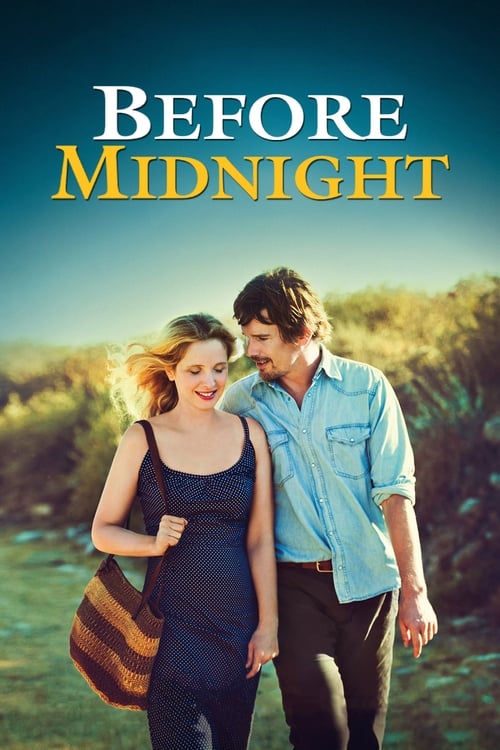
Before Midnight
It has been nine years since we last met Jesse and Celine, the French-American couple who once met on a train in Vienna. They now live in Paris with twin daughters but have spent a summer in Greece at the invitation of an author colleague of Jesse's. When the vacation is over and Jesse must send his teenage son off to the States, he begins to question his life decisions, and his relationship with Celine is at risk.
Despite its small-scale budget of $3.0M, Before Midnight became a commercial success, earning $11.2M worldwide—a 273% return. The film's unconventional structure attracted moviegoers, confirming that strong storytelling can transcend budget limitations.
Nominated for 1 Oscar. 20 wins & 64 nominations


Plot Structure
Story beats plotted across runtime


Narrative Arc
Emotional journey through the story's key moments
Story Circle
Blueprint 15-beat structure
Arcplot Score Breakdown
Weighted: Precision (70%) + Arc (15%) + Theme (15%)
Before Midnight (2013) demonstrates precise narrative architecture, characteristic of Richard Linklater's storytelling approach. This structural analysis examines how the film's 15-point plot structure maps to proven narrative frameworks across 1 hour and 49 minutes. With an Arcplot score of 6.9, the film balances conventional beats with creative variation.
Characters
Cast & narrative archetypes

Celine
Jesse
Main Cast & Characters
Celine
Played by Julie Delpy
A passionate, intellectually sharp French woman grappling with the realities of middle age, motherhood, and a long-term relationship with Jesse.
Jesse
Played by Ethan Hawke
An American writer and father navigating the complexities of his relationship with Celine while dealing with guilt over his distant son.
Structural Analysis
The Status Quo at 2 minutes (2% through the runtime) establishes Jesse says goodbye to his son Hank at the Greek airport. The opening establishes Jesse and Celine's life together nine years after "Before Sunset" - now parents, living in Paris, vacationing in Greece. Jesse's guilt about being an absent father to Hank is immediately visible.. Significantly, this early placement immediately immerses viewers in the story world.
The inciting incident occurs at 16 minutes when Jesse reveals he's been seriously considering moving back to Chicago to be near Hank. This disrupts the status quo of their European life and introduces the central conflict: Jesse's need to be present for his son versus Celine's career and life in Paris.. At 14% through the film, this Disruption is delayed, allowing extended setup of the story world. This beat shifts the emotional landscape, launching the protagonist into the central conflict.
The First Threshold at 29 minutes marks the transition into Act II, occurring at 27% of the runtime. This reveals the protagonist's commitment to Jesse and Celine choose to take a walk together to the hotel, accepting the gift of a night alone without their children. This active choice to spend time together as a couple - not as parents - launches them into an extended, uninterrupted examination of their relationship., moving from reaction to action.
At 55 minutes, the Midpoint arrives at 50% of the runtime—precisely centered, creating perfect narrative symmetry. Of particular interest, this crucial beat Jesse and Celine arrive at the hotel room, a beautiful space overlooking the sea. False victory: they seem to have recaptured their romantic connection, playfully role-playing strangers meeting. The room represents possibility - a space outside normal life where they might reconnect. But the Chicago issue remains unresolved., fundamentally raising what's at risk. The emotional intensity shifts, dividing the narrative into clear before-and-after phases.
The Collapse moment at 81 minutes (74% through) represents the emotional nadir. Here, Celine declares "I don't think I love you anymore" and walks out of the hotel room. The relationship dies - perhaps not literally, but the ideal of their perfect romance, the mythology they've built since Vienna, collapses. This is the whiff of death: the end of the dream., illustrates the protagonist at their lowest point. This beat's placement in the final quarter sets up the climactic reversal.
The Second Threshold at 89 minutes initiates the final act resolution at 82% of the runtime. Jesse finds Celine at a café. Instead of demanding or pleading, he sits down and begins telling a story - he uses their old method of connection (imaginative storytelling and humor) rather than direct argument. This represents synthesis: combining their romantic history with mature acceptance of imperfection., demonstrating the transformation achieved throughout the journey.
Emotional Journey
Before Midnight's emotional architecture traces a deliberate progression across 15 carefully calibrated beats.
Narrative Framework
This structural analysis employs proven narrative structure principles that track dramatic progression. By mapping Before Midnight against these established plot points, we can identify how Richard Linklater utilizes or subverts traditional narrative conventions. The plot point approach reveals not only adherence to structural principles but also creative choices that distinguish Before Midnight within the romance genre.
Richard Linklater's Structural Approach
Among the 10 Richard Linklater films analyzed on Arcplot, the average structural score is 6.0, demonstrating varied approaches to story architecture. Before Midnight represents one of the director's most structurally precise works. For comparative analysis, explore the complete Richard Linklater filmography.
Comparative Analysis
Additional romance films include South Pacific, Dirty Dancing: Havana Nights and The Evening Star. For more Richard Linklater analyses, see Hit Man, Before Sunrise and Boyhood.
Plot Points by Act
Act I
SetupStatus Quo
Jesse says goodbye to his son Hank at the Greek airport. The opening establishes Jesse and Celine's life together nine years after "Before Sunset" - now parents, living in Paris, vacationing in Greece. Jesse's guilt about being an absent father to Hank is immediately visible.
Theme
In the car ride from the airport, Patrick (their host) talks about his late wife Anna and how "the best thing we can do is love one another." This states the film's central question: Can romantic love survive time, children, compromise, and the death of idealism?
Worldbuilding
Extended car conversation where Jesse and Celine discuss parenting, Jesse's ex-wife, his desire to be closer to Hank, and Celine's career anxieties. The scene establishes their dynamic: witty banter masking deeper tensions about sacrifice, resentment, and diverging life paths.
Disruption
Jesse reveals he's been seriously considering moving back to Chicago to be near Hank. This disrupts the status quo of their European life and introduces the central conflict: Jesse's need to be present for his son versus Celine's career and life in Paris.
Resistance
Lunch scene with friends where couples of different ages discuss love, relationships, marriage, and compromise. The older generation offers wisdom (or warnings) about long-term relationships. Celine and Jesse debate and deflect, not yet confronting their core issue directly.
Act II
ConfrontationFirst Threshold
Jesse and Celine choose to take a walk together to the hotel, accepting the gift of a night alone without their children. This active choice to spend time together as a couple - not as parents - launches them into an extended, uninterrupted examination of their relationship.
Mirror World
As they walk through ancient Greek ruins, they encounter a young woman traveling alone who recognizes Jesse from his books. She represents their younger selves - idealistic, romantic, unburdened. The encounter reminds them of who they were in Vienna and Paris.
Premise
The extended walk to the hotel - the "promise of the premise." Jesse and Celine walk, talk, flirt, philosophize about time, memory, love, and aging. This is what audiences came for: watching these characters connect through conversation, blending intellectual sparring with genuine intimacy and playful romance.
Midpoint
Jesse and Celine arrive at the hotel room, a beautiful space overlooking the sea. False victory: they seem to have recaptured their romantic connection, playfully role-playing strangers meeting. The room represents possibility - a space outside normal life where they might reconnect. But the Chicago issue remains unresolved.
Opposition
The hotel room conversation curdles. Playful banter becomes argument. Celine's resentment about sacrificing her career emerges. Jesse's frustration about Hank intensifies. They excavate old wounds, throw past compromises in each other's faces. The pressure of unspoken resentments, incompatible needs, and accumulated disappointments closes in.
Collapse
Celine declares "I don't think I love you anymore" and walks out of the hotel room. The relationship dies - perhaps not literally, but the ideal of their perfect romance, the mythology they've built since Vienna, collapses. This is the whiff of death: the end of the dream.
Crisis
Jesse sits alone in the hotel room, devastated. Celine walks through the Greek village alone, angry and hurt. Both process the collapse separately. The silence and separation after years together forces each to confront what life without the other would mean.
Act III
ResolutionSecond Threshold
Jesse finds Celine at a café. Instead of demanding or pleading, he sits down and begins telling a story - he uses their old method of connection (imaginative storytelling and humor) rather than direct argument. This represents synthesis: combining their romantic history with mature acceptance of imperfection.
Synthesis
The café conversation finale. Jesse tells an elaborate time-travel fantasy about his future self warning him about Celine. It's absurd, romantic, and honest. Celine softens, engages, resists, connects. They don't resolve the Chicago question with a neat answer, but they choose each other again - not perfectly, but realistically.
Transformation
Celine, sitting across from Jesse at the café, says "I'm giving you a final chance" with a slight smile. Jesse replies he'll take it. The transformation: they've moved from idealistic romance (Vienna) through passionate reunion (Paris) to mature, imperfect commitment. Love as choice, not destiny.