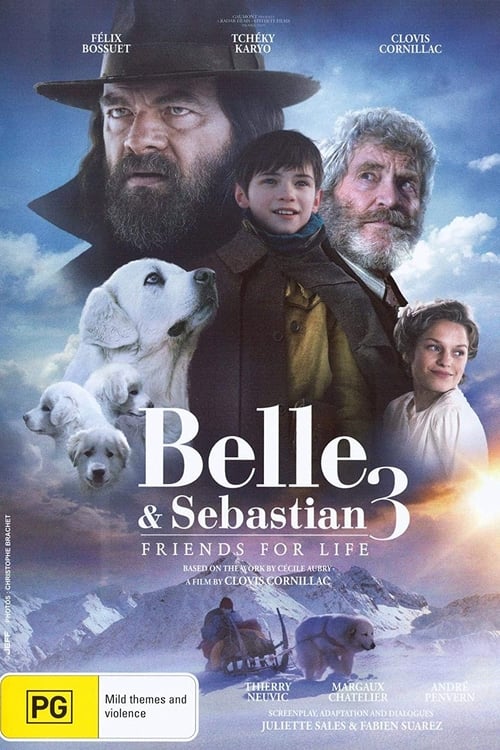
Belle and Sebastian 3: The Last Chapter
12 year-old Sebastian has decided not to follow his father and Angelina to Canada, deciding to stay in the alps to watch over Belle who has now become the mother of three beautiful pups. When a stranger arrives claiming to be Belle’s rightful owner, Sebastian will do all it takes to protect his best friend and her little ones.
Despite its tight budget of $13.5M, Belle and Sebastian 3: The Last Chapter became a box office success, earning $33.9M worldwide—a 151% return.

Plot Structure
Story beats plotted across runtime


Narrative Arc
Emotional journey through the story's key moments
Story Circle
Blueprint 15-beat structure
Arcplot Score Breakdown
Weighted: Precision (70%) + Arc (15%) + Theme (15%)
Belle and Sebastian 3: The Last Chapter (2018) exhibits precise plot construction, characteristic of Clovis Cornillac's storytelling approach. This structural analysis examines how the film's 15-point plot structure maps to proven narrative frameworks across 1 hour and 37 minutes. With an Arcplot score of 7.7, the film showcases strong structural fundamentals.
Characters
Cast & narrative archetypes

Sebastian
Belle
Pierre
Angelina
Joseph
Main Cast & Characters
Sebastian
Played by Félix Bossuet
A young boy who has grown up with his loyal dog Belle, facing the challenges of protecting his village and family in post-war France.
Belle
Played by Belle (dog)
Sebastian's faithful Great Pyrenees dog and companion, who helps protect the village and serves as a symbol of loyalty and courage.
Pierre
Played by Tchéky Karyo
Sebastian's adoptive grandfather, a wise and caring shepherd who guides Sebastian through difficult decisions.
Angelina
Played by Margaux Chatelier
Sebastian's adoptive mother figure, a compassionate woman who provides emotional support and stability to the family.
Joseph
Played by Dimitri Storoge
A mysterious stranger and potential threat who arrives in the village with unclear intentions, creating conflict for Sebastian and Belle.
Structural Analysis
The Status Quo at 1 minutes (1% through the runtime) establishes Sebastian and Belle live peacefully in the post-war French Alps. Sebastian is now a young man, and Belle has become a mother to cubs, representing the harmony they've found after the war.. Structural examination shows that this early placement immediately immerses viewers in the story world.
The inciting incident occurs at 12 minutes when Joseph, Belle's rightful owner from before the war, returns to reclaim her. This threatens to separate Sebastian from his beloved companion and challenges his sense of ownership and attachment.. At 12% through the film, this Disruption aligns precisely with traditional story structure. This beat shifts the emotional landscape, launching the protagonist into the central conflict.
The First Threshold at 24 minutes marks the transition into Act II, occurring at 25% of the runtime. This demonstrates the protagonist's commitment to Sebastian makes the active choice to run away with Belle and her cubs to prevent Joseph from taking her. This decision launches him into a journey across the mountains, leaving his safe home behind., moving from reaction to action.
At 49 minutes, the Midpoint arrives at 50% of the runtime—precisely centered, creating perfect narrative symmetry. The analysis reveals that this crucial beat False defeat: Sebastian and Belle are cornered or separated, and Joseph gets closer to reclaiming Belle. Sebastian realizes that running away isn't a permanent solution and that he can't outrun the truth forever., fundamentally raising what's at risk. The emotional intensity shifts, dividing the narrative into clear before-and-after phases.
The Collapse moment at 73 minutes (75% through) represents the emotional nadir. Here, All is lost: Belle or one of her cubs is in mortal danger (avalanche, injury, or illness). Sebastian realizes his selfishness has put Belle's life at risk. The "whiff of death" - either literal danger to Belle or the death of Sebastian's childhood illusions., illustrates the protagonist at their lowest point. This beat's placement in the final quarter sets up the climactic reversal.
The Second Threshold at 78 minutes initiates the final act resolution at 80% of the runtime. Sebastian has a realization: true love means letting go. He understands that Belle belongs with Joseph, and that growing up means accepting change. He chooses to return Belle to her rightful owner, synthesizing the theme stated earlier., demonstrating the transformation achieved throughout the journey.
Emotional Journey
Belle and Sebastian 3: The Last Chapter's emotional architecture traces a deliberate progression across 15 carefully calibrated beats.
Narrative Framework
This structural analysis employs a 15-point narrative structure framework that maps key story moments. By mapping Belle and Sebastian 3: The Last Chapter against these established plot points, we can identify how Clovis Cornillac utilizes or subverts traditional narrative conventions. The plot point approach reveals not only adherence to structural principles but also creative choices that distinguish Belle and Sebastian 3: The Last Chapter within the adventure genre.
Comparative Analysis
Additional adventure films include The Black Stallion, The Bad Guys and Puss in Boots.
Plot Points by Act
Act I
SetupStatus Quo
Sebastian and Belle live peacefully in the post-war French Alps. Sebastian is now a young man, and Belle has become a mother to cubs, representing the harmony they've found after the war.
Theme
César tells Sebastian that "every journey must come to an end, but what matters is what you carry with you." This establishes the theme of letting go and growing up.
Worldbuilding
Life in the mountain village after WWII. Sebastian has grown into a young man, Belle has cubs, and the community is rebuilding. We meet the key relationships: César (grandfather), Angelina, and the village dynamics.
Disruption
Joseph, Belle's rightful owner from before the war, returns to reclaim her. This threatens to separate Sebastian from his beloved companion and challenges his sense of ownership and attachment.
Resistance
Sebastian resists Joseph's claim and debates what to do. César and Angelina counsel him about doing the right thing versus following his heart. Sebastian struggles with the moral and legal implications while trying to find a way to keep Belle.
Act II
ConfrontationFirst Threshold
Sebastian makes the active choice to run away with Belle and her cubs to prevent Joseph from taking her. This decision launches him into a journey across the mountains, leaving his safe home behind.
Mirror World
During their journey, Sebastian encounters a young woman or forms a deeper bond with someone who represents what he must learn: that love means letting go when it's right, not holding on at all costs.
Premise
The adventure the audience came for: Sebastian and Belle traverse the treacherous Alps together, facing natural dangers, pursuing parties, and challenges. Beautiful mountain landscapes, narrow escapes, and the deep bond between boy and dog on full display.
Midpoint
False defeat: Sebastian and Belle are cornered or separated, and Joseph gets closer to reclaiming Belle. Sebastian realizes that running away isn't a permanent solution and that he can't outrun the truth forever.
Opposition
The pursuit intensifies. The elements turn harsh, Joseph closes in with authorities, and Sebastian's plan crumbles. His selfishness in keeping Belle becomes increasingly clear as her cubs are at risk and winter approaches.
Collapse
All is lost: Belle or one of her cubs is in mortal danger (avalanche, injury, or illness). Sebastian realizes his selfishness has put Belle's life at risk. The "whiff of death" - either literal danger to Belle or the death of Sebastian's childhood illusions.
Crisis
Sebastian sits in the darkness, processing what he's done. He confronts the truth: keeping Belle isn't about loving her, it's about his inability to let go. He must choose between his needs and Belle's wellbeing.
Act III
ResolutionSecond Threshold
Sebastian has a realization: true love means letting go. He understands that Belle belongs with Joseph, and that growing up means accepting change. He chooses to return Belle to her rightful owner, synthesizing the theme stated earlier.
Synthesis
Sebastian brings Belle back and faces Joseph with newfound maturity. He ensures Belle and her cubs will be safe and loved. The community witnesses his sacrifice and growth. Final goodbyes are exchanged with dignity rather than desperation.
Transformation
Sebastian watches Belle depart with Joseph, no longer the boy who needed to possess what he loved. He stands taller, at peace, having learned that some chapters must end. The image mirrors the opening but shows a young man where a boy once stood.