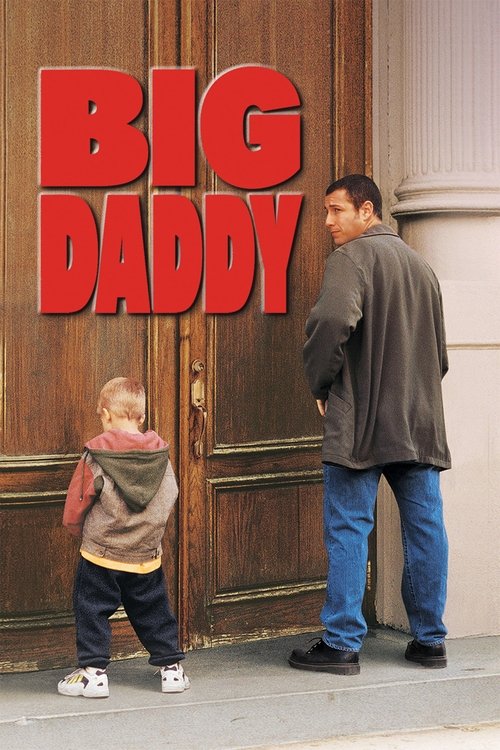
Big Daddy
A lazy law school grad adopts a kid to impress his girlfriend, but everything doesn't go as planned and he becomes the unlikely foster father.
Despite a moderate budget of $34.2M, Big Daddy became a box office phenomenon, earning $234.8M worldwide—a remarkable 587% return.
8 wins & 14 nominations


Plot Structure
Story beats plotted across runtime


Narrative Arc
Emotional journey through the story's key moments
Story Circle
Blueprint 15-beat structure
Arcplot Score Breakdown
Weighted: Precision (70%) + Arc (15%) + Theme (15%)
Big Daddy (1999) exemplifies deliberately positioned narrative design, characteristic of Dennis Dugan's storytelling approach. This structural analysis examines how the film's 15-point plot structure maps to proven narrative frameworks across 1 hour and 33 minutes. With an Arcplot score of 7.4, the film balances conventional beats with creative variation.
Characters
Cast & narrative archetypes

Sonny Koufax
Julian McGrath
Layla Maloney
Kevin Gerrity
Phil D'Amato
Vanessa
Corinne Maloney
Main Cast & Characters
Sonny Koufax
Played by Adam Sandler
An immature law school graduate who adopts a five-year-old boy to impress his girlfriend and learns responsibility through fatherhood.
Julian McGrath
Played by Cole Sprouse
A precocious five-year-old boy abandoned at Sonny's doorstep who becomes the catalyst for Sonny's transformation.
Layla Maloney
Played by Joey Lauren Adams
Sonny's love interest and legal aid attorney who initially doubts his parenting but comes to admire his growth.
Kevin Gerrity
Played by Jon Stewart
Sonny's responsible roommate and best friend whose identity Sonny uses to illegally adopt Julian.
Phil D'Amato
Played by Allen Covert
Sonny's friend who works as a delivery driver and provides comedic support throughout the story.
Vanessa
Played by Kristy Swanson
Sonny's shallow girlfriend who leaves him for an older, more successful man, triggering his adoption decision.
Corinne Maloney
Played by Leslie Mann
Layla's sister who becomes romantically involved with Kevin Gerrity.
Structural Analysis
The Status Quo at 1 minutes (1% through the runtime) establishes Sonny Koufax lives an arrested-development lifestyle: a 32-year-old law school graduate who refuses to take the bar exam, works one day a week as a tollbooth operator, and spends his time lounging around his apartment. His immaturity and lack of responsibility are on full display.. Notably, this early placement immediately immerses viewers in the story world.
The inciting incident occurs at 11 minutes when Five-year-old Julian arrives at Sonny's door—the son of Kevin's ex-girlfriend. Kevin is away, and Julian is left in Sonny's care. This unexpected child disrupts Sonny's carefree bachelor existence.. At 12% through the film, this Disruption aligns precisely with traditional story structure. This beat shifts the emotional landscape, launching the protagonist into the central conflict.
The First Threshold at 23 minutes marks the transition into Act II, occurring at 25% of the runtime. This demonstrates the protagonist's commitment to Sonny makes the active choice to keep Julian and pretend to be Kevin to social services, committing to caring for the boy. He crosses into Act 2 by taking on the responsibility of pseudo-fatherhood., moving from reaction to action.
At 47 minutes, the Midpoint arrives at 50% of the runtime—precisely centered, creating perfect narrative symmetry. Notably, this crucial beat Sonny and Julian have truly bonded—they've become a makeshift family. Sonny experiences a false victory: he feels like he's succeeded at being responsible and even wins over Layla. But the stakes raise when Kevin returns and learns what Sonny has done., fundamentally raising what's at risk. The emotional intensity shifts, dividing the narrative into clear before-and-after phases.
The Collapse moment at 70 minutes (75% through) represents the emotional nadir. Here, The court rules against Sonny. Julian is taken away from him and will be adopted by another family. Sonny loses the child he has come to love. This is his darkest moment—a metaphorical death of the family they'd built., demonstrates the protagonist at their lowest point. This beat's placement in the final quarter sets up the climactic reversal.
The Second Threshold at 75 minutes initiates the final act resolution at 80% of the runtime. Time jump: one year later. Sonny has internalized the lessons Julian taught him. He's now a responsible adult—he passed the bar exam and is working as a lawyer. He synthesizes who he was with who he needed to become., demonstrating the transformation achieved throughout the journey.
Emotional Journey
Big Daddy's emotional architecture traces a deliberate progression across 15 carefully calibrated beats.
Narrative Framework
This structural analysis employs structural analysis methodology used to understand storytelling architecture. By mapping Big Daddy against these established plot points, we can identify how Dennis Dugan utilizes or subverts traditional narrative conventions. The plot point approach reveals not only adherence to structural principles but also creative choices that distinguish Big Daddy within the comedy genre.
Dennis Dugan's Structural Approach
Among the 13 Dennis Dugan films analyzed on Arcplot, the average structural score is 7.3, reflecting strong command of classical structure. Big Daddy represents one of the director's most structurally precise works. For comparative analysis, explore the complete Dennis Dugan filmography.
Comparative Analysis
Additional comedy films include The Bad Guys, Ella Enchanted and The Evening Star. For more Dennis Dugan analyses, see Jack and Jill, Grown Ups 2 and Grown Ups.
Plot Points by Act
Act I
SetupStatus Quo
Sonny Koufax lives an arrested-development lifestyle: a 32-year-old law school graduate who refuses to take the bar exam, works one day a week as a tollbooth operator, and spends his time lounging around his apartment. His immaturity and lack of responsibility are on full display.
Theme
Sonny's girlfriend Vanessa criticizes his refusal to grow up, stating that he needs to take responsibility and act like an adult. This establishes the film's central theme: the necessity of maturity and what it truly means to be responsible.
Worldbuilding
Establishment of Sonny's world: his best friend Kevin (a successful lawyer), his apartment, his relationship with Vanessa, and his refusal to mature. Vanessa breaks up with him because he won't grow up. Sonny realizes he needs to prove he can be responsible.
Disruption
Five-year-old Julian arrives at Sonny's door—the son of Kevin's ex-girlfriend. Kevin is away, and Julian is left in Sonny's care. This unexpected child disrupts Sonny's carefree bachelor existence.
Resistance
Sonny debates what to do with Julian. He initially tries to get rid of the kid, calling social services, but then decides to keep Julian temporarily to prove to Vanessa he can be responsible. Sonny is reluctant and unprepared for parenthood.
Act II
ConfrontationFirst Threshold
Sonny makes the active choice to keep Julian and pretend to be Kevin to social services, committing to caring for the boy. He crosses into Act 2 by taking on the responsibility of pseudo-fatherhood.
Mirror World
Sonny meets Layla, a kind-hearted law student who works at a nearby restaurant. She represents the thematic counterpoint—a responsible adult who sees potential in Sonny. Their relationship subplot begins.
Premise
The fun and games of Sonny learning to be a parent: teaching Julian to trip rollerbladers, letting him choose his own name (Frankenstein), peeing on buildings, and shirking traditional parenting rules. Sonny bonds with Julian while still being irresponsible. His relationship with Layla develops.
Midpoint
Sonny and Julian have truly bonded—they've become a makeshift family. Sonny experiences a false victory: he feels like he's succeeded at being responsible and even wins over Layla. But the stakes raise when Kevin returns and learns what Sonny has done.
Opposition
Kevin reveals Sonny's deception to social services. The authorities get involved and threaten to take Julian away. Sonny fights to keep Julian, but his immaturity and lies catch up with him. His flawed approach to parenting is exposed in court.
Collapse
The court rules against Sonny. Julian is taken away from him and will be adopted by another family. Sonny loses the child he has come to love. This is his darkest moment—a metaphorical death of the family they'd built.
Crisis
Sonny falls into despair after losing Julian. He processes the profound loss and reflects on how Julian changed him. He realizes that he genuinely grew up through this experience, but now it's too late.
Act III
ResolutionSecond Threshold
Time jump: one year later. Sonny has internalized the lessons Julian taught him. He's now a responsible adult—he passed the bar exam and is working as a lawyer. He synthesizes who he was with who he needed to become.
Synthesis
The finale shows Sonny's transformed life: he's married to Layla, has a real career, and maintains a relationship with Julian (who was adopted by Kevin). All storylines resolve. Sonny demonstrates he has truly grown up.
Transformation
Final image shows Sonny in the park with Layla, their new baby, Kevin, and Julian—now a real family man. This mirrors the opening's immature bachelor but shows complete transformation into a responsible, loving adult.