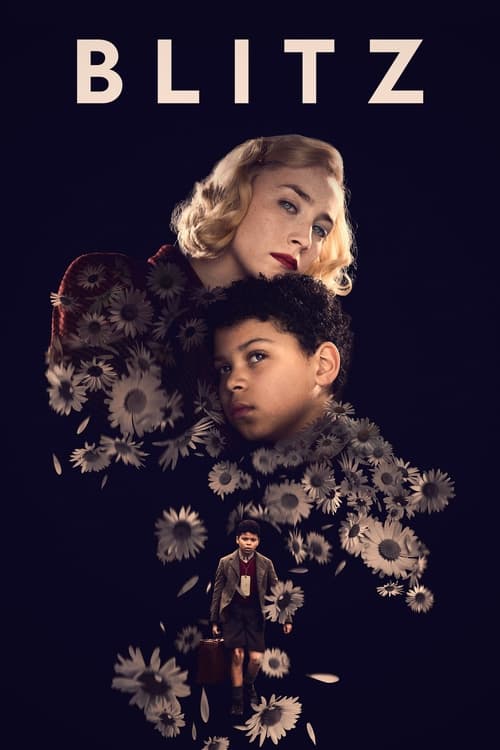
Blitz
The stories of a group of Londoners during the German bombing campaign of the British capital during World War II.
Nominated for 3 BAFTA 5 wins & 30 nominations


Plot Structure
Story beats plotted across runtime


Narrative Arc
Emotional journey through the story's key moments
Story Circle
Blueprint 15-beat structure
Characters
Cast & narrative archetypes

George

Rita

Jack

Gerald

Ife

Mickey

Marcus
Main Cast & Characters
George
Played by Elliott Heffernan
A 9-year-old biracial boy who embarks on a perilous journey across London during the Blitz to return home to his mother.
Rita
Played by Saoirse Ronan
George's devoted single mother who works in a munitions factory and desperately searches for her son across war-torn London.
Jack
Played by Paul Weller
Rita's father and George's grandfather, a resilient East End resident who helps in the search for George.
Gerald
Played by Harris Dickinson
Rita's estranged father who runs an air raid shelter and embodies moral complexity during wartime.
Ife
Played by Benjamin Clementine
A Nigerian air raid warden who befriends George and represents the diverse community of wartime London.
Mickey
Played by Kathy Burke
A charismatic looter who exploits the chaos of the Blitz for personal gain and represents moral decay.
Marcus
Played by CJ Beckford
Rita's musician boyfriend and George's father figure who provides emotional support during the crisis.
Structural Analysis
The Status Quo at 1 minutes (1% through the runtime) establishes Nine-year-old George lives in working-class East London with his mother Rita and grandfather Gerald. Despite the constant threat of German air raids, the family maintains warmth and love in their modest home, with Rita's singing providing comfort during the terror of the Blitz.. Of particular interest, this early placement immediately immerses viewers in the story world.
The inciting incident occurs at 14 minutes when After a devastating bombing raid strikes close to their neighborhood, Rita makes the heartbreaking decision to evacuate George to the countryside for his safety. George is devastated and resistant, but Rita insists it's the only way to keep him alive.. At 12% through the film, this Disruption aligns precisely with traditional story structure. This beat shifts the emotional landscape, launching the protagonist into the central conflict.
The First Threshold at 30 minutes marks the transition into Act II, occurring at 25% of the runtime. This illustrates the protagonist's commitment to George makes a fateful decision: he jumps from the moving evacuation train, determined to make his way back to London and his mother. This irreversible choice launches him into a dangerous odyssey through wartime Britain, alone and vulnerable., moving from reaction to action.
At 60 minutes, the Midpoint arrives at 50% of the runtime—precisely centered, creating perfect narrative symmetry. Notably, this crucial beat George falls in with a criminal gang that exploits the chaos of the bombing to loot from destroyed homes and vulnerable people. Initially they seem to offer protection, but George realizes he's become complicit in their crimes. This false victory turns to false defeat as he understands he's lost his moral compass in the fight to survive., fundamentally raising what's at risk. The emotional intensity shifts, dividing the narrative into clear before-and-after phases.
The Collapse moment at 90 minutes (75% through) represents the emotional nadir. Here, During the most devastating bombing raid yet, George is caught in the destruction. Buried in rubble, he believes he will die alone, never seeing his mother again. Rita receives word that suggests George may have perished. Both lose hope, experiencing a metaphorical and near-literal death of their dreams of reunion., indicates the protagonist at their lowest point. This beat's placement in the final quarter sets up the climactic reversal.
The Second Threshold at 96 minutes initiates the final act resolution at 80% of the runtime. George is rescued from the rubble by emergency workers. Clinging to his mother's photograph, he realizes that his journey home was never just about geography but about carrying the love his family gave him. With renewed determination, he sets out for the final leg of his journey. Rita hears rumors of a boy matching George's description being found alive., demonstrating the transformation achieved throughout the journey.
Emotional Journey
Blitz's emotional architecture traces a deliberate progression across 15 carefully calibrated beats.
Narrative Framework
This structural analysis employs structural analysis methodology used to understand storytelling architecture. By mapping Blitz against these established plot points, we can identify how Steve McQueen utilizes or subverts traditional narrative conventions. The plot point approach reveals not only adherence to structural principles but also creative choices that distinguish Blitz within the action genre.
Steve McQueen's Structural Approach
Among the 3 Steve McQueen films analyzed on Arcplot, the average structural score is 5.2, showcasing experimental approaches to narrative form. Blitz exemplifies the director's characteristic narrative technique. For comparative analysis, explore the complete Steve McQueen filmography.
Comparative Analysis
Additional action films include The Bad Guys, Puss in Boots and Venom: The Last Dance. For more Steve McQueen analyses, see Widows, 12 Years a Slave.
Plot Points by Act
Act I
SetupStatus Quo
Nine-year-old George lives in working-class East London with his mother Rita and grandfather Gerald. Despite the constant threat of German air raids, the family maintains warmth and love in their modest home, with Rita's singing providing comfort during the terror of the Blitz.
Theme
Gerald tells George that home isn't just a place but the people who love you, and that no matter how far apart you are, that connection can never be broken. This speaks to the film's core theme of the unbreakable bond between parent and child.
Worldbuilding
The film establishes wartime London under siege: air raid sirens, families crowding into underground shelters, Rita working at the munitions factory by day and singing in shelters by night. George's mixed-race heritage is introduced, hinting at the discrimination he'll face. The community's resilience and the constant presence of death establish the stakes.
Disruption
After a devastating bombing raid strikes close to their neighborhood, Rita makes the heartbreaking decision to evacuate George to the countryside for his safety. George is devastated and resistant, but Rita insists it's the only way to keep him alive.
Resistance
Rita prepares George for evacuation despite his protests. She gives him her treasured photograph and instructions on where to go. At the train station, surrounded by hundreds of other evacuated children, George boards reluctantly. Rita watches the train depart, already regretting her decision. George sits miserable among strangers, clutching his mother's photo.
Act II
ConfrontationFirst Threshold
George makes a fateful decision: he jumps from the moving evacuation train, determined to make his way back to London and his mother. This irreversible choice launches him into a dangerous odyssey through wartime Britain, alone and vulnerable.
Mirror World
George encounters a group of people surviving on the margins of society, including other displaced individuals and Black Britons who recognize his mixed heritage. For the first time, George meets others who understand his experience of being an outsider in his own country. This subplot embodies the theme of belonging and identity.
Premise
George navigates through bombed-out streets, encounters helpful strangers and dangerous opportunists, witnesses the destruction of the Blitz firsthand, and learns to survive by his wits. Meanwhile, Rita discovers George never arrived at his evacuation destination and begins her desperate search. Both journeys unfold in parallel as mother and son try to find their way back to each other.
Midpoint
George falls in with a criminal gang that exploits the chaos of the bombing to loot from destroyed homes and vulnerable people. Initially they seem to offer protection, but George realizes he's become complicit in their crimes. This false victory turns to false defeat as he understands he's lost his moral compass in the fight to survive.
Opposition
The dangers intensify as George tries to escape the criminal gang while navigating increasingly heavy bombing raids. He faces explicit racism from people who refuse to help him because of his skin color. Rita's search grows more desperate as she follows false leads. The parallel narratives build tension as mother and son struggle against increasingly impossible odds.
Collapse
During the most devastating bombing raid yet, George is caught in the destruction. Buried in rubble, he believes he will die alone, never seeing his mother again. Rita receives word that suggests George may have perished. Both lose hope, experiencing a metaphorical and near-literal death of their dreams of reunion.
Crisis
George lies trapped in darkness, reflecting on his journey and the people he's encountered. He remembers his grandfather's words about home being the people who love you. Rita, devastated by the news, continues to sing in the shelter, her music a lifeline for herself and others even in her darkest moment.
Act III
ResolutionSecond Threshold
George is rescued from the rubble by emergency workers. Clinging to his mother's photograph, he realizes that his journey home was never just about geography but about carrying the love his family gave him. With renewed determination, he sets out for the final leg of his journey. Rita hears rumors of a boy matching George's description being found alive.
Synthesis
George navigates through the scarred but surviving streets of London, drawing on everything he's learned about resilience and his own identity. Rita rushes through the city following reports of her son. The narratives converge as both race toward reunion, the city around them showing both the destruction of war and the indomitable spirit of its people.
Transformation
George and Rita are reunited in an emotional embrace. George has been transformed by his odyssey from a protected child into someone who has faced the world's cruelty and survived through his own resourcefulness and the love he carries. The final image shows the family together, forever changed but unbroken, their bond strengthened rather than severed by the fire of war.