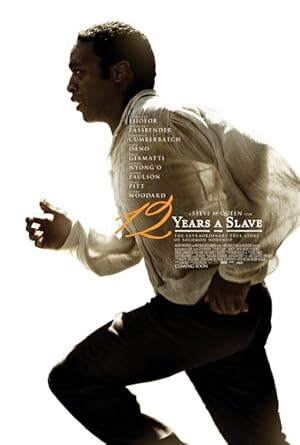
12 Years a Slave
Based on an incredible true story of one man's fight for survival and freedom. In the pre-Civil War United States, Solomon Northup, a free black man from upstate New York, is abducted and sold into slavery. Facing cruelty personified by a malevolent slave owner, as well as unexpected kindnesses, Solomon struggles not only to stay alive, but to retain his dignity. In the twelfth year of his unforgettable odyssey, Solomon's chance meeting with a Canadian abolitionist will forever alter his life.
Despite a respectable budget of $20.0M, 12 Years a Slave became a box office phenomenon, earning $187.0M worldwide—a remarkable 835% return.
3 Oscars. 244 wins & 338 nominations


Plot Structure
Story beats plotted across runtime


Narrative Arc
Emotional journey through the story's key moments
Story Circle
Blueprint 15-beat structure
Arcplot Score Breakdown
Weighted: Precision (70%) + Arc (15%) + Theme (15%)
12 Years a Slave (2013) exhibits meticulously timed story structure, characteristic of Steve McQueen's storytelling approach. This structural analysis examines how the film's 15-point plot structure maps to proven narrative frameworks across 2 hours and 14 minutes. With an Arcplot score of 3.1, the film takes an unconventional approach to traditional narrative frameworks.
Characters
Cast & narrative archetypes

Solomon Northup
Edwin Epps
Patsey
Bass
William Ford
Mistress Epps
Tibeats
Main Cast & Characters
Solomon Northup
Played by Chiwetel Ejiofor
A free black man from New York who is kidnapped and sold into slavery in the antebellum South, enduring twelve years of bondage.
Edwin Epps
Played by Michael Fassbender
A brutal and sadistic plantation owner who torments his slaves, particularly Patsey, whom he alternately obsesses over and punishes.
Patsey
Played by Lupita Nyong'o
A young enslaved woman on Epps' plantation who excels at cotton picking but suffers horrific abuse from both Epps and his wife.
Bass
Played by Brad Pitt
A Canadian carpenter and abolitionist who works for Epps and risks his life to help Solomon regain his freedom.
William Ford
Played by Benedict Cumberbatch
A relatively compassionate plantation owner who owns Solomon early in his enslavement and recognizes his intelligence.
Mistress Epps
Played by Sarah Paulson
Edwin Epps' jealous and cruel wife who takes out her rage at her husband's obsession with Patsey through vicious abuse.
Tibeats
Played by Paul Dano
A violent and vindictive carpenter who works for Ford and develops a murderous hatred for Solomon.
Structural Analysis
The Status Quo at 1 minutes (1% through the runtime) establishes Solomon Northup, a free Black man, is shown as a respected violinist in Saratoga, New York, 1841. He lives with his wife and children in dignity, prosperity, and freedom—a life of cultural refinement and community standing.. Structural examination shows that this early placement immediately immerses viewers in the story world.
The inciting incident occurs at 14 minutes when Solomon wakes in chains in a Washington D.C. Slave pen. He has been drugged, kidnapped, and his free papers stolen. When he protests that he is a free man, he is brutally beaten. His entire life has been stolen in a single night.. At 10% through the film, this Disruption aligns precisely with traditional story structure. This beat shifts the emotional landscape, launching the protagonist into the central conflict.
The First Threshold at 31 minutes marks the transition into Act II, occurring at 23% of the runtime. This indicates the protagonist's commitment to After a violent confrontation with the cruel carpenter Tibeats, who tries to lynch Solomon, Ford is forced to sell Solomon to save his life. Solomon is sold to Edwin Epps, a sadistic cotton plantation owner. This is Solomon's irreversible descent into the worst of slavery—there is no turning back, no rescue coming. He must now survive in hell., moving from reaction to action.
At 60 minutes, the Midpoint arrives at 45% of the runtime—arriving early, accelerating into Act IIb complications. Significantly, this crucial beat Epps forces Solomon to whip Patsey for leaving the plantation without permission (she went to get soap). Solomon must choose between his own survival and inflicting torture on an innocent woman. He whips her, though he tries to minimize the harm. This false defeat marks the death of his illusion that he can remain morally pure while surviving—complicity is inescapable., fundamentally raising what's at risk. The emotional intensity shifts, dividing the narrative into clear before-and-after phases.
The Collapse moment at 91 minutes (68% through) represents the emotional nadir. Here, Epps, in a drunken rage over Patsey, forces Solomon to whip her nearly to death—over 100 lashes until her back is destroyed. Solomon must participate in the near-murder of the person who represents innocent suffering. This is the "whiff of death"—Patsey's spirit and body are broken, and Solomon's humanity seems extinguished. He has become the instrument of the system he abhors., demonstrates the protagonist at their lowest point. This beat's placement in the final quarter sets up the climactic reversal.
The Second Threshold at 98 minutes initiates the final act resolution at 73% of the runtime. Samuel Bass, a Canadian carpenter and abolitionist working on Epps' property, arrives. Solomon takes the enormous risk of revealing his true identity and story to Bass. Bass believes him and agrees to send letters North. This act of trust and Bass's courage provide the synthesis: combining Solomon's knowledge of who he truly is with an outsider's ability to act. Hope is reborn., demonstrating the transformation achieved throughout the journey.
Emotional Journey
12 Years a Slave's emotional architecture traces a deliberate progression across 15 carefully calibrated beats.
Narrative Framework
This structural analysis employs proven narrative structure principles that track dramatic progression. By mapping 12 Years a Slave against these established plot points, we can identify how Steve McQueen utilizes or subverts traditional narrative conventions. The plot point approach reveals not only adherence to structural principles but also creative choices that distinguish 12 Years a Slave within the biography genre.
Steve McQueen's Structural Approach
Among the 3 Steve McQueen films analyzed on Arcplot, the average structural score is 5.2, showcasing experimental approaches to narrative form. 12 Years a Slave takes a more unconventional approach compared to the director's typical style. For comparative analysis, explore the complete Steve McQueen filmography.
Comparative Analysis
Additional biography films include After Thomas, Taking Woodstock and The Fire Inside. For more Steve McQueen analyses, see Blitz, Widows.
Plot Points by Act
Act I
SetupStatus Quo
Solomon Northup, a free Black man, is shown as a respected violinist in Saratoga, New York, 1841. He lives with his wife and children in dignity, prosperity, and freedom—a life of cultural refinement and community standing.
Theme
As Solomon shares a meal with his family, the theme of identity and survival is subtly introduced: "I don't want to survive. I want to live." This encapsulates the film's central question about what it means to maintain one's humanity under dehumanizing conditions.
Worldbuilding
Establishment of Solomon's free life in the North: his work as a musician, his loving family, his social standing. Two white men approach him with an offer to play violin for a traveling circus, promising good pay. The world of 1841 America is established with its stark contrasts between North and South.
Disruption
Solomon wakes in chains in a Washington D.C. slave pen. He has been drugged, kidnapped, and his free papers stolen. When he protests that he is a free man, he is brutally beaten. His entire life has been stolen in a single night.
Resistance
Solomon is transported South on a slave ship, given the slave name "Platt," and sold to William Ford, a relatively kind plantation owner. Solomon struggles with whether to reveal his true identity or survive by submission. He receives conflicting advice: some enslaved people counsel silence and obedience, while his inner voice demands he fight for his freedom. Ford gives him a violin, a bittersweet reminder of his former life.
Act II
ConfrontationFirst Threshold
After a violent confrontation with the cruel carpenter Tibeats, who tries to lynch Solomon, Ford is forced to sell Solomon to save his life. Solomon is sold to Edwin Epps, a sadistic cotton plantation owner. This is Solomon's irreversible descent into the worst of slavery—there is no turning back, no rescue coming. He must now survive in hell.
Mirror World
Patsey is introduced—a young enslaved woman who is both the most skilled cotton picker and the target of Epps' sexual obsession and his wife's jealous cruelty. Patsey embodies the film's thematic core: she is utterly trapped, yet fights to maintain her dignity and humanity. Her relationship with Solomon becomes central to his moral awakening.
Premise
The "promise of the premise"—the brutal reality of plantation slavery under Edwin Epps. Solomon experiences and witnesses relentless dehumanization: forced labor in cotton fields, religious justification of slavery, sexual violence, arbitrary punishment, and the systematic destruction of identity. He learns the rules of this world and how to navigate its horrors while keeping hope alive.
Midpoint
Epps forces Solomon to whip Patsey for leaving the plantation without permission (she went to get soap). Solomon must choose between his own survival and inflicting torture on an innocent woman. He whips her, though he tries to minimize the harm. This false defeat marks the death of his illusion that he can remain morally pure while surviving—complicity is inescapable.
Opposition
The pressure intensifies. Years pass with no rescue. Solomon's attempts to get word to the North fail—he trusts a white laborer who betrays him. Patsey's suffering worsens under both Epps and his wife. Solomon is forced deeper into complicity, losing more of himself. The antagonistic forces—the institution of slavery, Epps' sadism, the passage of time—tighten their grip.
Collapse
Epps, in a drunken rage over Patsey, forces Solomon to whip her nearly to death—over 100 lashes until her back is destroyed. Solomon must participate in the near-murder of the person who represents innocent suffering. This is the "whiff of death"—Patsey's spirit and body are broken, and Solomon's humanity seems extinguished. He has become the instrument of the system he abhors.
Crisis
In the aftermath of Patsey's whipping, Solomon sits in despair. The weight of twelve years, the impossibility of escape, the destruction of Patsey—all converge. He contemplates suicide by hanging but cannot complete the act. He stands on his toes in the noose, struggling to survive even as enslaved people pass by, unable to help. This is his dark night of the soul.
Act III
ResolutionSecond Threshold
Samuel Bass, a Canadian carpenter and abolitionist working on Epps' property, arrives. Solomon takes the enormous risk of revealing his true identity and story to Bass. Bass believes him and agrees to send letters North. This act of trust and Bass's courage provide the synthesis: combining Solomon's knowledge of who he truly is with an outsider's ability to act. Hope is reborn.
Synthesis
Bass sends the letters. Time passes in agonizing uncertainty—will help come? The sheriff arrives with a man from Saratoga who knew Solomon in his free life. Solomon's identity is legally verified. Epps is forced to release him. Solomon says goodbye to Patsey and the others, unable to free them. He leaves the plantation a free man, carrying the weight of those left behind.
Transformation
Solomon returns to his family in Saratoga after twelve years. He meets his grandson, named Solomon after him, for the first time. He weeps and apologizes for his absence. The final image shows a man restored to freedom but forever changed—he survived, he lived, but he can never be whole again. Title cards reveal his work as an abolitionist, giving meaning to his suffering.