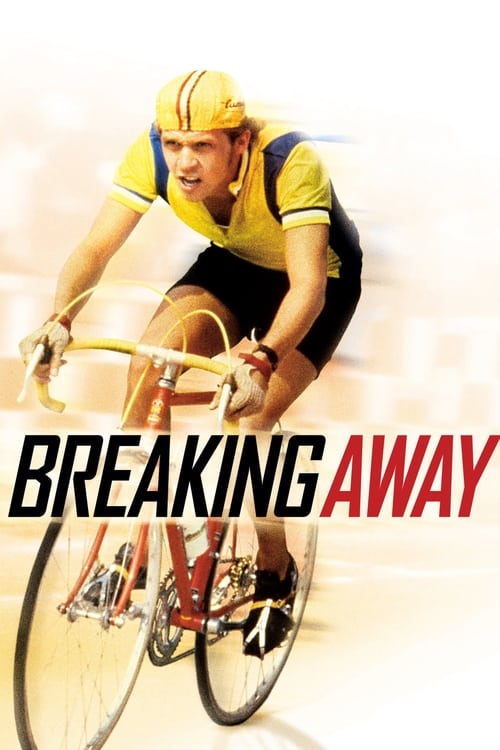
Breaking Away
Dave, nineteen, has just graduated high school, with his three friends: the comical Cyril, the warm hearted but short-tempered Moocher, and the athletic, spiteful but good-hearted Mike. Now, Dave enjoys racing bikes and hopes to race the Italians one day, and even takes up the Italian culture, much to his friends' and parents' annoyance.
Despite its tight budget of $2.3M, Breaking Away became a box office phenomenon, earning $20.0M worldwide—a remarkable 770% return. The film's innovative storytelling engaged audiences, proving that strong storytelling can transcend budget limitations.
1 Oscar. 11 wins & 14 nominations


Plot Structure
Story beats plotted across runtime


Narrative Arc
Emotional journey through the story's key moments
Story Circle
Blueprint 15-beat structure
Arcplot Score Breakdown
Weighted: Precision (70%) + Arc (15%) + Theme (15%)
Breaking Away (1979) exemplifies precise narrative design, characteristic of Peter Yates's storytelling approach. This structural analysis examines how the film's 15-point plot structure maps to proven narrative frameworks across 1 hour and 41 minutes. With an Arcplot score of 7.4, the film balances conventional beats with creative variation.
Characters
Cast & narrative archetypes

Dave Stoller
Raymond Stoller
Evelyn Stoller
Mike
Cyril
Moocher
Katherine
Main Cast & Characters
Dave Stoller
Played by Dennis Christopher
A working-class teenager obsessed with Italian cycling who struggles with identity and his future after high school.
Raymond Stoller
Played by Paul Dooley
Dave's pragmatic father, a former stone cutter frustrated by his son's lack of direction and Italian affectations.
Evelyn Stoller
Played by Barbara Barrie
Dave's supportive mother who mediates between her husband and son while encouraging Dave's dreams.
Mike
Played by Dennis Quaid
Dave's hot-tempered friend, a former high school quarterback bitter about his limited prospects as a "cutter".
Cyril
Played by Daniel Stern
The intellectual of the group, insecure and pessimistic about the future, often serving as comic relief.
Moocher
Played by Jackie Earle Haley
The shortest of the group, recently married and anxious about adult responsibilities and employment.
Katherine
Played by Robyn Douglass
A college student who becomes Dave's love interest, representing the university world that separates townies from students.
Structural Analysis
The Status Quo at 1 minutes (1% through the runtime) establishes Dave rides his bike through Bloomington, singing in Italian, living in a fantasy world as an Italian cyclist. He and his three friends (Mike, Cyril, Moocher) are recent high school graduates - "Cutters" - working-class kids in a college town, aimless and uncertain about their futures.. The analysis reveals that this early placement immediately immerses viewers in the story world.
The inciting incident occurs at 12 minutes when Dave successfully charms Katherine while posing as "Enrico," the Italian exchange student. This masquerade works, giving him access to a world (college, romance, sophistication) that seems closed to Cutters. The fake identity becomes deeply reinforced, pulling him further from his authentic self.. At 12% through the film, this Disruption aligns precisely with traditional story structure. This beat shifts the emotional landscape, launching the protagonist into the central conflict.
The First Threshold at 26 minutes marks the transition into Act II, occurring at 26% of the runtime. This illustrates the protagonist's commitment to Dave decides to enter and race in the Indiana University Little 500 bicycle race. He also commits fully to the Italian deception with Katherine, meeting her friends and maintaining the charade at deeper levels. He's chosen to pursue both his cycling dream and the false identity rather than face reality., moving from reaction to action.
At 49 minutes, the Midpoint arrives at 49% of the runtime—precisely centered, creating perfect narrative symmetry. Significantly, this crucial beat Dave races against the Cinzano professional Italian cycling team (his heroes) in a qualifier race. During the race, one of the Italian cyclists deliberately sabotages him, causing him to crash. His cycling idol curses at him in Italian. This "false defeat" shatters Dave's romantic illusion - the Italians aren't the noble heroes he imagined. His fantasy world begins to crack., fundamentally raising what's at risk. The emotional intensity shifts, dividing the narrative into clear before-and-after phases.
The Collapse moment at 74 minutes (73% through) represents the emotional nadir. Here, Dave has lost everything: his Italian fantasy is shattered, Katherine has left him, his father is furious, and he's quit the cycling team. He sits defeated in his room, no longer singing Italian songs. The "death" here is the death of his false identity and his dreams - but he hasn't yet found his true self to replace it., reveals the protagonist at their lowest point. This beat's placement in the final quarter sets up the climactic reversal.
The Second Threshold at 80 minutes initiates the final act resolution at 80% of the runtime. Dave rejoins his team for the Little 500 race as himself - Dave Stoller, a Cutter from Bloomington - not as an Italian fantasy. He synthesizes his cycling skills (learned through the Italian dream) with his authentic identity (working-class Hoosier). He's ready to race as who he truly is., demonstrating the transformation achieved throughout the journey.
Emotional Journey
Breaking Away's emotional architecture traces a deliberate progression across 15 carefully calibrated beats.
Narrative Framework
This structural analysis employs structural analysis methodology used to understand storytelling architecture. By mapping Breaking Away against these established plot points, we can identify how Peter Yates utilizes or subverts traditional narrative conventions. The plot point approach reveals not only adherence to structural principles but also creative choices that distinguish Breaking Away within the drama genre.
Peter Yates's Structural Approach
Among the 8 Peter Yates films analyzed on Arcplot, the average structural score is 7.1, reflecting strong command of classical structure. Breaking Away represents one of the director's most structurally precise works. For comparative analysis, explore the complete Peter Yates filmography.
Comparative Analysis
Additional drama films include After Thomas, South Pacific and Dirty Dancing: Havana Nights. For more Peter Yates analyses, see The Deep, Mother, Jugs & Speed and Bullitt.
Plot Points by Act
Act I
SetupStatus Quo
Dave rides his bike through Bloomington, singing in Italian, living in a fantasy world as an Italian cyclist. He and his three friends (Mike, Cyril, Moocher) are recent high school graduates - "Cutters" - working-class kids in a college town, aimless and uncertain about their futures.
Theme
Dave's father Mr. Stoller, a former limestone quarry worker (a "Cutter"), tells Dave: "You're not going to be a cutter. I was a cutter. You're going to do something better." The theme of identity, class, and finding your own authentic path is established - you can't live in someone else's world forever.
Worldbuilding
We see the world of Bloomington: the quarry where the fathers worked, the class tension between "Cutters" and college students, Dave's obsession with Italian cycling and culture (speaking Italian, listening to opera), his friends' aimlessness. Mike is angry and resentful about not going to college. Dave meets Katherine, a college student, and pretends to be an Italian exchange student named "Enrico."
Disruption
Dave successfully charms Katherine while posing as "Enrico," the Italian exchange student. This masquerade works, giving him access to a world (college, romance, sophistication) that seems closed to Cutters. The fake identity becomes deeply reinforced, pulling him further from his authentic self.
Resistance
Dave doubles down on his Italian persona, deepening his relationship with Katherine while maintaining the lie. His father grows increasingly frustrated with Dave's refusal to accept reality or get a job. Dave's friends debate their futures - should they leave town? Accept their lot? His mother quietly supports Dave's dreams. Dave trains obsessively for cycling.
Act II
ConfrontationFirst Threshold
Dave decides to enter and race in the Indiana University Little 500 bicycle race. He also commits fully to the Italian deception with Katherine, meeting her friends and maintaining the charade at deeper levels. He's chosen to pursue both his cycling dream and the false identity rather than face reality.
Mirror World
Katherine represents the "college world" - the life of sophistication, education, and upward mobility that Dave yearns for. Their relationship deepens, but it's built on a lie. She sees "Enrico," not Dave. This relationship will ultimately teach Dave that he must be himself to truly connect with others.
Premise
Dave lives the "promise of the premise" - being an Italian cyclist. He races against a semi-truck and wins, delighting in his abilities. He serenades Katherine in Italian. He trains intensely. His relationship with Katherine grows, though the lies pile up. His friends form their own cycling team for the Little 500. Tension with college students escalates.
Midpoint
Dave races against the Cinzano professional Italian cycling team (his heroes) in a qualifier race. During the race, one of the Italian cyclists deliberately sabotages him, causing him to crash. His cycling idol curses at him in Italian. This "false defeat" shatters Dave's romantic illusion - the Italians aren't the noble heroes he imagined. His fantasy world begins to crack.
Opposition
Devastated by the betrayal of his Italian heroes, Dave spirals. The lie with Katherine becomes harder to maintain. His father discovers the deception about Katherine and explodes in anger. Katherine learns Dave isn't Italian - he's a local Cutter - and feels betrayed. She breaks up with him. Dave abandons the Italian persona, becoming depressed and cynical. He quits the team. His friends struggle to convince him to rejoin for the Little 500.
Collapse
Dave has lost everything: his Italian fantasy is shattered, Katherine has left him, his father is furious, and he's quit the cycling team. He sits defeated in his room, no longer singing Italian songs. The "death" here is the death of his false identity and his dreams - but he hasn't yet found his true self to replace it.
Crisis
Dave processes his loss and identity crisis. His father, in a moment of vulnerability, reveals his own regrets about the quarry closing and his lost pride as a Cutter. This honesty opens something in Dave. His friends appeal to him - they need him for the Little 500. Dave begins to see that he can be proud of who he really is.
Act III
ResolutionSecond Threshold
Dave rejoins his team for the Little 500 race as himself - Dave Stoller, a Cutter from Bloomington - not as an Italian fantasy. He synthesizes his cycling skills (learned through the Italian dream) with his authentic identity (working-class Hoosier). He's ready to race as who he truly is.
Synthesis
The Little 500 race - the finale. Dave and his Cutter teammates (Mike, Cyril, Moocher) compete against the college fraternity teams. Through teamwork, grit, and Dave's cycling prowess, they fight for victory. Dave takes over in the final laps despite a bike malfunction, pedaling with pure determination. The Cutters win the race, proving their worth on their own terms.
Transformation
Dave rides his bike to Indiana University, where he's now enrolled as a student. He passes Katherine and greets her warmly but without pretense. He meets a French student and begins speaking French - but this time it's playful, not a desperate escape from himself. He's found his authentic path forward, integrating his working-class identity with his aspirations.