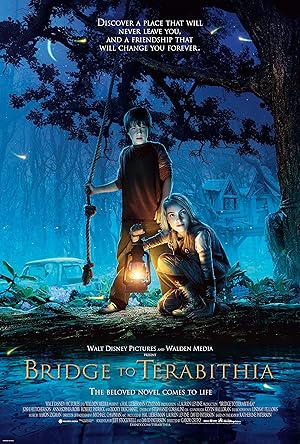
Bridge to Terabithia
Growing up in the Redneck country isn't easy for shy Jess Aarons, with a father struggling to make ends meet, three arrogant bigger sisters and a 'baby' he has to take to school and watches generally. In class he bonds with cheeky newcomer Leslie Burke, whose scientist parents moved into the neighboring villa, despite her taking his only local prestige by beating him in the race. Wandered off after school in the woods, they invent a fantasy land Terabithia, where they can be the superheroes of imaginary feral races. Together they also stand up against school bullies, but then tragedy strikes and Jess must adjust again.
Despite a moderate budget of $60.0M, Bridge to Terabithia became a solid performer, earning $137.6M worldwide—a 129% return.
6 wins & 5 nominations


Plot Structure
Story beats plotted across runtime


Narrative Arc
Emotional journey through the story's key moments
Story Circle
Blueprint 15-beat structure
Arcplot Score Breakdown
Weighted: Precision (70%) + Arc (15%) + Theme (15%)
Bridge to Terabithia (2007) demonstrates carefully calibrated narrative design, characteristic of Gábor Csupó's storytelling approach. This structural analysis examines how the film's 15-point plot structure maps to proven narrative frameworks across 1 hour and 36 minutes. With an Arcplot score of 7.2, the film balances conventional beats with creative variation.
Characters
Cast & narrative archetypes

Jess Aarons
Leslie Burke
Ms. Edmunds
May Belle Aarons
Jack Aarons
Mary Aarons
Main Cast & Characters
Jess Aarons
Played by Josh Hutcherson
A creative fifth-grader struggling with family expectations and bullying who discovers friendship and imagination through Leslie.
Leslie Burke
Played by AnnaSophia Robb
An imaginative, confident new girl who introduces Jess to the magical world of Terabithia and helps him discover his creative potential.
Ms. Edmunds
Played by Zooey Deschanel
Jess's young music teacher who recognizes his artistic talent and becomes a source of inspiration and encouragement.
May Belle Aarons
Played by Bailee Madison
Jess's younger sister who idolizes him and struggles with feeling left out of his adventures.
Jack Aarons
Played by Robert Patrick
Jess's hardworking father who struggles to connect with his son and show affection due to financial stress.
Mary Aarons
Played by Kate Butler
Jess's pragmatic mother who is overwhelmed by household responsibilities and often dismissive of Jess's creative pursuits.
Structural Analysis
The Status Quo at 1 minutes (1% through the runtime) establishes Jess Aarons wakes up early in his rural home, surrounded by his four sisters. He practices running alone in the fields, dreaming of being the fastest runner in fifth grade - his one chance to stand out and be special.. Notably, this early placement immediately immerses viewers in the story world.
The inciting incident occurs at 11 minutes when Leslie Burke moves in next door - a confident, imaginative girl who doesn't fit the mold. She beats all the boys (including Jess) in the race he'd been training for all summer, disrupting his one plan for significance.. At 12% through the film, this Disruption aligns precisely with traditional story structure. This beat shifts the emotional landscape, launching the protagonist into the central conflict.
The First Threshold at 24 minutes marks the transition into Act II, occurring at 25% of the runtime. This reveals the protagonist's commitment to Jess chooses to swing across the creek with Leslie into the woods. He actively decides to enter her world of imagination, creating Terabithia - a magical kingdom where they are king and queen, free from the constraints of their ordinary lives., moving from reaction to action.
At 47 minutes, the Midpoint arrives at 49% of the runtime—precisely centered, creating perfect narrative symmetry. Of particular interest, this crucial beat False victory: Jess and Leslie defeat the "Dark Master" in Terabithia and feel invincible. They stand together against the school bully Janice Avery with compassion instead of revenge. Jess is becoming brave, empathetic, and confident - everything seems to be working., fundamentally raising what's at risk. The emotional intensity shifts, dividing the narrative into clear before-and-after phases.
The Collapse moment at 69 minutes (72% through) represents the emotional nadir. Here, Jess returns from a museum trip with Miss Edmunds to learn that Leslie drowned trying to swing across the swollen creek to Terabithia alone. His best friend, his queen, his guide to imagination and bravery - dead. The literal "whiff of death" - the story's devastating low point., shows the protagonist at their lowest point. This beat's placement in the final quarter sets up the climactic reversal.
The Second Threshold at 76 minutes initiates the final act resolution at 80% of the runtime. Jess realizes Leslie's gift wasn't Terabithia the place - it was imagination itself, the ability to transform pain into beauty, to keep magic alive. He synthesizes her lessons with his own artistic soul and understands what he must do: pass it on., demonstrating the transformation achieved throughout the journey.
Emotional Journey
Bridge to Terabithia's emotional architecture traces a deliberate progression across 15 carefully calibrated beats.
Narrative Framework
This structural analysis employs a 15-point narrative structure framework that maps key story moments. By mapping Bridge to Terabithia against these established plot points, we can identify how Gábor Csupó utilizes or subverts traditional narrative conventions. The plot point approach reveals not only adherence to structural principles but also creative choices that distinguish Bridge to Terabithia within the drama genre.
Gábor Csupó's Structural Approach
Among the 2 Gábor Csupó films analyzed on Arcplot, the average structural score is 7.0, reflecting strong command of classical structure. Bridge to Terabithia represents one of the director's most structurally precise works. For comparative analysis, explore the complete Gábor Csupó filmography.
Comparative Analysis
Additional drama films include After Thomas, South Pacific and Dirty Dancing: Havana Nights. For more Gábor Csupó analyses, see The Secret of Moonacre.
Plot Points by Act
Act I
SetupStatus Quo
Jess Aarons wakes up early in his rural home, surrounded by his four sisters. He practices running alone in the fields, dreaming of being the fastest runner in fifth grade - his one chance to stand out and be special.
Theme
May Belle tells Jess: "You're the best brother ever. Don't let anyone tell you different." The theme of self-worth and imagination versus external validation is introduced through his youngest sister's unconditional belief in him.
Worldbuilding
Jess's world is established: bullied at school, financially struggling family, dismissed by his father who sees his drawing as a waste of time, and his only ally is music teacher Miss Edmunds. He's isolated, artistic, and yearning for escape from his mundane rural life.
Disruption
Leslie Burke moves in next door - a confident, imaginative girl who doesn't fit the mold. She beats all the boys (including Jess) in the race he'd been training for all summer, disrupting his one plan for significance.
Resistance
Jess resists Leslie's friendship initially, embarrassed by his defeat. Leslie persists, showing him a different way of seeing the world through imagination. She introduces him to the idea that they can create their own reality, their own kingdom where they make the rules.
Act II
ConfrontationFirst Threshold
Jess chooses to swing across the creek with Leslie into the woods. He actively decides to enter her world of imagination, creating Terabithia - a magical kingdom where they are king and queen, free from the constraints of their ordinary lives.
Mirror World
Leslie becomes Jess's true friend and thematic teacher. Their relationship carries the film's core message: imagination and friendship can transform pain into power, loneliness into sovereignty. She shows him how to rule his own mind.
Premise
The promise of the premise: Jess and Leslie escape daily to Terabithia, battling imaginary dark creatures, building a castle, and ruling their kingdom. Their friendship deepens. Jess gains confidence, stands up to bullies, and begins to see himself differently through Leslie's eyes.
Midpoint
False victory: Jess and Leslie defeat the "Dark Master" in Terabithia and feel invincible. They stand together against the school bully Janice Avery with compassion instead of revenge. Jess is becoming brave, empathetic, and confident - everything seems to be working.
Opposition
The rope swing begins to fray (literal foreshadowing). Jess's father criticizes his friendship with Leslie. The creek rises from rain, making Terabithia harder to reach. Leslie faces loneliness when Jess can't always be there. Reality intrudes on their magical world.
Collapse
Jess returns from a museum trip with Miss Edmunds to learn that Leslie drowned trying to swing across the swollen creek to Terabithia alone. His best friend, his queen, his guide to imagination and bravery - dead. The literal "whiff of death" - the story's devastating low point.
Crisis
Jess cycles through denial, rage, and guilt. He runs away, destroys his drawings, blames himself for not being there. His father finally shows him emotional support. Jess sits in darkness, processing that Leslie is gone and he must face the world without her.
Act III
ResolutionSecond Threshold
Jess realizes Leslie's gift wasn't Terabithia the place - it was imagination itself, the ability to transform pain into beauty, to keep magic alive. He synthesizes her lessons with his own artistic soul and understands what he must do: pass it on.
Synthesis
Jess builds a bridge to Terabithia - literal and metaphorical. He takes his sister May Belle across, crowning her the new queen, teaching her what Leslie taught him. He honors Leslie by keeping her magic alive and sharing it with others who need it.
Transformation
Jess and May Belle stand together in Terabithia as king and queen. The closing image mirrors the opening isolation but shows transformation: Jess is no longer alone, no longer seeking external validation. He carries Leslie's gift forward, having become the mentor himself.