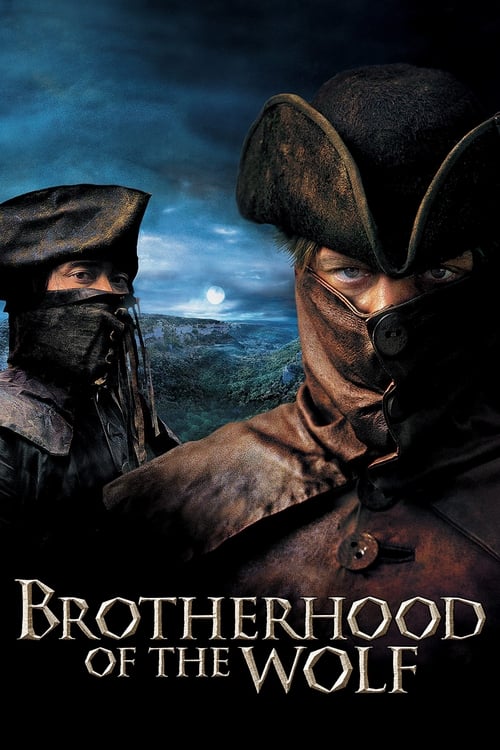
Brotherhood of the Wolf
In 18th century France, the Chevalier de Fronsac and his Native American friend Mani are sent by the King to the Gevaudan province to investigate the killings of hundreds by a mysterious beast.
Despite a mid-range budget of $29.0M, Brotherhood of the Wolf became a commercial success, earning $70.8M worldwide—a 144% return.
4 wins & 22 nominations


Plot Structure
Story beats plotted across runtime


Narrative Arc
Emotional journey through the story's key moments
Story Circle
Blueprint 15-beat structure
Arcplot Score Breakdown
Weighted: Precision (70%) + Arc (15%) + Theme (15%)
Brotherhood of the Wolf (2001) demonstrates carefully calibrated narrative design, characteristic of Christophe Gans's storytelling approach. This structural analysis examines how the film's 15-point plot structure maps to proven narrative frameworks across 2 hours and 31 minutes. With an Arcplot score of 6.8, the film balances conventional beats with creative variation.
Characters
Cast & narrative archetypes

Grégoire de Fronsac
Mani
Marianne de Morangias
Jean-François de Morangias
Sylvia
Henri Sardis
Comte de Morangias
Main Cast & Characters
Grégoire de Fronsac
Played by Samuel Le Bihan
Royal naturalist sent to investigate mysterious beast killings in Gévaudan. Enlightenment thinker skilled in both science and combat.
Mani
Played by Mark Dacascos
Fronsac's Iroquois blood brother and companion. Mysterious warrior with exceptional fighting skills and spiritual wisdom.
Marianne de Morangias
Played by Émilie Dequenne
Intelligent aristocratic woman interested in science and forbidden knowledge. Caught between duty and desire.
Jean-François de Morangias
Played by Vincent Cassel
Scarred, one-armed nobleman and veteran fighter. Marianne's brother with a dark, violent nature.
Sylvia
Played by Monica Bellucci
Seductive Italian courtesan and member of secret society. Uses her charms for manipulation and intelligence gathering.
Henri Sardis
Played by Jean-François Stévenin
Mysterious priest with African origins. Connected to secret societies and the conspiracy behind the beast.
Comte de Morangias
Played by Jacques Perrin
Aging patriarch of the Morangias family. Traditional nobleman hiding dark family secrets.
Structural Analysis
The Status Quo at 2 minutes (1% through the runtime) establishes An elderly Marquis begins writing his memoirs during the French Revolution, flashing back to 1764 Gévaudan. Naturalist Grégoire de Fronsac and his Iroquois companion Mani arrive in rural France, where peasants live in fear of a mysterious beast terrorizing the countryside.. Notably, this early placement immediately immerses viewers in the story world.
The inciting incident occurs at 18 minutes when Fronsac witnesses a beast attack firsthand and sees a mutilated corpse. The King has sent him to study and capture the Beast of Gévaudan, making it personal when he realizes this is no ordinary wolf but something far more terrifying.. At 12% through the film, this Disruption aligns precisely with traditional story structure. This beat shifts the emotional landscape, launching the protagonist into the central conflict.
The First Threshold at 38 minutes marks the transition into Act II, occurring at 25% of the runtime. This demonstrates the protagonist's commitment to Fronsac chooses to stay and hunt the beast himself rather than simply report his findings to the King. He commits to uncovering the truth behind the attacks, organizing a massive hunt with the local nobility and accepting the danger this commitment brings., moving from reaction to action.
At 76 minutes, the Midpoint arrives at 50% of the runtime—precisely centered, creating perfect narrative symmetry. The analysis reveals that this crucial beat A large wolf is killed in a grand hunt and presented as the Beast of Gévaudan. The King declares victory and Fronsac is celebrated as a hero. This false victory seems to end the terror, but Fronsac suspects this ordinary wolf is not the true beast—the attacks were too calculated, too purposeful., fundamentally raising what's at risk. The emotional intensity shifts, dividing the narrative into clear before-and-after phases.
The Collapse moment at 113 minutes (75% through) represents the emotional nadir. Here, Mani is murdered by the conspirators—poisoned and then killed while weakened. Fronsac loses his closest friend and spiritual brother, the one person who understood him completely. The whiff of death becomes literal as Fronsac cradles his companion's body, his quest for truth having cost him everything he loved., indicates the protagonist at their lowest point. This beat's placement in the final quarter sets up the climactic reversal.
The Second Threshold at 121 minutes initiates the final act resolution at 80% of the runtime. Fronsac discovers the full truth: Jean-François controls the beast, which is an armored lion-like creature, and leads a secret cult using the attacks to terrorize the populace. Honoring Mani's memory, Fronsac resolves to destroy the conspiracy and avenge his friend, combining his scientific knowledge with the warrior spirit Mani taught him., demonstrating the transformation achieved throughout the journey.
Emotional Journey
Brotherhood of the Wolf's emotional architecture traces a deliberate progression across 15 carefully calibrated beats.
Narrative Framework
This structural analysis employs a 15-point narrative structure framework that maps key story moments. By mapping Brotherhood of the Wolf against these established plot points, we can identify how Christophe Gans utilizes or subverts traditional narrative conventions. The plot point approach reveals not only adherence to structural principles but also creative choices that distinguish Brotherhood of the Wolf within the adventure genre.
Christophe Gans's Structural Approach
Among the 3 Christophe Gans films analyzed on Arcplot, the average structural score is 7.0, demonstrating varied approaches to story architecture. Brotherhood of the Wolf takes a more unconventional approach compared to the director's typical style. For comparative analysis, explore the complete Christophe Gans filmography.
Comparative Analysis
Additional adventure films include The Black Stallion, The Bad Guys and Puss in Boots. For more Christophe Gans analyses, see Beauty and the Beast, Silent Hill.
Plot Points by Act
Act I
SetupStatus Quo
An elderly Marquis begins writing his memoirs during the French Revolution, flashing back to 1764 Gévaudan. Naturalist Grégoire de Fronsac and his Iroquois companion Mani arrive in rural France, where peasants live in fear of a mysterious beast terrorizing the countryside.
Theme
A local remarks that the beast is God's punishment for the sins of man, establishing the film's central theme: the real monsters are not supernatural creatures but human beings who use fear and superstition to manipulate and control others.
Worldbuilding
The world of 18th-century Gévaudan is established: a rural province terrorized by beast attacks, where the aristocracy lives in decadent comfort while peasants suffer. Fronsac and Mani demonstrate their skills rescuing villagers. The corrupt local nobility, including the de Morangias family, and the mysterious brothel run by Sylvia are introduced.
Disruption
Fronsac witnesses a beast attack firsthand and sees a mutilated corpse. The King has sent him to study and capture the Beast of Gévaudan, making it personal when he realizes this is no ordinary wolf but something far more terrifying.
Resistance
Fronsac debates how to proceed with his investigation. He meets the de Morangias family, including the beautiful Marianne and her one-armed brother Jean-François. He gathers evidence, interviews witnesses, and begins to suspect the beast may not be natural. His connection with the Italian courtesan Sylvia deepens as she provides him with information from her clients.
Act II
ConfrontationFirst Threshold
Fronsac chooses to stay and hunt the beast himself rather than simply report his findings to the King. He commits to uncovering the truth behind the attacks, organizing a massive hunt with the local nobility and accepting the danger this commitment brings.
Mirror World
Fronsac's romantic relationship with Marianne de Morangias blossoms, representing purity and genuine connection in contrast to the corruption around them. Simultaneously, his bond with Mani deepens, showing how true brotherhood transcends race and class—the film's thematic heart.
Premise
Fronsac employs his scientific methods and Mani's tracking skills to hunt the beast. Elaborate hunting sequences unfold across the beautiful Gévaudan landscape. Fronsac navigates court politics, romances Marianne, and gathers clues. The audience enjoys the martial arts action, period spectacle, and mystery as Fronsac gets closer to the truth.
Midpoint
A large wolf is killed in a grand hunt and presented as the Beast of Gévaudan. The King declares victory and Fronsac is celebrated as a hero. This false victory seems to end the terror, but Fronsac suspects this ordinary wolf is not the true beast—the attacks were too calculated, too purposeful.
Opposition
Despite the official proclamation, attacks resume. Fronsac continues his secret investigation and discovers evidence of a conspiracy involving the local aristocracy and a secret society. Jean-François de Morangias emerges as increasingly sinister. Fronsac's allies are threatened and Sylvia warns him he is in danger. The conspiracy moves to silence him permanently.
Collapse
Mani is murdered by the conspirators—poisoned and then killed while weakened. Fronsac loses his closest friend and spiritual brother, the one person who understood him completely. The whiff of death becomes literal as Fronsac cradles his companion's body, his quest for truth having cost him everything he loved.
Crisis
Fronsac grieves for Mani and contemplates abandoning his mission. He is consumed by rage and despair, questioning whether the truth is worth the price. Sylvia tends to him as he processes his loss. The conspiracy believes they have broken him and prepare to kill him next.
Act III
ResolutionSecond Threshold
Fronsac discovers the full truth: Jean-François controls the beast, which is an armored lion-like creature, and leads a secret cult using the attacks to terrorize the populace. Honoring Mani's memory, Fronsac resolves to destroy the conspiracy and avenge his friend, combining his scientific knowledge with the warrior spirit Mani taught him.
Synthesis
Fronsac infiltrates the cult's lair in a spectacular assault. He confronts Jean-François in a brutal fight, kills the beast, and exposes the conspiracy. The finale combines martial arts action with Gothic horror as Fronsac dismantles the organization responsible for terrorizing Gévaudan. Marianne is saved and the truth about human monsters is revealed.
Transformation
The elderly Marquis finishes his memoir as revolutionaries approach. The beast was always human cruelty and aristocratic corruption—now being swept away by the Revolution. Fronsac is transformed from detached naturalist to committed warrior for justice, carrying Mani's brotherhood and Marianne's love as his legacy against tyranny.