Burnt
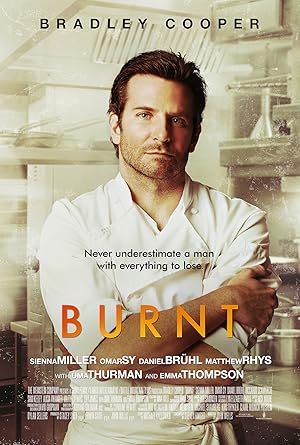
Chef Adam Jones (Bradley Cooper) had it all - and lost it. A two-star Michelin rockstar with the bad habits to match, the former enfant terrible of the Paris restaurant scene did everything different every time out, and only ever cared about the thrill of creating explosions of taste. To land his own kitchen and that third elusive Michelin star though, he'll need the best of the best on his side, including the beautiful Helene (Sienna Miller).
Working with a respectable budget of $20.0M, the film achieved a modest success with $36.6M in global revenue (+83% profit margin).
6 wins & 1 nomination


Plot Structure
Story beats plotted across runtime


Narrative Arc
Emotional journey through the story's key moments
Story Circle
Blueprint 15-beat structure
Arcplot Score Breakdown
Weighted: Precision (70%) + Arc (15%) + Theme (15%)
Burnt (2015) showcases precise plot construction, characteristic of John Wells's storytelling approach. This structural analysis examines how the film's 15-point plot structure maps to proven narrative frameworks across 1 hour and 40 minutes. With an Arcplot score of 7.4, the film balances conventional beats with creative variation.
Characters
Cast & narrative archetypes

Adam Jones
Helene
Tony
Reece
Michel
Conti
Max
Dr. Rosshilde
Main Cast & Characters
Adam Jones
Played by Bradley Cooper
A brilliant but volatile chef seeking redemption and his third Michelin star after destroying his career in Paris.
Helene
Played by Sienna Miller
A talented single mother and sous chef who becomes Adam's right hand and romantic interest.
Tony
Played by Daniel Brühl
Adam's old friend and restaurant owner who reluctantly gives him another chance in London.
Reece
Played by Matthew Rhys
A skilled chef and Adam's former colleague who harbors resentment over past betrayals.
Michel
Played by Omar Sy
Adam's loyal maître d' and former colleague who rejoins his team in London.
Conti
Played by Riccardo Scamarcio
Adam's former mentor and legendary chef who represents both inspiration and the standards Adam must meet.
Max
Played by Riccardo Scamarcio
A young, talented pastry chef who joins Adam's kitchen team.
Dr. Rosshilde
Played by Emma Thompson
Adam's therapist who helps him confront his demons and substance abuse issues.
Structural Analysis
The Status Quo at 1 minutes (1% through the runtime) establishes Adam Jones shucks oysters in a New Orleans dive bar, a fallen two-star Michelin chef reduced to penance work after destroying his Paris career with drugs and arrogance. He counts his one millionth oyster, symbolizing his self-imposed exile from greatness.. Of particular interest, this early placement immediately immerses viewers in the story world.
The inciting incident occurs at 12 minutes when Adam confronts Tony Balerdi at his hotel restaurant, demanding Tony give him the head chef position. Tony initially refuses, knowing Adam's destructive history, but Adam's intensity and vision begin to crack Tony's resistance. The disruption is mutual: Adam disrupts Tony's comfortable operation while Tony represents Adam's only path back.. At 12% through the film, this Disruption aligns precisely with traditional story structure. This beat shifts the emotional landscape, launching the protagonist into the central conflict.
The First Threshold at 25 minutes marks the transition into Act II, occurring at 25% of the runtime. This shows the protagonist's commitment to Adam chooses to fully commit to redemption by attending his first therapy session with Dr. Rosshilde and assembling his complete brigade in the kitchen for opening night. He accepts Tony's terms, including surveillance and accountability. This is his active choice to pursue the third star the right way, through collaboration rather than tyranny., moving from reaction to action.
At 50 minutes, the Midpoint arrives at 50% of the runtime—precisely centered, creating perfect narrative symmetry. Notably, this crucial beat The restaurant earns its second Michelin star. False victory: Adam and his team celebrate their achievement, believing they're on track for the third star. The stakes raise—now they must maintain this level while reaching even higher. Adam seems to be succeeding at redemption, but his obsessive methods and unresolved past haven't truly been addressed., fundamentally raising what's at risk. The emotional intensity shifts, dividing the narrative into clear before-and-after phases.
The Collapse moment at 75 minutes (75% through) represents the emotional nadir. Here, Adam's kitchen collapses during critical service when his abusive leadership drives the team to sabotage. Max deliberately ruins dishes, the brigade falls apart, and Helene walks out, telling Adam he's learned nothing. Adam suffers a complete breakdown, destroying the kitchen in rage. The whiff of death: his dream of the third star dies, and with it, any hope of redemption. He's become exactly what he feared—unredeemable., illustrates the protagonist at their lowest point. This beat's placement in the final quarter sets up the climactic reversal.
The Second Threshold at 80 minutes initiates the final act resolution at 80% of the runtime. Adam has a breakthrough realization: he doesn't need to be perfect or monstrous—he needs to be present and honest with his team. He makes amends with Jean Luc in Paris, apologizing for his betrayal and settling his debts (literally and figuratively). He returns to London not to demand loyalty, but to earn it by being vulnerable. The synthesis of his old skills with his new understanding of collaboration and humanity., demonstrating the transformation achieved throughout the journey.
Emotional Journey
Burnt's emotional architecture traces a deliberate progression across 15 carefully calibrated beats.
Narrative Framework
This structural analysis employs systematic plot point analysis that identifies crucial turning points. By mapping Burnt against these established plot points, we can identify how John Wells utilizes or subverts traditional narrative conventions. The plot point approach reveals not only adherence to structural principles but also creative choices that distinguish Burnt within the comedy genre.
John Wells's Structural Approach
Among the 3 John Wells films analyzed on Arcplot, the average structural score is 7.3, reflecting strong command of classical structure. Burnt represents one of the director's most structurally precise works. For comparative analysis, explore the complete John Wells filmography.
Comparative Analysis
Additional comedy films include The Bad Guys, Ella Enchanted and The Evening Star. For more John Wells analyses, see The Company Men, August: Osage County.
Plot Points by Act
Act I
SetupStatus Quo
Adam Jones shucks oysters in a New Orleans dive bar, a fallen two-star Michelin chef reduced to penance work after destroying his Paris career with drugs and arrogance. He counts his one millionth oyster, symbolizing his self-imposed exile from greatness.
Theme
Tony tells Adam, "You can't get a third star for yourself. You need a team." This establishes the film's central theme: redemption and excellence require collaboration, not solitary genius.
Worldbuilding
Adam travels to London to reassemble his old brigade. We meet his former colleagues: Michel (now running a successful brasserie), Tony (mentor figure), and learn about Adam's burned bridges in Paris—walking out on Jean Luc's restaurant, drug abuse, and spectacular professional suicide. The culinary world's unforgiving hierarchy and the mystique of Michelin stars are established.
Disruption
Adam confronts Tony Balerdi at his hotel restaurant, demanding Tony give him the head chef position. Tony initially refuses, knowing Adam's destructive history, but Adam's intensity and vision begin to crack Tony's resistance. The disruption is mutual: Adam disrupts Tony's comfortable operation while Tony represents Adam's only path back.
Resistance
Tony reluctantly agrees to let Adam run his kitchen under strict conditions: weekly drug tests and therapy sessions. Adam recruits his old team—David, Michel (who refuses at first), and discovers Helene, a talented sous chef. He battles resistance from his former colleagues who remember his toxicity, struggles with sobriety requirements, and faces skepticism from food critics. The debate: can a monster become a master?
Act II
ConfrontationFirst Threshold
Adam chooses to fully commit to redemption by attending his first therapy session with Dr. Rosshilde and assembling his complete brigade in the kitchen for opening night. He accepts Tony's terms, including surveillance and accountability. This is his active choice to pursue the third star the right way, through collaboration rather than tyranny.
Mirror World
Helene challenges Adam in the kitchen and refuses to be intimidated by his reputation. She represents the thematic counterpoint: discipline without destruction, excellence with humanity. Their evolving relationship—professional respect deepening into romantic tension—will teach Adam that vulnerability and connection make him stronger, not weaker.
Premise
The promise of the premise: watching a master chef create culinary art and transform a kitchen into a Michelin-worthy operation. Adam drills his brigade relentlessly, creates innovative dishes, and the restaurant begins earning buzz. Beautiful food cinematography, kitchen choreography, and rising stakes as critics take notice. The fun of watching genius at work, tempered by Adam's controlling perfectionism and the team's growing cohesion.
Midpoint
The restaurant earns its second Michelin star. False victory: Adam and his team celebrate their achievement, believing they're on track for the third star. The stakes raise—now they must maintain this level while reaching even higher. Adam seems to be succeeding at redemption, but his obsessive methods and unresolved past haven't truly been addressed.
Opposition
Pressure intensifies as Adam pushes harder for the third star. His abusive behavior returns—screaming at staff, impossible standards, and emotional cruelty. Michel reaches his breaking point and quits. Anne Marie (from Adam's Paris past) attempts suicide, revealing the deep damage Adam caused. Reece (Jean Luc's son) appears, seeking revenge for Adam's betrayal of his father. The ghosts of Adam's past close in while his present team fractures under his tyranny.
Collapse
Adam's kitchen collapses during critical service when his abusive leadership drives the team to sabotage. Max deliberately ruins dishes, the brigade falls apart, and Helene walks out, telling Adam he's learned nothing. Adam suffers a complete breakdown, destroying the kitchen in rage. The whiff of death: his dream of the third star dies, and with it, any hope of redemption. He's become exactly what he feared—unredeemable.
Crisis
Adam sits alone in the destroyed kitchen, processing his failure. He visits Anne Marie in the hospital, confronting the human cost of his ambition. In therapy, he finally admits his fundamental flaw: he believed he had to be a monster to be great. Tony considers shutting down the restaurant. Adam faces the dark truth that talent without humanity is worthless, and he may have destroyed his last chance.
Act III
ResolutionSecond Threshold
Adam has a breakthrough realization: he doesn't need to be perfect or monstrous—he needs to be present and honest with his team. He makes amends with Jean Luc in Paris, apologizing for his betrayal and settling his debts (literally and figuratively). He returns to London not to demand loyalty, but to earn it by being vulnerable. The synthesis of his old skills with his new understanding of collaboration and humanity.
Synthesis
Adam humbly asks his brigade to return, offering genuine apologies and changed behavior. The team reassembles, with Helene returning last. They execute a perfect service for the Michelin inspectors—not through fear, but through trust and mutual respect. Adam leads differently: listening, supporting, and empowering rather than controlling. The final judgment arrives as they await the Michelin decision, the team united regardless of outcome.
Transformation
Adam stands with his brigade as family, not as a tyrant. Whether they achieved the third star becomes secondary to what he's become: a leader who values people as much as perfection. The closing image mirrors the opening—Adam in a kitchen—but transformed. He's no longer shucking oysters in penance, but cooking alongside equals he respects. Redemption achieved through connection, not isolation.