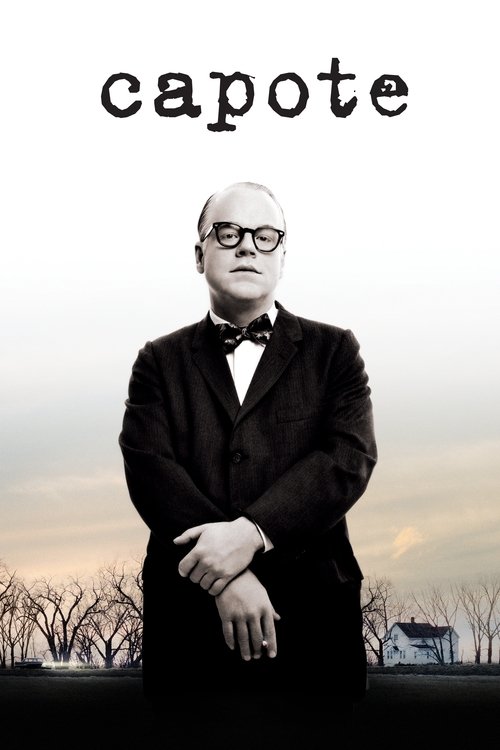
Capote
A biopic of writer Truman Capote and his assignment for The New Yorker to write the non-fiction book "In Cold Blood".
Despite its small-scale budget of $7.0M, Capote became a commercial juggernaut, earning $49.3M worldwide—a remarkable 605% return. The film's compelling narrative attracted moviegoers, demonstrating that strong storytelling can transcend budget limitations.
1 Oscar. 59 wins & 89 nominations


Plot Structure
Story beats plotted across runtime


Narrative Arc
Emotional journey through the story's key moments
Story Circle
Blueprint 15-beat structure
Arcplot Score Breakdown
Weighted: Precision (70%) + Arc (15%) + Theme (15%)
Capote (2005) exhibits meticulously timed story structure, characteristic of Bennett Miller's storytelling approach. This structural analysis examines how the film's 15-point plot structure maps to proven narrative frameworks across 1 hour and 54 minutes. With an Arcplot score of 6.9, the film balances conventional beats with creative variation.
Characters
Cast & narrative archetypes

Truman Capote
Perry Smith
Harper Lee
Jack Dunphy
Alvin Dewey
Main Cast & Characters
Truman Capote
Played by Philip Seymour Hoffman
Celebrated author who becomes obsessed with writing about the Clutter family murders, developing a complex relationship with killer Perry Smith.
Perry Smith
Played by Clifton Collins Jr.
One of the convicted killers of the Clutter family, whose troubled past and vulnerability draw Capote into an intense emotional connection.
Harper Lee
Played by Catherine Keener
Capote's childhood friend and fellow writer who assists him with research in Kansas and serves as his moral compass.
Jack Dunphy
Played by Bruce Greenwood
Capote's longtime partner who witnesses his emotional deterioration during the writing of In Cold Blood.
Alvin Dewey
Played by Chris Cooper
Kansas Bureau of Investigation agent who leads the Clutter murder investigation and develops a working relationship with Capote.
Structural Analysis
The Status Quo at 1 minutes (1% through the runtime) establishes Truman Capote holds court at a glamorous New York party, the celebrated author surrounded by high society admirers, demonstrating his wit and celebrity status in his comfortable world of literary fame.. Structural examination shows that this early placement immediately immerses viewers in the story world.
The inciting incident occurs at 13 minutes when Capote reads a small New York Times article about the brutal murder of the Clutter family in Holcomb, Kansas—four people killed in their home. He becomes immediately fixated, sensing this could be the subject for something extraordinary.. At 12% through the film, this Disruption aligns precisely with traditional story structure. This beat shifts the emotional landscape, launching the protagonist into the central conflict.
The First Threshold at 28 minutes marks the transition into Act II, occurring at 25% of the runtime. This shows the protagonist's commitment to The killers Perry Smith and Dick Hickock are captured. Capote makes the active choice to attend the initial court hearing and decides to pursue access to the killers themselves, committing fully to telling their story—not just the Clutters' story., moving from reaction to action.
At 57 minutes, the Midpoint arrives at 50% of the runtime—precisely centered, creating perfect narrative symmetry. Structural examination shows that this crucial beat Perry and Dick are sentenced to death by hanging. False defeat: while Capote appears to have the ending he needs for his book, he realizes he's trapped—he needs them to die to finish the book, but has grown genuinely attached to Perry. The stakes are now deeply personal and moral., fundamentally raising what's at risk. The emotional intensity shifts, dividing the narrative into clear before-and-after phases.
The Collapse moment at 85 minutes (74% through) represents the emotional nadir. Here, Perry discovers that Capote has lied to him and never intended to help with his appeal. Perry accuses Capote of using them, and their relationship—the emotional core of Capote's connection to the story—dies. Capote must face what he's become: a man who befriended someone to exploit his story., indicates the protagonist at their lowest point. This beat's placement in the final quarter sets up the climactic reversal.
The Second Threshold at 91 minutes initiates the final act resolution at 80% of the runtime. The execution date is set. Capote must face the final consequence of his choices. He visits Perry one last time, and despite the betrayal, they share a final moment of genuine connection. Capote accepts he must witness the execution to finish his book—crossing the final threshold of his moral compromise., demonstrating the transformation achieved throughout the journey.
Emotional Journey
Capote's emotional architecture traces a deliberate progression across 15 carefully calibrated beats.
Narrative Framework
This structural analysis employs a 15-point narrative structure framework that maps key story moments. By mapping Capote against these established plot points, we can identify how Bennett Miller utilizes or subverts traditional narrative conventions. The plot point approach reveals not only adherence to structural principles but also creative choices that distinguish Capote within the crime genre.
Bennett Miller's Structural Approach
Among the 3 Bennett Miller films analyzed on Arcplot, the average structural score is 7.0, demonstrating varied approaches to story architecture. Capote takes a more unconventional approach compared to the director's typical style. For comparative analysis, explore the complete Bennett Miller filmography.
Comparative Analysis
Additional crime films include The Bad Guys, Rustom and The Whole Ten Yards. For more Bennett Miller analyses, see Foxcatcher, Moneyball.
Plot Points by Act
Act I
SetupStatus Quo
Truman Capote holds court at a glamorous New York party, the celebrated author surrounded by high society admirers, demonstrating his wit and celebrity status in his comfortable world of literary fame.
Theme
Harper Lee mentions to Capote that there's more to people than meets the eye, foreshadowing the central question: How well can we truly know another person, and what are we willing to sacrifice to tell their story?
Worldbuilding
Establishing Capote's world as a celebrated author living a privileged New York life, his friendship with Harper Lee, his relationship with partner Jack, and his position as a literary celebrity who has achieved success but is searching for his next great subject.
Disruption
Capote reads a small New York Times article about the brutal murder of the Clutter family in Holcomb, Kansas—four people killed in their home. He becomes immediately fixated, sensing this could be the subject for something extraordinary.
Resistance
Capote convinces The New Yorker to fund his trip to Kansas with Harper Lee. They travel to Holcomb where Capote struggles with the hostile reception from locals suspicious of outsiders and press. He debates whether he can penetrate this closed community and tell this story.
Act II
ConfrontationFirst Threshold
The killers Perry Smith and Dick Hickock are captured. Capote makes the active choice to attend the initial court hearing and decides to pursue access to the killers themselves, committing fully to telling their story—not just the Clutters' story.
Mirror World
Capote's first meaningful meeting with Perry Smith in jail. He sees something of himself in Perry—both had difficult childhoods, both are artists in their own way, both are outsiders. This relationship will become central to everything that follows and embodies the film's theme about connection and exploitation.
Premise
Capote develops his relationship with Perry and Dick, conducting extensive interviews, gaining their trust, and gathering material for his book. He navigates between his glamorous New York life and the stark reality of Kansas, becoming increasingly obsessed with the story while the promise of creating a revolutionary "nonfiction novel" drives him forward.
Midpoint
Perry and Dick are sentenced to death by hanging. False defeat: while Capote appears to have the ending he needs for his book, he realizes he's trapped—he needs them to die to finish the book, but has grown genuinely attached to Perry. The stakes are now deeply personal and moral.
Opposition
As appeals drag on for years, Capote's desperation grows. He becomes increasingly manipulative, emotionally depleted, and morally compromised. His relationship with Jack deteriorates, his drinking increases, and those around him begin to see the toll the book is taking. The opposition is both external (the waiting) and internal (his guilt).
Collapse
Perry discovers that Capote has lied to him and never intended to help with his appeal. Perry accuses Capote of using them, and their relationship—the emotional core of Capote's connection to the story—dies. Capote must face what he's become: a man who befriended someone to exploit his story.
Crisis
Capote spirals into guilt and self-loathing while waiting for the execution. He processes the profound moral cost of his ambition—the realization that he needed Perry to die so he could finish his masterpiece. His dark night wrestling with what he's done and who he's become.
Act III
ResolutionSecond Threshold
The execution date is set. Capote must face the final consequence of his choices. He visits Perry one last time, and despite the betrayal, they share a final moment of genuine connection. Capote accepts he must witness the execution to finish his book—crossing the final threshold of his moral compromise.
Synthesis
Capote attends the execution and watches Perry and Dick hang. He completes "In Cold Blood," which becomes a massive success and revolutionizes literary journalism. But the victory is hollow—the synthesis shows the irreversible cost of his achievement.
Transformation
Final image mirrors the opening party scene, but now Capote is hollow, damaged, barely able to speak about the book. Text reveals he never finished another book before his death. The transformation is tragic: he achieved his masterpiece but destroyed himself in the process.