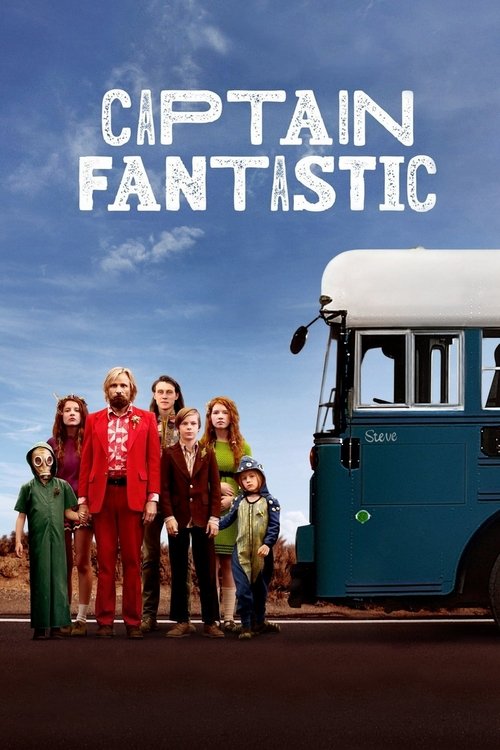
Captain Fantastic
Deep in the forests of the Pacific Northwest, a father devoted to raising his six kids with a rigorous physical and intellectual education is forced to leave his paradise and enter the world, beginning a journey that challenges his idea of what it means to be a parent.
Despite its tight budget of $5.0M, Captain Fantastic became a commercial success, earning $23.1M worldwide—a 362% return. The film's fresh perspective connected with viewers, demonstrating that strong storytelling can transcend budget limitations.
Nominated for 1 Oscar. 15 wins & 51 nominations


Plot Structure
Story beats plotted across runtime


Narrative Arc
Emotional journey through the story's key moments
Story Circle
Blueprint 15-beat structure
Arcplot Score Breakdown
Weighted: Precision (70%) + Arc (15%) + Theme (15%)
Captain Fantastic (2016) exhibits strategically placed narrative design, characteristic of Matt Ross's storytelling approach. This structural analysis examines how the film's 15-point plot structure maps to proven narrative frameworks across 1 hour and 58 minutes. With an Arcplot score of 7.0, the film balances conventional beats with creative variation.
Characters
Cast & narrative archetypes

Ben Cash
Bo
Rellian
Kielyr
Vespyr
Zaja
Nai
Jack
Abigail
Main Cast & Characters
Ben Cash
Played by Viggo Mortensen
A father raising six children in the wilderness with survivalist and intellectual training, struggling to reintegrate with society after his wife's death.
Bo
Played by George MacKay
The eldest son, intellectually brilliant and physically capable, preparing to leave for college and questioning his unconventional upbringing.
Rellian
Played by Nicholas Hamilton
A teenage son who rebels against his father's methods and blames Ben for his mother's death.
Kielyr
Played by Samantha Isler
The eldest daughter, athletic and devoted to her family's way of life.
Vespyr
Played by Annalise Basso
A middle daughter, intelligent and adaptable to both wilderness and conventional society.
Zaja
Played by Shree Crooks
One of the younger daughters, curious and eager to learn.
Nai
Played by Charlie Shotwell
The youngest son, innocent and loyal to his father's teachings.
Jack
Played by Frank Langella
Ben's father-in-law who disapproves of Ben's parenting and threatens to take custody of the children.
Abigail
Played by Ann Dowd
Ben's mother-in-law who shares her husband's concerns about the children's welfare.
Structural Analysis
The Status Quo at 1 minutes (1% through the runtime) establishes The children hunt a deer in the Pacific Northwest forest. Bo kills it and is celebrated as "now a man." Ben's utopian survivalist family thrives in isolation, physically capable and intellectually brilliant.. Structural examination shows that this early placement immediately immerses viewers in the story world.
The inciting incident occurs at 14 minutes when Ben tells the children their mother has died. Jack, Leslie's father, calls and forbids Ben from attending the funeral, threatening to have him arrested. The isolated world can no longer be maintained.. At 12% through the film, this Disruption aligns precisely with traditional story structure. This beat shifts the emotional landscape, launching the protagonist into the central conflict.
The First Threshold at 30 minutes marks the transition into Act II, occurring at 25% of the runtime. This reveals the protagonist's commitment to Ben actively chooses to defy Jack and drive the family to New Mexico for the funeral. They cross from wilderness into civilization, leaving their isolated world behind., moving from reaction to action.
At 60 minutes, the Midpoint arrives at 51% of the runtime—precisely centered, creating perfect narrative symmetry. Significantly, this crucial beat At the funeral, Jack publicly confronts Ben, calling him a dangerous extremist. Ben responds by having the children execute Leslie's wish: Zaja reads Leslie's suicide note aloud to the entire church, revealing her mental illness and attacking Christian burial. False victory turns to humiliation and exposure., fundamentally raising what's at risk. The emotional intensity shifts, dividing the narrative into clear before-and-after phases.
The Collapse moment at 87 minutes (74% through) represents the emotional nadir. Here, At the hospital, Rellian—injured because of Ben's ideology—screams that he hates his father and wants to live with his grandparents. Ben realizes his experiment has harmed his children. His dream dies., reveals the protagonist at their lowest point. This beat's placement in the final quarter sets up the climactic reversal.
The Second Threshold at 94 minutes initiates the final act resolution at 79% of the runtime. The children escape Jack's house at night and reunite with Ben on the road. Bo tells Ben, "You're still our father. We need you." Ben realizes the answer isn't abandonment or control—it's synthesis. Together, they retrieve Leslie's body., demonstrating the transformation achieved throughout the journey.
Emotional Journey
Captain Fantastic's emotional architecture traces a deliberate progression across 15 carefully calibrated beats.
Narrative Framework
This structural analysis employs proven narrative structure principles that track dramatic progression. By mapping Captain Fantastic against these established plot points, we can identify how Matt Ross utilizes or subverts traditional narrative conventions. The plot point approach reveals not only adherence to structural principles but also creative choices that distinguish Captain Fantastic within the adventure genre.
Comparative Analysis
Additional adventure films include The Black Stallion, The Bad Guys and Puss in Boots.
Plot Points by Act
Act I
SetupStatus Quo
The children hunt a deer in the Pacific Northwest forest. Bo kills it and is celebrated as "now a man." Ben's utopian survivalist family thrives in isolation, physically capable and intellectually brilliant.
Theme
During a family discussion, one child challenges Ben's methods: "If you make us leave, how will we survive out there?" The tension between ideological purity and practical integration is established.
Worldbuilding
The family's daily life: rigorous physical training, advanced philosophical education, musical performance, celebration of Noam Chomsky Day instead of Christmas. Ben receives news that Leslie, hospitalized for bipolar disorder, has died by suicide.
Disruption
Ben tells the children their mother has died. Jack, Leslie's father, calls and forbids Ben from attending the funeral, threatening to have him arrested. The isolated world can no longer be maintained.
Resistance
Ben debates whether to honor Jack's demand or Leslie's wishes (Buddhist cremation). The children push him to go. Ben prepares them for "the mission" to rescue their mother. They leave the forest in their bus "Steve."
Act II
ConfrontationFirst Threshold
Ben actively chooses to defy Jack and drive the family to New Mexico for the funeral. They cross from wilderness into civilization, leaving their isolated world behind.
Mirror World
The family visits Ben's sister Harper and her husband. The contrast between the two parenting styles becomes explicit. Harper's children are sheltered and technologically dependent; Ben's are worldly but socially awkward. Bo meets girls for the first time.
Premise
Fish-out-of-water sequences: the children experience supermarkets, restaurants, and normal teenagers. Bo attempts to kiss a girl and fails spectacularly. Rellian confronts Ben about their isolation. They steal supplies and continue toward New Mexico.
Midpoint
At the funeral, Jack publicly confronts Ben, calling him a dangerous extremist. Ben responds by having the children execute Leslie's wish: Zaja reads Leslie's suicide note aloud to the entire church, revealing her mental illness and attacking Christian burial. False victory turns to humiliation and exposure.
Opposition
Jack threatens legal action for custody. That night, the family executes a heist to steal Leslie's body and cremate her per her wishes. During the escape, Rellian falls from the roof and is severely injured. Ben rushes him to the hospital.
Collapse
At the hospital, Rellian—injured because of Ben's ideology—screams that he hates his father and wants to live with his grandparents. Ben realizes his experiment has harmed his children. His dream dies.
Crisis
Ben takes the children to Jack's house and surrenders them, believing they'll be better off. He returns to the forest alone, devastated. The children are trapped in normal suburban life, miserable but "safe."
Act III
ResolutionSecond Threshold
The children escape Jack's house at night and reunite with Ben on the road. Bo tells Ben, "You're still our father. We need you." Ben realizes the answer isn't abandonment or control—it's synthesis. Together, they retrieve Leslie's body.
Synthesis
The family cremates Leslie in a Buddhist ceremony in the desert, singing and celebrating her. Ben processes his grief and his failures. He brings the family to a farm where they begin a new balanced life: the children attend public school but maintain their skills and values.
Transformation
The family celebrates a normal Christmas morning in their farmhouse, eating junk food together. They still play music and debate ideas, but they're integrated with the world. Ben has found balance. The children gather around—connected, healthy, whole.