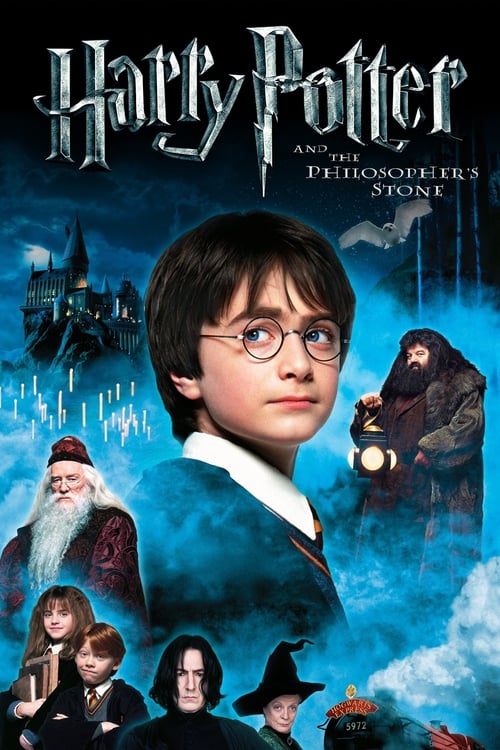
Harry Potter and the Philosopher's Stone
Harry Potter has lived under the stairs at his aunt and uncle's house his whole life. But on his 11th birthday, he learns he's a powerful wizard—with a place waiting for him at the Hogwarts School of Witchcraft and Wizardry. As he learns to harness his newfound powers with the help of the school's kindly headmaster, Harry uncovers the truth about his parents' deaths—and about the villain who's to blame.
Despite a substantial budget of $125.0M, Harry Potter and the Philosopher's Stone became a box office phenomenon, earning $976.5M worldwide—a remarkable 681% return.
Nominated for 3 Oscars. 20 wins & 75 nominations











Plot Structure
Story beats plotted across runtime


Narrative Arc
Emotional journey through the story's key moments
Story Circle
Blueprint 15-beat structure
Arcplot Score Breakdown
Weighted: Precision (70%) + Arc (15%) + Theme (15%)
Harry Potter and the Philosopher's Stone (2001) showcases carefully calibrated narrative architecture, characteristic of Chris Columbus's storytelling approach. This structural analysis examines how the film's 15-point plot structure maps to proven narrative frameworks across 2 hours and 32 minutes. With an Arcplot score of 6.3, the film takes an unconventional approach to traditional narrative frameworks.
Characters
Cast & narrative archetypes

Harry Potter
Hermione Granger
Ron Weasley
Albus Dumbledore
Severus Snape
Rubeus Hagrid
Lord Voldemort
Draco Malfoy
Main Cast & Characters
Harry Potter
Played by Daniel Radcliffe
An 11-year-old orphan who discovers he is a famous wizard and begins his magical education at Hogwarts School of Witchcraft and Wizardry.
Hermione Granger
Played by Emma Watson
A brilliant and studious Muggle-born witch who becomes Harry's loyal friend and voice of reason.
Ron Weasley
Played by Rupert Grint
Harry's first wizard friend from a large pure-blood family, loyal but often insecure about living in his siblings' shadows.
Albus Dumbledore
Played by Richard Harris
The wise and powerful Headmaster of Hogwarts who protects and guides Harry throughout his journey.
Severus Snape
Played by Alan Rickman
The Potions Master at Hogwarts who appears to despise Harry and shows clear favoritism toward Slytherin house.
Rubeus Hagrid
Played by Robbie Coltrane
The half-giant Keeper of Keys and Grounds at Hogwarts who introduces Harry to the wizarding world.
Lord Voldemort
Played by Richard Bremmer
The dark wizard who murdered Harry's parents and seeks the Philosopher's Stone to regain his physical form.
Draco Malfoy
Played by Tom Felton
A spoiled pure-blood wizard from Slytherin house who becomes Harry's rival and antagonist at school.
Structural Analysis
The Status Quo at 2 minutes (1% through the runtime) establishes Harry lives in a cupboard under the stairs at the Dursleys, mistreated and unloved, completely unaware of his true identity as a wizard.. Structural examination shows that this early placement immediately immerses viewers in the story world.
The inciting incident occurs at 18 minutes when Harry enters Diagon Alley for the first time, a magical hidden street where he discovers he's famous and wealthy, completely transforming his understanding of himself.. At 12% through the film, this Disruption aligns precisely with traditional story structure. This beat shifts the emotional landscape, launching the protagonist into the central conflict.
The First Threshold at 38 minutes marks the transition into Act II, occurring at 25% of the runtime. This indicates the protagonist's commitment to Harry crosses through the barrier at Platform 9¾ and boards the Hogwarts Express, actively choosing to leave the Muggle world behind and enter the wizarding world., moving from reaction to action.
At 76 minutes, the Midpoint arrives at 50% of the runtime—precisely centered, creating perfect narrative symmetry. Of particular interest, this crucial beat Harry catches the Snitch in his first Quidditch match, becoming the youngest Seeker in a century - a false victory as it draws unwanted attention and the mystery of the Philosopher's Stone deepens., fundamentally raising what's at risk. The emotional intensity shifts, dividing the narrative into clear before-and-after phases.
The Collapse moment at 114 minutes (75% through) represents the emotional nadir. Here, Harry realizes Dumbledore is gone and no adults will help. The Stone will be stolen tonight. He must face the threat alone with only his friends - a child confronting ultimate evil., shows the protagonist at their lowest point. This beat's placement in the final quarter sets up the climactic reversal.
The Second Threshold at 122 minutes initiates the final act resolution at 80% of the runtime. Harry enters the final chamber and discovers Quirrell, not Snape, is the enemy. He synthesizes what he's learned: love is more powerful than dark magic., demonstrating the transformation achieved throughout the journey.
Emotional Journey
Harry Potter and the Philosopher's Stone's emotional architecture traces a deliberate progression across 15 carefully calibrated beats.
Narrative Framework
This structural analysis employs a 15-point narrative structure framework that maps key story moments. By mapping Harry Potter and the Philosopher's Stone against these established plot points, we can identify how Chris Columbus utilizes or subverts traditional narrative conventions. The plot point approach reveals not only adherence to structural principles but also creative choices that distinguish Harry Potter and the Philosopher's Stone within the adventure genre.
Chris Columbus's Structural Approach
Among the 15 Chris Columbus films analyzed on Arcplot, the average structural score is 6.3, demonstrating varied approaches to story architecture. Harry Potter and the Philosopher's Stone represents one of the director's most structurally precise works. For comparative analysis, explore the complete Chris Columbus filmography.
Comparative Analysis
Additional adventure films include The Black Stallion, The Bad Guys and Puss in Boots. For more Chris Columbus analyses, see Nine Months, Harry Potter and the Prisoner of Azkaban and Percy Jackson & the Olympians: The Lightning Thief.
Plot Points by Act
Act I
SetupStatus Quo
Harry lives in a cupboard under the stairs at the Dursleys, mistreated and unloved, completely unaware of his true identity as a wizard.
Theme
Hagrid tells Harry "You're a wizard" - the theme of identity and discovering who you truly are despite what others tell you.
Worldbuilding
Harry experiences the abuse of the Dursleys, receives mysterious letters, and learns he's a wizard. Hagrid introduces him to the wizarding world.
Disruption
Harry enters Diagon Alley for the first time, a magical hidden street where he discovers he's famous and wealthy, completely transforming his understanding of himself.
Resistance
Harry explores Diagon Alley, gets his wand, learns about his parents' death and Voldemort, and prepares for Hogwarts. He meets uncertainty about entering this new world.
Act II
ConfrontationFirst Threshold
Harry crosses through the barrier at Platform 9¾ and boards the Hogwarts Express, actively choosing to leave the Muggle world behind and enter the wizarding world.
Mirror World
Harry meets Ron and Hermione on the train, forming the friendship trio that will teach him about loyalty, bravery, and belonging - the family he never had.
Premise
Harry experiences the wonder of Hogwarts: the Sorting Hat, classes, Quidditch, making friends and enemies, discovering his natural talents, and exploring the magical castle.
Midpoint
Harry catches the Snitch in his first Quidditch match, becoming the youngest Seeker in a century - a false victory as it draws unwanted attention and the mystery of the Philosopher's Stone deepens.
Opposition
The trio investigates Snape, discovers the three-headed dog and the Stone, faces detentions in the Forbidden Forest, and realizes someone is trying to steal the Stone. Danger escalates.
Collapse
Harry realizes Dumbledore is gone and no adults will help. The Stone will be stolen tonight. He must face the threat alone with only his friends - a child confronting ultimate evil.
Crisis
The trio descends through the trapdoor into the unknown, facing deadly obstacles. Ron and Hermione are left behind. Harry must continue alone into darkness.
Act III
ResolutionSecond Threshold
Harry enters the final chamber and discovers Quirrell, not Snape, is the enemy. He synthesizes what he's learned: love is more powerful than dark magic.
Synthesis
Harry confronts Voldemort through Quirrell, uses his mother's protective love to destroy the host, and prevents the Stone's theft. Dumbledore explains Harry's power comes from love.
Transformation
Harry leaves Hogwarts for the summer, returning to the Dursleys but transformed - no longer the unloved orphan in the cupboard, but a confident wizard with a true home and family to return to.