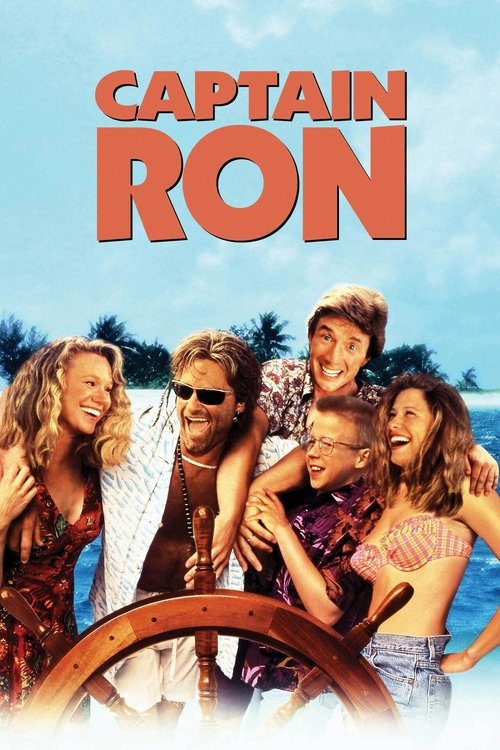
Captain Ron
When mild-mannered Martin Harvey finds out that he has inherited a vintage yacht, he decides to take his family on a Caribbean vacation to retrieve the vessel. Upon arriving on a small island and realizing that the ship is in rough shape, Martin and his family end up with more than they bargained for as the roguish Captain Ron signs on to sail the boat to Miami. It doesn't take long before Ron's anything-goes antics get the Harveys into plenty of trouble.
The film struggled financially against its respectable budget of $24.0M, earning $22.5M globally (-6% loss).


Plot Structure
Story beats plotted across runtime


Narrative Arc
Emotional journey through the story's key moments
Story Circle
Blueprint 15-beat structure
Arcplot Score Breakdown
Weighted: Precision (70%) + Arc (15%) + Theme (15%)
Captain Ron (1992) exhibits meticulously timed story structure, characteristic of Thom Eberhardt's storytelling approach. This structural analysis examines how the film's 15-point plot structure maps to proven narrative frameworks across 1 hour and 40 minutes. With an Arcplot score of 7.7, the film showcases strong structural fundamentals.
Characters
Cast & narrative archetypes

Captain Ron
Martin Harvey
Katherine Harvey
Caroline Harvey
Benjamin Harvey
Main Cast & Characters
Captain Ron
Played by Kurt Russell
A scruffy, laid-back sailor hired to captain the Harvey family's inherited yacht from the Caribbean to Miami.
Martin Harvey
Played by Martin Short
An uptight Chicago businessman who inherits a yacht and seeks adventure but struggles with chaos and unpredictability.
Katherine Harvey
Played by Mary Kay Place
Martin's wife who supports the family adventure while trying to maintain order and protect her children.
Caroline Harvey
Played by Meadow Sisto
The teenage daughter of the Harvey family who becomes romantically interested in the sailing lifestyle.
Benjamin Harvey
Played by Benjamin Salisbury
The young son of the Harvey family who idolizes Captain Ron and embraces the adventure.
Structural Analysis
The Status Quo at 1 minutes (1% through the runtime) establishes Martin Harvey lives a buttoned-up corporate life in Chicago, micromanaging his family and anxiously conforming to social expectations at a yacht club dinner.. Notably, this early placement immediately immerses viewers in the story world.
The inciting incident occurs at 13 minutes when Martin learns he has inherited a yacht in the Caribbean from his recently deceased uncle. This unexpected windfall offers an escape from his mundane corporate existence.. At 13% through the film, this Disruption is delayed, allowing extended setup of the story world. This beat shifts the emotional landscape, launching the protagonist into the central conflict.
The First Threshold at 24 minutes marks the transition into Act II, occurring at 24% of the runtime. This shows the protagonist's commitment to The Harveys arrive in the Caribbean and meet Captain Ron for the first time. Martin makes the active choice to hire this questionable one-eyed sailor to captain their yacht back to Miami., moving from reaction to action.
At 51 minutes, the Midpoint arrives at 51% of the runtime—precisely centered, creating perfect narrative symmetry. Significantly, this crucial beat A major crisis occurs (pirates, mechanical failure, or family conflict reaches peak tension). Martin's controlling approach fails spectacularly, and Captain Ron's competence shines through. The stakes are raised significantly., fundamentally raising what's at risk. The emotional intensity shifts, dividing the narrative into clear before-and-after phases.
The Collapse moment at 75 minutes (75% through) represents the emotional nadir. Here, Martin fires Captain Ron in a moment of pride and insecurity, attempting to captain the boat himself. This decision immediately leads to disaster, endangering his family and revealing his deepest inadequacy., indicates the protagonist at their lowest point. This beat's placement in the final quarter sets up the climactic reversal.
The Second Threshold at 79 minutes initiates the final act resolution at 79% of the runtime. Martin swallows his pride and asks Captain Ron to return, or makes a crucial realization that he must embrace risk and trust others. He synthesizes Ron's spontaneity with his own protective instincts., demonstrating the transformation achieved throughout the journey.
Emotional Journey
Captain Ron's emotional architecture traces a deliberate progression across 15 carefully calibrated beats.
Narrative Framework
This structural analysis employs a 15-point narrative structure framework that maps key story moments. By mapping Captain Ron against these established plot points, we can identify how Thom Eberhardt utilizes or subverts traditional narrative conventions. The plot point approach reveals not only adherence to structural principles but also creative choices that distinguish Captain Ron within the adventure genre.
Thom Eberhardt's Structural Approach
Among the 3 Thom Eberhardt films analyzed on Arcplot, the average structural score is 7.2, reflecting strong command of classical structure. Captain Ron represents one of the director's most structurally precise works. For comparative analysis, explore the complete Thom Eberhardt filmography.
Comparative Analysis
Additional adventure films include The Black Stallion, The Bad Guys and Puss in Boots. For more Thom Eberhardt analyses, see Without a Clue, Night of the Comet.
Plot Points by Act
Act I
SetupStatus Quo
Martin Harvey lives a buttoned-up corporate life in Chicago, micromanaging his family and anxiously conforming to social expectations at a yacht club dinner.
Theme
Martin's boss or colleague suggests that sometimes you need to take risks and stop living in fear, hinting at the film's theme of embracing adventure over safety.
Worldbuilding
Introduction to the Harvey family dynamics: uptight father Martin, supportive wife Katherine, rebellious daughter Caroline, and younger son Ben. Their strained relationships and Martin's controlling nature are established.
Disruption
Martin learns he has inherited a yacht in the Caribbean from his recently deceased uncle. This unexpected windfall offers an escape from his mundane corporate existence.
Resistance
The Harveys debate whether to travel to the Caribbean to claim the boat. Martin researches, plans obsessively, and the family discusses the risks versus potential rewards of sailing it back themselves.
Act II
ConfrontationFirst Threshold
The Harveys arrive in the Caribbean and meet Captain Ron for the first time. Martin makes the active choice to hire this questionable one-eyed sailor to captain their yacht back to Miami.
Mirror World
Captain Ron begins to bond with the family, particularly the kids, representing a carefree, adventurous philosophy that contrasts sharply with Martin's rigid control. He embodies the thematic lesson Martin needs to learn.
Premise
The sailing adventure delivers comedic mishaps and bonding moments. Captain Ron's unorthodox methods clash with Martin's need for control, while the family experiences freedom, encounters guerrilla fighters, and navigates Caribbean waters.
Midpoint
A major crisis occurs (pirates, mechanical failure, or family conflict reaches peak tension). Martin's controlling approach fails spectacularly, and Captain Ron's competence shines through. The stakes are raised significantly.
Opposition
Martin's insecurity intensifies as his family increasingly respects Captain Ron over him. External pressures mount (authorities, mechanical problems, dangerous waters), and Martin's attempts to reassert control backfire repeatedly.
Collapse
Martin fires Captain Ron in a moment of pride and insecurity, attempting to captain the boat himself. This decision immediately leads to disaster, endangering his family and revealing his deepest inadequacy.
Crisis
Martin faces the consequences of his hubris as the boat and family are in genuine peril. He confronts his need for control and realizes that his rigidity has been pushing his family away.
Act III
ResolutionSecond Threshold
Martin swallows his pride and asks Captain Ron to return, or makes a crucial realization that he must embrace risk and trust others. He synthesizes Ron's spontaneity with his own protective instincts.
Synthesis
The finale involves navigating the final obstacles to reach Miami. Martin applies his new lessons, working collaboratively with Captain Ron and trusting his family. They overcome the last challenge together as a transformed unit.
Transformation
The Harveys arrive safely in Miami as a changed family. Martin has loosened up, embraced adventure, and reconnected with his wife and kids. The closing image mirrors the opening but shows a relaxed, confident Martin who has learned to let go.