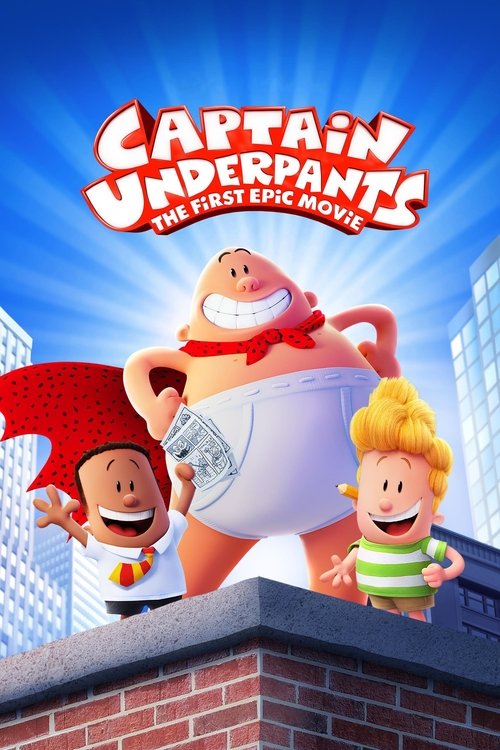
Captain Underpants: The First Epic Movie
Based on the bestselling book series, this outrageous comedy tells the story of George and Harold, two overly imaginative pranksters who hypnotize their principal into thinking he’s an enthusiastic, yet dimwitted, superhero named Captain Underpants.
Despite a respectable budget of $38.0M, Captain Underpants: The First Epic Movie became a commercial success, earning $125.4M worldwide—a 230% return.
3 wins & 15 nominations


Plot Structure
Story beats plotted across runtime


Narrative Arc
Emotional journey through the story's key moments
Story Circle
Blueprint 15-beat structure
Arcplot Score Breakdown
Weighted: Precision (70%) + Arc (15%) + Theme (15%)
Captain Underpants: The First Epic Movie (2017) exhibits deliberately positioned story structure, characteristic of David Soren's storytelling approach. This structural analysis examines how the film's 15-point plot structure maps to proven narrative frameworks across 1 hour and 29 minutes. With an Arcplot score of 7.6, the film showcases strong structural fundamentals.
Characters
Cast & narrative archetypes

George Beard
Harold Hutchins
Captain Underpants / Mr. Krupp
Professor Poopypants
Melvin Sneedly
Main Cast & Characters
George Beard
Played by Kevin Hart
Creative, imaginative fourth-grader who co-creates Captain Underpants comics with his best friend Harold.
Harold Hutchins
Played by Thomas Middleditch
Artistic, thoughtful fourth-grader who illustrates the Captain Underpants comics with George.
Captain Underpants / Mr. Krupp
Played by Ed Helms
The boys' grumpy principal who transforms into the delusional superhero Captain Underpants when hypnotized.
Professor Poopypants
Played by Nick Kroll
A brilliant but humiliated scientist seeking revenge on those who mock his ridiculous name.
Melvin Sneedly
Played by Jordan Peele
The tattletale teacher's pet who represents everything the boys despise about conformity.
Structural Analysis
The Status Quo at 1 minutes (1% through the runtime) establishes George and Harold's joyful friendship is established through their comic-making and prank partnership. They narrate their origin story and demonstrate their inseparable bond at Jerome Horwitz Elementary School.. Notably, this early placement immediately immerses viewers in the story world.
The inciting incident occurs at 10 minutes when George and Harold are caught on camera sabotaging the school's Invention Convention. Principal Krupp finally has evidence to punish them and declares he will put them in separate classes, destroying their friendship.. At 12% through the film, this Disruption aligns precisely with traditional story structure. This beat shifts the emotional landscape, launching the protagonist into the central conflict.
The First Threshold at 22 minutes marks the transition into Act II, occurring at 25% of the runtime. This indicates the protagonist's commitment to George and Harold make the active choice to embrace Captain Underpants and use him to make school fun. They decide to manage their creation rather than reverse the hypnosis, entering the new world of having a superhero principal., moving from reaction to action.
At 44 minutes, the Midpoint arrives at 49% of the runtime—precisely centered, creating perfect narrative symmetry. Of particular interest, this crucial beat Professor Poopypants reveals his evil plan to rid the world of laughter using the Turbo Toilet 2000. The stakes raise from school-level pranks to world-threatening danger. The boys realize their fun has enabled a real villain., fundamentally raising what's at risk. The emotional intensity shifts, dividing the narrative into clear before-and-after phases.
The Collapse moment at 66 minutes (74% through) represents the emotional nadir. Here, Captain Underpants is defeated and captured by Poopypants. George and Harold face separation as their friendship and fun have seemingly caused disaster. The death of their joyful world and partnership appears imminent., indicates the protagonist at their lowest point. This beat's placement in the final quarter sets up the climactic reversal.
The Second Threshold at 71 minutes initiates the final act resolution at 80% of the runtime. George and Harold realize that their creativity and friendship are their true powers. They synthesize their comic-making skills with real courage, choosing to save Captain Underpants and stop Poopypants themselves, accepting responsibility while keeping their joy., demonstrating the transformation achieved throughout the journey.
Emotional Journey
Captain Underpants: The First Epic Movie's emotional architecture traces a deliberate progression across 15 carefully calibrated beats.
Narrative Framework
This structural analysis employs systematic plot point analysis that identifies crucial turning points. By mapping Captain Underpants: The First Epic Movie against these established plot points, we can identify how David Soren utilizes or subverts traditional narrative conventions. The plot point approach reveals not only adherence to structural principles but also creative choices that distinguish Captain Underpants: The First Epic Movie within the family genre.
David Soren's Structural Approach
Among the 2 David Soren films analyzed on Arcplot, the average structural score is 7.4, reflecting strong command of classical structure. Captain Underpants: The First Epic Movie represents one of the director's most structurally precise works. For comparative analysis, explore the complete David Soren filmography.
Comparative Analysis
Additional family films include The Black Stallion, The Bad Guys and Ella Enchanted. For more David Soren analyses, see Turbo.
Plot Points by Act
Act I
SetupStatus Quo
George and Harold's joyful friendship is established through their comic-making and prank partnership. They narrate their origin story and demonstrate their inseparable bond at Jerome Horwitz Elementary School.
Theme
Mr. Krupp warns the boys that their pranks and friendship won't last forever, stating "One day you'll be separated." The theme of friendship vs. conformity/authority is introduced.
Worldbuilding
Establishment of Jerome Horwitz Elementary as a joy-crushing institution. Introduction of Principal Krupp as the antagonist who wants to destroy fun, the boys' treehouse headquarters, their comic book creation process, and the school's oppressive atmosphere.
Disruption
George and Harold are caught on camera sabotaging the school's Invention Convention. Principal Krupp finally has evidence to punish them and declares he will put them in separate classes, destroying their friendship.
Resistance
The boys resist separation and desperately try to find a solution. George uses a 3D Hypno-Ring from a cereal box to hypnotize Principal Krupp as a last resort, accidentally transforming him into their comic book hero, Captain Underpants.
Act II
ConfrontationFirst Threshold
George and Harold make the active choice to embrace Captain Underpants and use him to make school fun. They decide to manage their creation rather than reverse the hypnosis, entering the new world of having a superhero principal.
Mirror World
Captain Underpants becomes the manifestation of pure joy and friendship that the boys represent. His childlike enthusiasm and lack of responsibility mirror what the boys must learn to balance - fun with consequences.
Premise
The promise of the premise: Captain Underpants makes school fun. The boys manage their hypnotized principal, enjoy the improved school atmosphere, but struggle to keep him out of danger. Introduction of Professor Poopypants as the new science teacher.
Midpoint
Professor Poopypants reveals his evil plan to rid the world of laughter using the Turbo Toilet 2000. The stakes raise from school-level pranks to world-threatening danger. The boys realize their fun has enabled a real villain.
Opposition
Poopypants gains power and begins turning people humorless. Captain Underpants proves ineffective without real powers. The boys' management of the situation falls apart as consequences mount. Their immaturity catches up with them.
Collapse
Captain Underpants is defeated and captured by Poopypants. George and Harold face separation as their friendship and fun have seemingly caused disaster. The death of their joyful world and partnership appears imminent.
Crisis
The boys process their apparent failure and face the end of their friendship. They reflect on whether their fun-loving nature is actually irresponsible. Dark night as they contemplate giving up their creative partnership.
Act III
ResolutionSecond Threshold
George and Harold realize that their creativity and friendship are their true powers. They synthesize their comic-making skills with real courage, choosing to save Captain Underpants and stop Poopypants themselves, accepting responsibility while keeping their joy.
Synthesis
Final confrontation with Poopypants. The boys use their creativity to give Captain Underpants real superpowers by having him drink alien juice. They defeat the villain through teamwork, imagination, and responsibility combined with fun.
Transformation
George and Harold remain best friends, still making comics and having fun, but now with Captain Underpants as their partner. They've proven that creativity and joy don't have to be irresponsible. The school remains transformed, showing friendship triumphant.