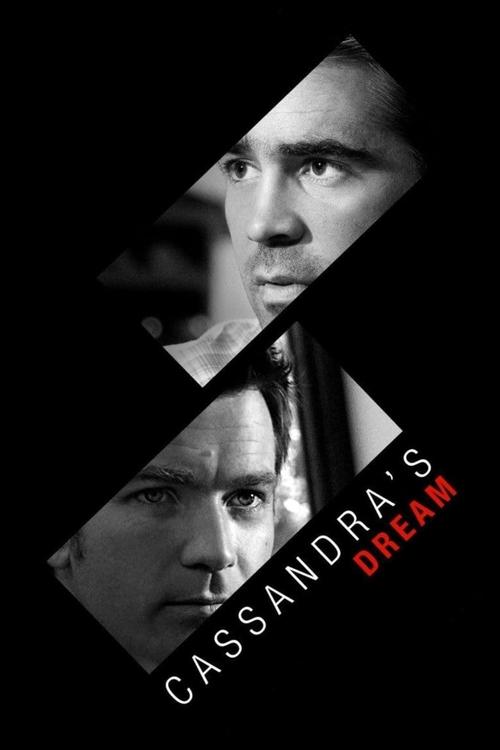
Cassandra's Dream
The tale of two brothers with serious financial woes. When a third party proposes they turn to crime, things go bad and the two become enemies.
Working with a moderate budget of $15.0M, the film achieved a modest success with $22.7M in global revenue (+51% profit margin).


Plot Structure
Story beats plotted across runtime


Narrative Arc
Emotional journey through the story's key moments
Story Circle
Blueprint 15-beat structure
Arcplot Score Breakdown
Weighted: Precision (70%) + Arc (15%) + Theme (15%)
Cassandra's Dream (2007) demonstrates meticulously timed story structure, characteristic of Woody Allen's storytelling approach. This structural analysis examines how the film's 15-point plot structure maps to proven narrative frameworks across 1 hour and 48 minutes. With an Arcplot score of 7.1, the film balances conventional beats with creative variation.
Characters
Cast & narrative archetypes

Terry Blaine
Ian Blaine
Howard
Angela Stark
Kate
Main Cast & Characters
Terry Blaine
Played by Colin Farrell
A charismatic car mechanic and dreamer who convinces his brother to buy a boat, leading them into moral compromise when debts mount.
Ian Blaine
Played by Ewan McGregor
Terry's cautious older brother who works in his father's restaurant and becomes increasingly anxious as their moral situation deteriorates.
Howard
Played by Tom Wilkinson
The brothers' wealthy uncle who offers them a way out of debt in exchange for committing murder.
Angela Stark
Played by Hayley Atwell
Ian's ambitious actress girlfriend who pressures him to provide a better lifestyle and invest in opportunities.
Kate
Played by Sally Hawkins
Terry's wealthy girlfriend whose father disapproves of their relationship due to class differences.
Structural Analysis
The Status Quo at 2 minutes (2% through the runtime) establishes Brothers Ian and Terry work humble jobs in London. They purchase a sailboat together called Cassandra's Dream, representing their shared dreams of escape and prosperity. Both feel trapped by their working-class circumstances.. Of particular interest, this early placement immediately immerses viewers in the story world.
The inciting incident occurs at 12 minutes when Uncle Howard arrives from California - wealthy, successful, everything the brothers aspire to be. He represents the life they want, bringing hope that he might help them escape their circumstances.. At 12% through the film, this Disruption aligns precisely with traditional story structure. This beat shifts the emotional landscape, launching the protagonist into the central conflict.
The First Threshold at 26 minutes marks the transition into Act II, occurring at 24% of the runtime. This demonstrates the protagonist's commitment to Howard makes his offer: he'll give them the money they desperately need, but only if they murder Martin Burns, a business associate who threatens to expose Howard's financial crimes. The brothers must choose between morality and their dreams., moving from reaction to action.
At 54 minutes, the Midpoint arrives at 50% of the runtime—precisely centered, creating perfect narrative symmetry. Significantly, this crucial beat The brothers commit the murder, shooting Martin Burns. The act is done - there's no going back. What seemed like a solution now becomes their curse. The false victory of getting the money is immediately tainted by guilt and paranoia., fundamentally raising what's at risk. The emotional intensity shifts, dividing the narrative into clear before-and-after phases.
The Collapse moment at 81 minutes (75% through) represents the emotional nadir. Here, Terry reaches complete breakdown and tells Ian he plans to confess to the police. Ian realizes his brother will destroy both their lives. The dream is dead; their relationship is dead. Ian must now decide whether to let Terry confess or take more drastic action., demonstrates the protagonist at their lowest point. This beat's placement in the final quarter sets up the climactic reversal.
The Second Threshold at 87 minutes initiates the final act resolution at 81% of the runtime. Ian makes his decision: he will kill Terry. He's fully embraced moral corruption. He lures Terry onto the boat, Cassandra's Dream - the symbol of their shared hopes now becomes the site of ultimate betrayal., demonstrating the transformation achieved throughout the journey.
Emotional Journey
Cassandra's Dream's emotional architecture traces a deliberate progression across 15 carefully calibrated beats.
Narrative Framework
This structural analysis employs systematic plot point analysis that identifies crucial turning points. By mapping Cassandra's Dream against these established plot points, we can identify how Woody Allen utilizes or subverts traditional narrative conventions. The plot point approach reveals not only adherence to structural principles but also creative choices that distinguish Cassandra's Dream within the crime genre.
Woody Allen's Structural Approach
Among the 42 Woody Allen films analyzed on Arcplot, the average structural score is 7.0, demonstrating varied approaches to story architecture. Cassandra's Dream represents one of the director's most structurally precise works. For comparative analysis, explore the complete Woody Allen filmography.
Comparative Analysis
Additional crime films include The Bad Guys, Rustom and The Whole Ten Yards. For more Woody Allen analyses, see Everyone Says I Love You, Celebrity and Interiors.
Plot Points by Act
Act I
SetupStatus Quo
Brothers Ian and Terry work humble jobs in London. They purchase a sailboat together called Cassandra's Dream, representing their shared dreams of escape and prosperity. Both feel trapped by their working-class circumstances.
Theme
Discussion about luck, gambling, and taking risks to get ahead. Terry talks about betting and how sometimes you have to take chances. The theme: what moral lines will you cross to escape your circumstances?
Worldbuilding
Ian works as a car mechanic but dreams of bigger things; he starts an affair with Angela, an actress. Terry manages his father's restaurant and has a gambling addiction. Their family dynamics are established, including their struggling parents and their own frustrated ambitions.
Disruption
Uncle Howard arrives from California - wealthy, successful, everything the brothers aspire to be. He represents the life they want, bringing hope that he might help them escape their circumstances.
Resistance
The brothers court Howard's favor. Ian needs money for a business investment in hotels. Terry's gambling debts spiral out of control. Howard seems sympathetic but noncommittal. The brothers debate asking him directly for help.
Act II
ConfrontationFirst Threshold
Howard makes his offer: he'll give them the money they desperately need, but only if they murder Martin Burns, a business associate who threatens to expose Howard's financial crimes. The brothers must choose between morality and their dreams.
Mirror World
Ian's relationship with Angela deepens. She represents hope, love, and the good life he wants to achieve. She embodies the question: can you build happiness on a foundation of moral compromise?
Premise
The brothers wrestle with the decision. Ian is more calculating and convinced they can get away with it. Terry is wracked with moral conflict. They plan the murder, rationalize it, argue about it. The premise plays out: watching two ordinary men convince themselves to commit murder.
Midpoint
The brothers commit the murder, shooting Martin Burns. The act is done - there's no going back. What seemed like a solution now becomes their curse. The false victory of getting the money is immediately tainted by guilt and paranoia.
Opposition
Terry psychologically unravels, consumed by guilt and nightmares. He becomes erratic, visiting doctors and therapists. Ian tries to hold things together and enjoy his new life with Angela, but Terry's instability threatens everything. The police investigation progresses. The brothers' bond fractures under the weight of their crime.
Collapse
Terry reaches complete breakdown and tells Ian he plans to confess to the police. Ian realizes his brother will destroy both their lives. The dream is dead; their relationship is dead. Ian must now decide whether to let Terry confess or take more drastic action.
Crisis
Ian grapples with the unthinkable: murdering his own brother to save himself. The dark night of realizing how far he's fallen - from dreaming of success to contemplating fratricide. Terry, meanwhile, is beyond reason, certain confession is his only path to peace.
Act III
ResolutionSecond Threshold
Ian makes his decision: he will kill Terry. He's fully embraced moral corruption. He lures Terry onto the boat, Cassandra's Dream - the symbol of their shared hopes now becomes the site of ultimate betrayal.
Synthesis
Ian shoots Terry on the boat. In attempting to stage it as suicide, Ian accidentally dies as well in the struggle. Both brothers are destroyed by the choice they made. The police discover their bodies. Angela and the family are left devastated.
Transformation
The boat Cassandra's Dream sits empty on the water - a monument to destroyed dreams. The closing image mirrors the opening hope with final devastation. The brothers who wanted to escape their circumstances found only death. The moral cost of their choice was total.