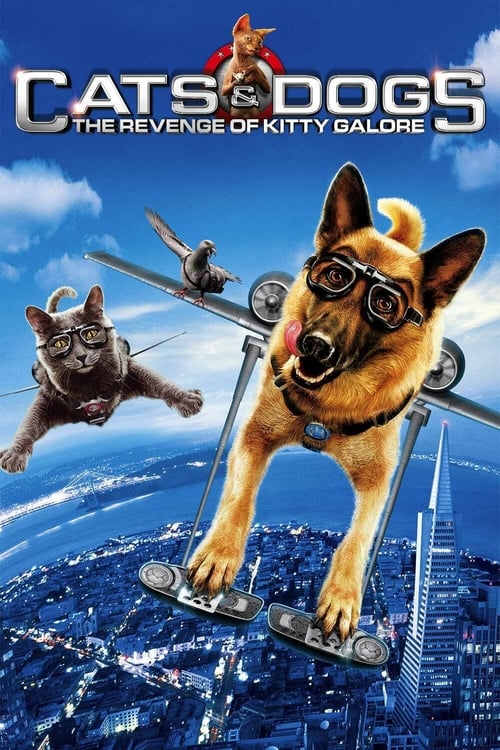
Cats & Dogs: The Revenge of Kitty Galore
The ongoing war between the canine and feline species is put on hold when they join forces to thwart a rogue cat spy with her own sinister plans for conquest.
Working with a substantial budget of $85.0M, the film achieved a respectable showing with $112.5M in global revenue (+32% profit margin).
1 win & 3 nominations


Plot Structure
Story beats plotted across runtime


Narrative Arc
Emotional journey through the story's key moments
Story Circle
Blueprint 15-beat structure
Arcplot Score Breakdown
Weighted: Precision (70%) + Arc (15%) + Theme (15%)
Cats & Dogs: The Revenge of Kitty Galore (2010) exemplifies deliberately positioned narrative design, characteristic of Brad Peyton's storytelling approach. This structural analysis examines how the film's 15-point plot structure maps to proven narrative frameworks across 1 hour and 22 minutes. With an Arcplot score of 6.8, the film balances conventional beats with creative variation.
Characters
Cast & narrative archetypes

Diggs
Butch
Kitty Galore
Catherine
Seamus
Lou
Main Cast & Characters
Diggs
Played by James Marsden
A reckless German Shepherd police dog who joins the secret agent organization to stop Kitty Galore.
Butch
Played by Nick Nolte
A gruff, experienced Anatolian Shepherd who leads the dog spy agency and mentors Diggs.
Kitty Galore
Played by Bette Midler
A hairless cat and former agent seeking revenge against both cats and dogs with a world domination plan.
Catherine
Played by Christina Applegate
A skilled Russian Blue cat agent from M.E.O.W.S. who reluctantly teams up with the dogs.
Seamus
Played by Katt Williams
A comical pigeon who serves as the eyes and ears of the animal spy network.
Lou
Played by Neil Patrick Harris
A retired beagle agent and former hero who provides wisdom and support.
Structural Analysis
The Status Quo at 1 minutes (1% through the runtime) establishes Diggs, a reckless German Shepherd police dog, bungling operations with his lone-wolf approach and lack of teamwork skills.. Structural examination shows that this early placement immediately immerses viewers in the story world.
The inciting incident occurs at 10 minutes when Kitty Galore, a rogue ex-MEOWS agent, reveals her plan to use a satellite to broadcast a frequency that will make all dogs turn on their masters, threatening the peace.. At 12% through the film, this Disruption aligns precisely with traditional story structure. This beat shifts the emotional landscape, launching the protagonist into the central conflict.
The First Threshold at 21 minutes marks the transition into Act II, occurring at 25% of the runtime. This demonstrates the protagonist's commitment to Diggs chooses to accept the mission and partner with Catherine, entering the world of cat-dog collaboration and heading to track down Kitty Galore., moving from reaction to action.
At 41 minutes, the Midpoint arrives at 50% of the runtime—precisely centered, creating perfect narrative symmetry. Notably, this crucial beat The team discovers the full scope of Kitty Galore's plan and her satellite is nearly operational. The stakes are raised—failure means all dogs worldwide become enemies of humans., fundamentally raising what's at risk. The emotional intensity shifts, dividing the narrative into clear before-and-after phases.
The Collapse moment at 62 minutes (75% through) represents the emotional nadir. Here, The team is captured by Kitty Galore. Diggs's inability to trust fully has led to their downfall, and they're imprisoned as the satellite launch countdown begins., reveals the protagonist at their lowest point. This beat's placement in the final quarter sets up the climactic reversal.
The Second Threshold at 66 minutes initiates the final act resolution at 80% of the runtime. Diggs rallies the team with newfound understanding of cooperation. They escape using teamwork, combining each member's unique skills—the lesson Butch taught him finally clicks., demonstrating the transformation achieved throughout the journey.
Emotional Journey
Cats & Dogs: The Revenge of Kitty Galore's emotional architecture traces a deliberate progression across 15 carefully calibrated beats.
Narrative Framework
This structural analysis employs proven narrative structure principles that track dramatic progression. By mapping Cats & Dogs: The Revenge of Kitty Galore against these established plot points, we can identify how Brad Peyton utilizes or subverts traditional narrative conventions. The plot point approach reveals not only adherence to structural principles but also creative choices that distinguish Cats & Dogs: The Revenge of Kitty Galore within the family genre.
Brad Peyton's Structural Approach
Among the 5 Brad Peyton films analyzed on Arcplot, the average structural score is 7.0, reflecting strong command of classical structure. Cats & Dogs: The Revenge of Kitty Galore takes a more unconventional approach compared to the director's typical style. For comparative analysis, explore the complete Brad Peyton filmography.
Comparative Analysis
Additional family films include The Black Stallion, The Bad Guys and Ella Enchanted. For more Brad Peyton analyses, see Rampage, Atlas and Incarnate.
Plot Points by Act
Act I
SetupStatus Quo
Diggs, a reckless German Shepherd police dog, bungling operations with his lone-wolf approach and lack of teamwork skills.
Theme
Butch tells Diggs that being a spy isn't about glory—it's about teamwork and trusting your partners.
Worldbuilding
Introduction to the secret spy organization MEOWS and DOG HQ, the longtime truce between cats and dogs, and the characters: Diggs, Butch, and the capable cat agent Catherine.
Disruption
Kitty Galore, a rogue ex-MEOWS agent, reveals her plan to use a satellite to broadcast a frequency that will make all dogs turn on their masters, threatening the peace.
Resistance
DOG HQ and MEOWS reluctantly agree to work together. Diggs resists partnering with Catherine the cat, but Butch mentors him on the need for unprecedented cooperation.
Act II
ConfrontationFirst Threshold
Diggs chooses to accept the mission and partner with Catherine, entering the world of cat-dog collaboration and heading to track down Kitty Galore.
Mirror World
Diggs begins working with Catherine and meets Seamus, a resourceful pigeon informant, learning to rely on others and see value in unlikely allies.
Premise
The team investigates Kitty Galore's operations, infiltrating locations, using gadgets, and engaging in action sequences that showcase the fun of cats and dogs working together as spies.
Midpoint
The team discovers the full scope of Kitty Galore's plan and her satellite is nearly operational. The stakes are raised—failure means all dogs worldwide become enemies of humans.
Opposition
Kitty Galore's forces close in. Diggs's old habits of working alone cause friction. The team faces setbacks, traps, and the villain's henchman Paws, growing increasingly desperate.
Collapse
The team is captured by Kitty Galore. Diggs's inability to trust fully has led to their downfall, and they're imprisoned as the satellite launch countdown begins.
Crisis
Imprisoned and seemingly defeated, Diggs reflects on his journey and realizes that true strength comes from trusting and working with your team, not individual heroics.
Act III
ResolutionSecond Threshold
Diggs rallies the team with newfound understanding of cooperation. They escape using teamwork, combining each member's unique skills—the lesson Butch taught him finally clicks.
Synthesis
The united cat-dog team storms Kitty Galore's lair. Diggs leads with trust and collaboration, they disable the satellite, and defeat Kitty Galore through perfect teamwork.
Transformation
Diggs is celebrated as a hero, but now works seamlessly as part of the team, mentoring others. He has transformed from lone wolf to collaborative leader.