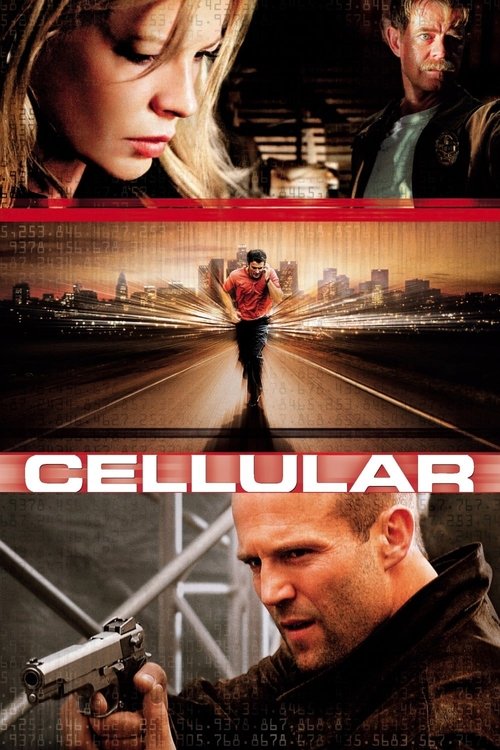
Cellular
A young man receives an emergency phone call on his cell phone from an older woman. She claims to have been kidnapped – and the kidnappers have targeted her husband and child next.
Despite a mid-range budget of $25.0M, Cellular became a box office success, earning $57.7M worldwide—a 131% return.


Plot Structure
Story beats plotted across runtime


Narrative Arc
Emotional journey through the story's key moments
Story Circle
Blueprint 15-beat structure
Arcplot Score Breakdown
Weighted: Precision (70%) + Arc (15%) + Theme (15%)
Cellular (2004) exemplifies carefully calibrated dramatic framework, characteristic of David R. Ellis's storytelling approach. This structural analysis examines how the film's 15-point plot structure maps to proven narrative frameworks across 1 hour and 34 minutes. With an Arcplot score of 7.0, the film balances conventional beats with creative variation.
Characters
Cast & narrative archetypes

Ryan
Jessica Martin
Ethan Greer
Sgt. Bob Mooney
Chloe Martin
Main Cast & Characters
Ryan
Played by Chris Evans
An ordinary young man who receives a desperate call from a kidnapped woman and becomes her only lifeline.
Jessica Martin
Played by Kim Basinger
A high school science teacher kidnapped by corrupt cops who must rely on a stranger to save her family.
Ethan Greer
Played by Jason Statham
A corrupt LAPD officer leading the kidnapping operation to retrieve incriminating evidence.
Sgt. Bob Mooney
Played by William H. Macy
A veteran LAPD desk sergeant who becomes an unlikely ally in the rescue effort.
Chloe Martin
Played by Jessica Biel
Jessica's teenage daughter who becomes a target of the kidnappers.
Structural Analysis
The Status Quo at 1 minutes (1% through the runtime) establishes Ryan, a carefree slacker at the beach, gets dumped by his girlfriend for being irresponsible and unreliable. Jessica Martin, a high school science teacher, starts her normal day with her family.. Structural examination shows that this early placement immediately immerses viewers in the story world.
The inciting incident occurs at 11 minutes when Ryan receives a random call from Jessica, who has jury-rigged a broken phone in the attic. She desperately begs him not to hang up - she's been kidnapped and he's her only lifeline.. At 12% through the film, this Disruption aligns precisely with traditional story structure. This beat shifts the emotional landscape, launching the protagonist into the central conflict.
The First Threshold at 23 minutes marks the transition into Act II, occurring at 24% of the runtime. This reveals the protagonist's commitment to Ryan makes the active choice to fully commit to helping Jessica. He steals a charger at gunpoint from a store, crossing into criminality to keep the connection alive. No turning back., moving from reaction to action.
At 46 minutes, the Midpoint arrives at 49% of the runtime—precisely centered, creating perfect narrative symmetry. Of particular interest, this crucial beat False defeat: The kidnappers murder Jessica's friend Dana and capture her husband Craig. Ryan fails to save them in time. The stakes are raised - the villains are winning and the body count is rising., fundamentally raising what's at risk. The emotional intensity shifts, dividing the narrative into clear before-and-after phases.
The Collapse moment at 70 minutes (75% through) represents the emotional nadir. Here, All is lost: Ryan loses the cell connection to Jessica. The phone dies completely. His lifeline to her is severed. Mooney is shot and gravely wounded. The whiff of death - both literal and metaphorical., illustrates the protagonist at their lowest point. This beat's placement in the final quarter sets up the climactic reversal.
The Second Threshold at 74 minutes initiates the final act resolution at 79% of the runtime. Breakthrough: Ryan synthesizes all the clues Jessica gave him and deduces where she's being held. He gains new resolve and a plan. Mooney provides backup. Ryan becomes the hero Jessica believed he could be., demonstrating the transformation achieved throughout the journey.
Emotional Journey
Cellular's emotional architecture traces a deliberate progression across 15 carefully calibrated beats.
Narrative Framework
This structural analysis employs a 15-point narrative structure framework that maps key story moments. By mapping Cellular against these established plot points, we can identify how David R. Ellis utilizes or subverts traditional narrative conventions. The plot point approach reveals not only adherence to structural principles but also creative choices that distinguish Cellular within the action genre.
David R. Ellis's Structural Approach
Among the 6 David R. Ellis films analyzed on Arcplot, the average structural score is 7.2, reflecting strong command of classical structure. Cellular takes a more unconventional approach compared to the director's typical style. For comparative analysis, explore the complete David R. Ellis filmography.
Comparative Analysis
Additional action films include The Bad Guys, Puss in Boots and Venom: The Last Dance. For more David R. Ellis analyses, see Final Destination 2, Homeward Bound II: Lost in San Francisco and Shark Night 3D.
Plot Points by Act
Act I
SetupStatus Quo
Ryan, a carefree slacker at the beach, gets dumped by his girlfriend for being irresponsible and unreliable. Jessica Martin, a high school science teacher, starts her normal day with her family.
Theme
Jessica's son talks about responsibility and doing the right thing. The theme of stepping up when others need you is established early.
Worldbuilding
Two parallel worlds established: Ryan's irresponsible beach life and Jessica's suburban family normalcy. Jessica is violently kidnapped by corrupt cops led by Greer, locked in an attic, and her family is threatened.
Disruption
Ryan receives a random call from Jessica, who has jury-rigged a broken phone in the attic. She desperately begs him not to hang up - she's been kidnapped and he's her only lifeline.
Resistance
Ryan debates whether this is real or a prank. Jessica tries to convince him while he navigates errands. He considers hanging up multiple times but keeps listening. The phone battery becomes a ticking clock.
Act II
ConfrontationFirst Threshold
Ryan makes the active choice to fully commit to helping Jessica. He steals a charger at gunpoint from a store, crossing into criminality to keep the connection alive. No turning back.
Mirror World
Ryan connects with Jessica on a deeper level. Their bond strengthens as he realizes saving her family is worth the risk. She represents the responsibility and purpose he's been lacking.
Premise
The "fun and games" of the high-speed chase premise. Ryan races across LA following Jessica's instructions, recruiting help from burned-out cop Mooney, surviving car chases, and desperately trying to reach her husband and son before the killers do.
Midpoint
False defeat: The kidnappers murder Jessica's friend Dana and capture her husband Craig. Ryan fails to save them in time. The stakes are raised - the villains are winning and the body count is rising.
Opposition
Everything gets harder. Ryan and Mooney are pursued by police who think Ryan is the criminal. The kidnappers close in on Jessica's son. Phone battery keeps dying. Greer stays one step ahead, and the conspiracy deepens.
Collapse
All is lost: Ryan loses the cell connection to Jessica. The phone dies completely. His lifeline to her is severed. Mooney is shot and gravely wounded. The whiff of death - both literal and metaphorical.
Crisis
Dark night of the soul. Ryan processes the apparent failure. Mooney fights for life. Ryan must find a way forward without the phone connection, relying only on what he's learned.
Act III
ResolutionSecond Threshold
Breakthrough: Ryan synthesizes all the clues Jessica gave him and deduces where she's being held. He gains new resolve and a plan. Mooney provides backup. Ryan becomes the hero Jessica believed he could be.
Synthesis
The finale. Ryan storms the location, fights the kidnappers, and rescues Jessica and her son. Epic confrontation with Greer at the pier. Police arrive. The conspiracy is exposed. Good triumphs.
Transformation
Final image mirrors opening: Ryan is back at the beach, but transformed. He's now responsible, heroic, and valued. Jessica and her son visit to thank him. He's become the man who does the right thing.