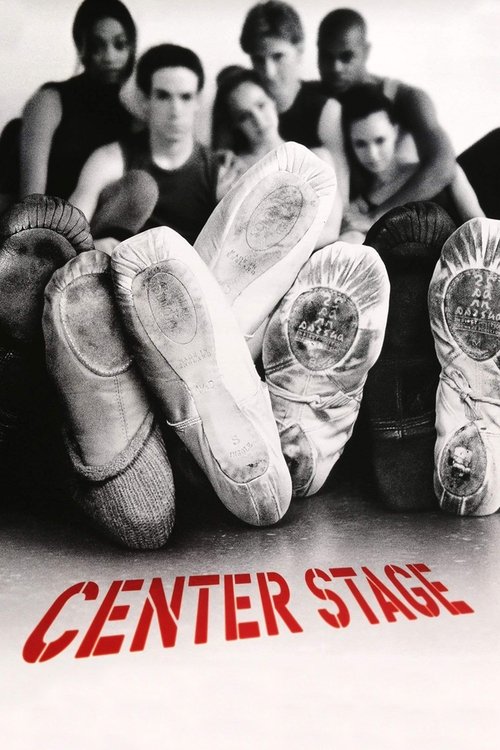
Center Stage
A group of 12 teenagers from various backgrounds enroll at the American Ballet Academy in New York to make it as ballet dancers and each one deals with the problems and stress of training and getting ahead in the world of dance.
The film struggled financially against its mid-range budget of $29.0M, earning $26.4M globally (-9% loss).


Plot Structure
Story beats plotted across runtime


Narrative Arc
Emotional journey through the story's key moments
Story Circle
Blueprint 15-beat structure
Arcplot Score Breakdown
Weighted: Precision (70%) + Arc (15%) + Theme (15%)
Center Stage (2000) reveals precise narrative architecture, characteristic of Nicholas Hytner's storytelling approach. This structural analysis examines how the film's 15-point plot structure maps to proven narrative frameworks across 1 hour and 55 minutes. With an Arcplot score of 7.3, the film balances conventional beats with creative variation.
Characters
Cast & narrative archetypes

Jody Sawyer
Cooper Nielson
Charlie
Maureen Cummings
Eva Rodriguez
Jonathan Reeves
Erik Jones
Sergei
Main Cast & Characters
Jody Sawyer
Played by Amanda Schull
A talented but technically flawed dancer who struggles to fit the classical ballet mold while discovering her authentic artistic voice.
Cooper Nielson
Played by Ethan Stiefel
A charismatic but self-destructive principal dancer battling injury and inner demons while mentoring Jody.
Charlie
Played by Sascha Radetsky
A supportive modern dancer and choreographer who sees Jody's true potential beyond classical ballet.
Maureen Cummings
Played by Susan May Pratt
A perfectionist dancer with a privileged background who is obsessed with achieving prima ballerina status.
Eva Rodriguez
Played by Zoe Saldana
A passionate Latina dancer battling body image issues and the pressure to maintain an impossibly thin physique.
Jonathan Reeves
Played by Peter Gallagher
The demanding and exacting artistic director of the American Ballet Academy who serves as ultimate gatekeeper.
Erik Jones
Played by Shakiem Evans
A talented male dancer and Maureen's boyfriend who becomes romantically entangled with Jody.
Sergei
Played by Ilia Kulik
A skilled dancer from the academy who becomes romantically involved with Maureen, complicating relationships.
Structural Analysis
The Status Quo at 1 minutes (1% through the runtime) establishes Jody Sawyer practices ballet in her small-town studio, demonstrating passion but imperfect technique. She's the big fish in a small pond, dreaming of more but not yet tested by real competition.. Of particular interest, this early placement immediately immerses viewers in the story world.
The inciting incident occurs at 13 minutes when Juliette Simone, the demanding ballet mistress, publicly humiliates Jody in class, telling her she has "bad feet" and lacks the body and technique for professional ballet. This threatens Jody's entire dream and identity.. At 12% through the film, this Disruption aligns precisely with traditional story structure. This beat shifts the emotional landscape, launching the protagonist into the central conflict.
The First Threshold at 28 minutes marks the transition into Act II, occurring at 24% of the runtime. This demonstrates the protagonist's commitment to Jody makes the active choice to stay at the academy and fight for her place, despite knowing she may not make the company. She commits to proving herself on her own terms rather than giving up or going home., moving from reaction to action.
At 57 minutes, the Midpoint arrives at 49% of the runtime—precisely centered, creating perfect narrative symmetry. Structural examination shows that this crucial beat False victory: Jody is cast in a featured role in the workshop performance, and her relationship with Cooper intensifies. She seems to be succeeding on both fronts—but this "success" is built on compromising herself, dancing Cooper's way rather than her own, and pursuing the wrong relationship., fundamentally raising what's at risk. The emotional intensity shifts, dividing the narrative into clear before-and-after phases.
The Collapse moment at 85 minutes (74% through) represents the emotional nadir. Here, Jody is told she will not be offered a contract with the company—her dream dies. Simultaneously, she confronts Cooper about his infidelity and ends their relationship. Her identity as both a dancer and woman in love collapses. Maureen also learns her injury may end her career (literal "death" of a dream)., shows the protagonist at their lowest point. This beat's placement in the final quarter sets up the climactic reversal.
The Second Threshold at 91 minutes initiates the final act resolution at 79% of the runtime. Jonathan Reeves offers Jody a second chance: dance in his new contemporary ballet at the final workshop performance, but dance her way—with full emotional authenticity. Jody realizes she can combine her technical training with her natural artistry. She accepts herself and chooses to dance for art, not approval., demonstrating the transformation achieved throughout the journey.
Emotional Journey
Center Stage's emotional architecture traces a deliberate progression across 15 carefully calibrated beats.
Narrative Framework
This structural analysis employs a 15-point narrative structure framework that maps key story moments. By mapping Center Stage against these established plot points, we can identify how Nicholas Hytner utilizes or subverts traditional narrative conventions. The plot point approach reveals not only adherence to structural principles but also creative choices that distinguish Center Stage within the drama genre.
Nicholas Hytner's Structural Approach
Among the 6 Nicholas Hytner films analyzed on Arcplot, the average structural score is 7.3, reflecting strong command of classical structure. Center Stage takes a more unconventional approach compared to the director's typical style. For comparative analysis, explore the complete Nicholas Hytner filmography.
Comparative Analysis
Additional drama films include After Thomas, South Pacific and Dirty Dancing: Havana Nights. For more Nicholas Hytner analyses, see The Madness of King George, The Lady in the Van and The Object of My Affection.
Plot Points by Act
Act I
SetupStatus Quo
Jody Sawyer practices ballet in her small-town studio, demonstrating passion but imperfect technique. She's the big fish in a small pond, dreaming of more but not yet tested by real competition.
Theme
Jonathan Reeves, the company choreographer, watches auditions and states: "I'm not looking for perfection of technique. I'm looking for perfection of emotion." This establishes the film's central theme about authenticity versus technical precision in art.
Worldbuilding
Introduction to the American Ballet Academy and its diverse students: perfectionist Maureen, confident Eva, rebellious Erik, and others. We see the competitive environment, strict instructors, and Jody's technical weaknesses. Cooper Nielson, the arrogant star dancer, is introduced.
Disruption
Juliette Simone, the demanding ballet mistress, publicly humiliates Jody in class, telling her she has "bad feet" and lacks the body and technique for professional ballet. This threatens Jody's entire dream and identity.
Resistance
Jody debates quitting versus persevering. She receives conflicting advice: her mother encourages her to come home, but her friends urge her to stay. She begins studying other students and working extra hours. Cooper notices her and begins a flirtation, offering her attention but also distraction.
Act II
ConfrontationFirst Threshold
Jody makes the active choice to stay at the academy and fight for her place, despite knowing she may not make the company. She commits to proving herself on her own terms rather than giving up or going home.
Mirror World
Jody begins a genuine connection with Charlie, the academy pianist and Cooper's roommate. Unlike the ballet world's superficiality, Charlie represents authentic emotion and sees Jody for who she really is, not just her technique. He embodies the theme of emotional truth over perfect form.
Premise
The "fun and games" of ballet academy life: rehearsals, performances, romantic entanglements, and competition. Jody dates Cooper while growing closer to Charlie. Eva deals with body image issues. Maureen struggles with her mother's pressure. Erik rebels against classical constraints. The students explore their identities as dancers.
Midpoint
False victory: Jody is cast in a featured role in the workshop performance, and her relationship with Cooper intensifies. She seems to be succeeding on both fronts—but this "success" is built on compromising herself, dancing Cooper's way rather than her own, and pursuing the wrong relationship.
Opposition
The pressure intensifies as workshop performance approaches. Jody discovers Cooper is cheating on her. Eva's eating disorder worsens. Maureen suffers a stress fracture from overwork. Juliette continues to criticize Jody's limitations. Jonathan Reeves sees something special in Jody but she's too compromised to access it. Everything gets harder.
Collapse
Jody is told she will not be offered a contract with the company—her dream dies. Simultaneously, she confronts Cooper about his infidelity and ends their relationship. Her identity as both a dancer and woman in love collapses. Maureen also learns her injury may end her career (literal "death" of a dream).
Crisis
Jody processes the loss of her dream and relationship. She contemplates her identity beyond ballet perfection. Maureen faces similar questions. Both dancers sit in the darkness of their shattered expectations, questioning what comes next and whether they gave up too much of themselves.
Act III
ResolutionSecond Threshold
Jonathan Reeves offers Jody a second chance: dance in his new contemporary ballet at the final workshop performance, but dance her way—with full emotional authenticity. Jody realizes she can combine her technical training with her natural artistry. She accepts herself and chooses to dance for art, not approval.
Synthesis
The final workshop performance. Jody dances Jonathan's contemporary piece with raw emotion and authenticity, stunning the audience and company directors. Maureen chooses to dance through pain one last time. Eva performs with newfound confidence. Erik showcases his modern style. Each dancer resolves their arc, synthesizing technique with personal truth.
Transformation
Jody receives multiple job offers from companies that value her artistry. She reunites with Charlie, choosing authentic love over superficial attraction. In contrast to the opening image of her dancing alone in a small studio seeking approval, she now dances confidently as her true self, surrounded by genuine supporters. The artist has found her voice.