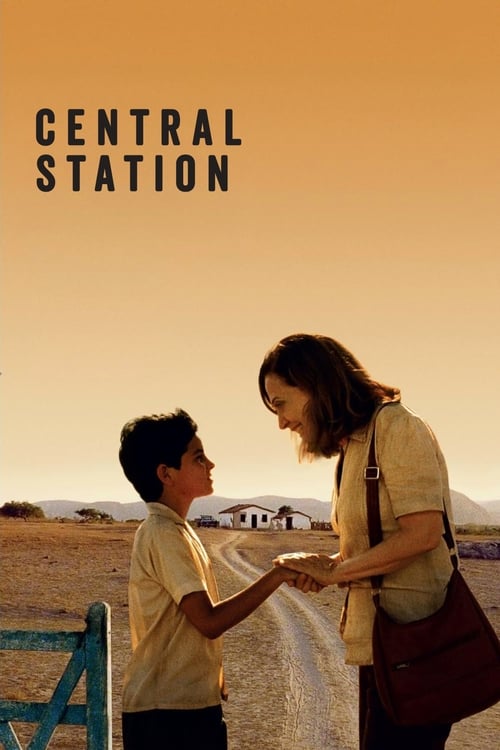
Central Station
An emotional journey of a former school teacher, who writes letters for illiterate people, and a young boy, whose mother has just died, as they search for the father he never knew.
Working with a tight budget of $2.9M, the film achieved a respectable showing with $5.6M in global revenue (+93% profit margin).
Nominated for 2 Oscars. 44 wins & 26 nominations

Plot Structure
Story beats plotted across runtime


Narrative Arc
Emotional journey through the story's key moments
Story Circle
Blueprint 15-beat structure
Arcplot Score Breakdown
Weighted: Precision (70%) + Arc (15%) + Theme (15%)
Central Station (1998) exemplifies deliberately positioned dramatic framework, characteristic of Walter Salles's storytelling approach. This structural analysis examines how the film's 15-point plot structure maps to proven narrative frameworks across 1 hour and 50 minutes. With an Arcplot score of 6.6, the film balances conventional beats with creative variation.
Characters
Cast & narrative archetypes

Dora
Josué
Main Cast & Characters
Dora
Played by Fernanda Montenegro
A cynical, hardened former schoolteacher who writes letters for illiterate people at Rio's train station. Her emotional journey from isolation to maternal connection drives the film.
Josué
Played by Vinícius de Oliveira
A nine-year-old boy who becomes orphaned and embarks on a journey to find his father with Dora. His innocence and hope gradually crack Dora's cynical exterior.
Structural Analysis
The Status Quo at 1 minutes (1% through the runtime) establishes Dora sits at her writing station in Rio's Central Station, cynically composing letters for illiterate customers while pocketing their money and discarding most letters unposted. She is emotionally isolated, hardened, and disconnected from humanity.. Significantly, this early placement immediately immerses viewers in the story world.
The inciting incident occurs at 13 minutes when Ana is hit by a bus and killed immediately after leaving the station with young Josué. The boy is now orphaned, alone in the city, with only the unposted letters to his father and a chance encounter with the woman who wrote them.. At 12% through the film, this Disruption aligns precisely with traditional story structure. This beat shifts the emotional landscape, launching the protagonist into the central conflict.
The First Threshold at 28 minutes marks the transition into Act II, occurring at 26% of the runtime. This illustrates the protagonist's commitment to Dora makes the active choice to take Josué on a bus journey to the interior to find his father. She leaves her familiar Rio world behind, committing to the journey and to the boy, crossing into unknown territory both geographically and emotionally., moving from reaction to action.
At 55 minutes, the Midpoint arrives at 50% of the runtime—precisely centered, creating perfect narrative symmetry. The analysis reveals that this crucial beat They arrive at the father's address to find he has moved away. The initial quest seems to have failed. Stakes raise as their money dwindles and the journey becomes more desperate. Dora realizes she's become emotionally invested, making the potential failure more painful., fundamentally raising what's at risk. The emotional intensity shifts, dividing the narrative into clear before-and-after phases.
The Collapse moment at 83 minutes (75% through) represents the emotional nadir. Here, Dora awakens to find Josué gone—he has run away after a bitter argument. She experiences devastating loss and the death of her hope for redemption. The surrogate mother-son relationship appears destroyed. Her chance to become human again seems lost., reveals the protagonist at their lowest point. This beat's placement in the final quarter sets up the climactic reversal.
The Second Threshold at 88 minutes initiates the final act resolution at 80% of the runtime. Dora finds Josué with his half-brothers at a carpenter's workshop. She realizes the father is dead, but Josué has found family. She understands her role: not to possess the boy, but to deliver him home. She synthesizes her maternal love with the wisdom to let go., demonstrating the transformation achieved throughout the journey.
Emotional Journey
Central Station's emotional architecture traces a deliberate progression across 15 carefully calibrated beats.
Narrative Framework
This structural analysis employs systematic plot point analysis that identifies crucial turning points. By mapping Central Station against these established plot points, we can identify how Walter Salles utilizes or subverts traditional narrative conventions. The plot point approach reveals not only adherence to structural principles but also creative choices that distinguish Central Station within the drama genre.
Walter Salles's Structural Approach
Among the 6 Walter Salles films analyzed on Arcplot, the average structural score is 7.2, reflecting strong command of classical structure. Central Station takes a more unconventional approach compared to the director's typical style. For comparative analysis, explore the complete Walter Salles filmography.
Comparative Analysis
Additional drama films include After Thomas, South Pacific and Dirty Dancing: Havana Nights. For more Walter Salles analyses, see On the Road, Central Station and Dark Water.
Plot Points by Act
Act I
SetupStatus Quo
Dora sits at her writing station in Rio's Central Station, cynically composing letters for illiterate customers while pocketing their money and discarding most letters unposted. She is emotionally isolated, hardened, and disconnected from humanity.
Theme
A customer dictates a letter about finding family and connection. The theme of redemption through human connection and the search for father/home is introduced through others' words, foreshadowing Dora's journey.
Worldbuilding
Establishment of Dora's cynical world: her letter-writing scam, her apartment with friend Irene, her moral bankruptcy. We see Josué and his mother Ana dictate letters to the boy's absent father. The bustling, impersonal city life contrasts with the longing for connection expressed in the letters.
Disruption
Ana is hit by a bus and killed immediately after leaving the station with young Josué. The boy is now orphaned, alone in the city, with only the unposted letters to his father and a chance encounter with the woman who wrote them.
Resistance
Josué follows Dora, who reluctantly takes him in. She tries to sell him to organ traffickers, takes the money, but is guilt-stricken. After Irene's moral pressure and her own awakening conscience, Dora rescues Josué. She debates whether to help him find his father or abandon him.
Act II
ConfrontationFirst Threshold
Dora makes the active choice to take Josué on a bus journey to the interior to find his father. She leaves her familiar Rio world behind, committing to the journey and to the boy, crossing into unknown territory both geographically and emotionally.
Mirror World
The developing relationship between Dora and Josué becomes the emotional center. Their bond begins to crack her cynical armor. Josué represents innocence, hope, and the possibility of redemption—everything Dora has abandoned. He becomes her teacher in rediscovering humanity.
Premise
The road trip through Brazil's interior. Dora and Josué journey together, facing obstacles, encountering colorful characters, and gradually bonding. The promise of the premise: a cynical woman and an orphaned boy searching for family, discovering each other. Their relationship deepens despite Dora's resistance.
Midpoint
They arrive at the father's address to find he has moved away. The initial quest seems to have failed. Stakes raise as their money dwindles and the journey becomes more desperate. Dora realizes she's become emotionally invested, making the potential failure more painful.
Opposition
The search continues with increasing difficulty. They track leads to the father's possible location. Tensions rise between Dora and Josué as exhaustion and disappointment build. Dora's old instincts to abandon the quest and protect herself resurface, but her bond with Josué is now too strong.
Collapse
Dora awakens to find Josué gone—he has run away after a bitter argument. She experiences devastating loss and the death of her hope for redemption. The surrogate mother-son relationship appears destroyed. Her chance to become human again seems lost.
Crisis
Dora searches desperately for Josué, confronting her terror of loss and her deep love for the boy. She sits in darkness with her grief and fear, processing the emotional transformation she has undergone. This is her dark night of recognizing what she has become and what she stands to lose.
Act III
ResolutionSecond Threshold
Dora finds Josué with his half-brothers at a carpenter's workshop. She realizes the father is dead, but Josué has found family. She understands her role: not to possess the boy, but to deliver him home. She synthesizes her maternal love with the wisdom to let go.
Synthesis
Dora spends precious final time with Josué and his brothers. She helps Josué understand his father through old letters. They share a tender farewell. She leaves him sleeping, writing him a letter of love and goodbye, completing the circle of the unposted letters that began their journey.
Transformation
Dora rides the bus back alone, reading a letter Josué's father once wrote. Tears stream down her face—the hardened, cynical woman has been transformed into someone capable of love, sacrifice, and genuine human connection. She has found redemption through losing what she learned to love.