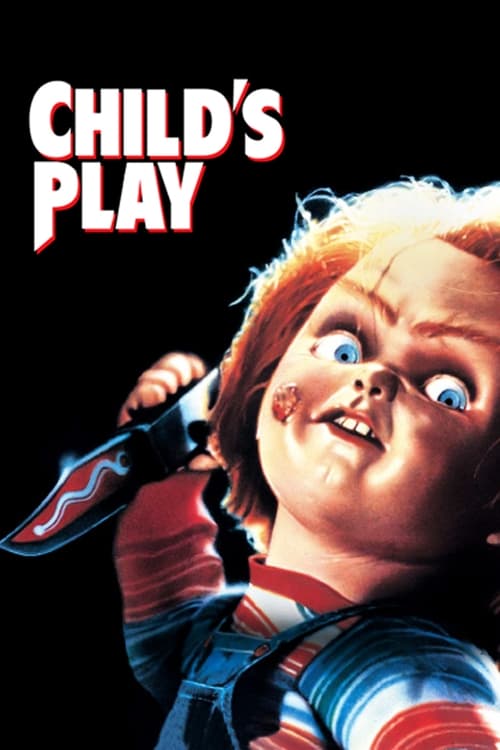
Child's Play
An innocent-looking doll is inhabited by the soul of a serial killer who refuses to die.
Despite its small-scale budget of $9.0M, Child's Play became a box office success, earning $44.2M worldwide—a 391% return. The film's bold vision engaged audiences, confirming that strong storytelling can transcend budget limitations.
2 wins & 4 nominations


Plot Structure
Story beats plotted across runtime


Narrative Arc
Emotional journey through the story's key moments
Story Circle
Blueprint 15-beat structure
Arcplot Score Breakdown
Weighted: Precision (70%) + Arc (15%) + Theme (15%)
Child's Play (1988) exemplifies carefully calibrated story structure, characteristic of Tom Holland's storytelling approach. This structural analysis examines how the film's 15-point plot structure maps to proven narrative frameworks across 1 hour and 27 minutes. With an Arcplot score of 7.1, the film balances conventional beats with creative variation.
Characters
Cast & narrative archetypes

Andy Barclay

Chucky / Charles Lee Ray

Karen Barclay

Mike Norris
Main Cast & Characters
Andy Barclay
Played by Alex Vincent
A six-year-old boy who receives a Good Guy doll possessed by serial killer Charles Lee Ray for his birthday.
Chucky / Charles Lee Ray
Played by Brad Dourif
A serial killer who transfers his soul into a Good Guy doll and terrorizes young Andy to possess his body.
Karen Barclay
Played by Catherine Hicks
Andy's single mother who struggles to believe her son's claims about the possessed doll.
Mike Norris
Played by Chris Sarandon
A Chicago police detective investigating the string of murders connected to Andy and the doll.
Structural Analysis
The Status Quo at 1 minutes (1% through the runtime) establishes Andy Barclay watches a Good Guys commercial on TV in his modest Chicago apartment, wishing for the popular doll for his birthday while his single mother Karen struggles financially.. The analysis reveals that this early placement immediately immerses viewers in the story world.
The inciting incident occurs at 10 minutes when Karen buys Andy a Good Guys doll from a homeless peddler in an alley for his birthday - unknowingly bringing the possessed Chucky doll containing serial killer Charles Lee Ray's soul into their home.. At 12% through the film, this Disruption aligns precisely with traditional story structure. This beat shifts the emotional landscape, launching the protagonist into the central conflict.
The First Threshold at 22 minutes marks the transition into Act II, occurring at 25% of the runtime. This shows the protagonist's commitment to Andy, under Chucky's influence, travels alone across Chicago to the home of Eddie Caputo (Charles Lee Ray's former accomplice). This active journey into danger marks Andy's entry into a nightmare world where the doll controls events., moving from reaction to action.
At 44 minutes, the Midpoint arrives at 50% of the runtime—precisely centered, creating perfect narrative symmetry. Notably, this crucial beat Karen and Mike confront John, the voodoo practitioner who taught Charles Lee Ray. John reveals the terrible truth: Chucky's soul will be trapped in the doll forever unless he transfers it into the first person he revealed himself to - Andy. The stakes skyrocket: Chucky will kill Andy to steal his body., fundamentally raising what's at risk. The emotional intensity shifts, dividing the narrative into clear before-and-after phases.
The Collapse moment at 65 minutes (75% through) represents the emotional nadir. Here, Chucky captures Andy and takes him back to the apartment to perform the soul transfer chant. Karen and Mike arrive but are overpowered. Chucky begins the voodoo ritual as Andy is helpless - the darkest moment where the child is about to lose his soul and body to the killer., shows the protagonist at their lowest point. This beat's placement in the final quarter sets up the climactic reversal.
The Second Threshold at 69 minutes initiates the final act resolution at 80% of the runtime. Karen realizes that despite Chucky's supernatural origin, he's becoming more human and vulnerable in the doll body. This revelation provides the key: he can be killed like anything else if they destroy the body completely., demonstrating the transformation achieved throughout the journey.
Emotional Journey
Child's Play's emotional architecture traces a deliberate progression across 15 carefully calibrated beats.
Narrative Framework
This structural analysis employs structural analysis methodology used to understand storytelling architecture. By mapping Child's Play against these established plot points, we can identify how Tom Holland utilizes or subverts traditional narrative conventions. The plot point approach reveals not only adherence to structural principles but also creative choices that distinguish Child's Play within the horror genre.
Tom Holland's Structural Approach
Among the 3 Tom Holland films analyzed on Arcplot, the average structural score is 6.6, demonstrating varied approaches to story architecture. Child's Play represents one of the director's most structurally precise works. For comparative analysis, explore the complete Tom Holland filmography.
Comparative Analysis
Additional horror films include A Nightmare on Elm Street, Mary Reilly. For more Tom Holland analyses, see Thinner, Fright Night.
Plot Points by Act
Act I
SetupStatus Quo
Andy Barclay watches a Good Guys commercial on TV in his modest Chicago apartment, wishing for the popular doll for his birthday while his single mother Karen struggles financially.
Theme
Karen's coworker warns her about buying things from peddlers in alleys, stating "You never know where it's been" - foreshadowing the danger of unknown origins and the consequences of desperate choices.
Worldbuilding
Introduction to Karen and Andy's world: a struggling single mother working at Carson Peirce department store, Andy's longing for a Good Guys doll, and the opening sequence showing serial killer Charles Lee Ray being shot by police and transferring his soul into a Good Guy doll via voodoo before dying.
Disruption
Karen buys Andy a Good Guys doll from a homeless peddler in an alley for his birthday - unknowingly bringing the possessed Chucky doll containing serial killer Charles Lee Ray's soul into their home.
Resistance
Andy bonds with Chucky and treats him as a best friend. Maggie the babysitter is killed by Chucky, falling out a window. Detective Mike Norris investigates. Karen initially dismisses Andy's claims that Chucky is alive, believing he's just traumatized.
Act II
ConfrontationFirst Threshold
Andy, under Chucky's influence, travels alone across Chicago to the home of Eddie Caputo (Charles Lee Ray's former accomplice). This active journey into danger marks Andy's entry into a nightmare world where the doll controls events.
Mirror World
Detective Mike Norris begins investigating the connection between the recent murders and the child Andy, forming an unlikely alliance with Karen. Mike represents the rational world forced to confront the supernatural.
Premise
The "killer doll" premise unfolds: Chucky murders Eddie Caputo, Andy is institutionalized as people blame him, Karen discovers Chucky is alive when the doll attacks her, and she teams with Detective Norris to stop Chucky and save Andy. The fun premise of a horror doll comes to life.
Midpoint
Karen and Mike confront John, the voodoo practitioner who taught Charles Lee Ray. John reveals the terrible truth: Chucky's soul will be trapped in the doll forever unless he transfers it into the first person he revealed himself to - Andy. The stakes skyrocket: Chucky will kill Andy to steal his body.
Opposition
Chucky hunts Andy at the psychiatric hospital. Karen and Mike race to save him. Chucky kills Dr. Ardmore and pursues Andy through the hospital. The chase intensifies as Chucky becomes more desperate - his time is running out to complete the soul transfer ritual.
Collapse
Chucky captures Andy and takes him back to the apartment to perform the soul transfer chant. Karen and Mike arrive but are overpowered. Chucky begins the voodoo ritual as Andy is helpless - the darkest moment where the child is about to lose his soul and body to the killer.
Crisis
The ritual fails - Chucky has waited too long and is now stuck in the doll body. Enraged, Chucky decides to kill Andy out of spite. Karen and Mike desperately fight to stop the seemingly indestructible doll as it pursues Andy through the apartment.
Act III
ResolutionSecond Threshold
Karen realizes that despite Chucky's supernatural origin, he's becoming more human and vulnerable in the doll body. This revelation provides the key: he can be killed like anything else if they destroy the body completely.
Synthesis
The final battle: Karen shoots Chucky, Mike sets him on fire in the fireplace, and they dismember the burning doll. Even limbless, Chucky continues attacking until Andy shoots him in the heart, finally destroying him. The family unit (Karen, Andy, and Mike) work together to defeat the evil.
Transformation
Andy is safe in his mother's arms as police and emergency vehicles arrive. The nightmare is over. Karen holds Andy close, their bond strengthened - she now believes and protects him. The innocent child has survived, and the mother has learned to trust her son's truth.