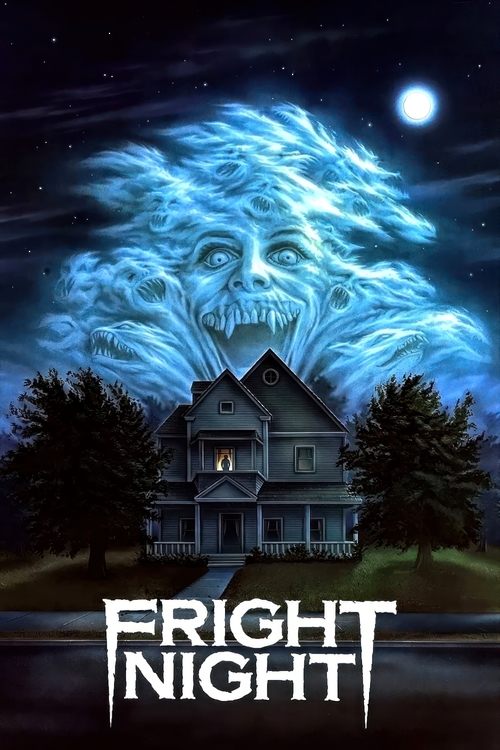
Fright Night
Charley Brewster, a high school student, accidentally discovers the true and creepy nature of Jerry Dandrige, his dashing and enigmatic new neighbor; but no one seems willing to believe him.
Despite its small-scale budget of $9.0M, Fright Night became a commercial success, earning $24.9M worldwide—a 177% return.
5 wins & 5 nominations


Plot Structure
Story beats plotted across runtime


Narrative Arc
Emotional journey through the story's key moments
Story Circle
Blueprint 15-beat structure
Arcplot Score Breakdown
Weighted: Precision (70%) + Arc (15%) + Theme (15%)
Fright Night (1985) demonstrates precise plot construction, characteristic of Tom Holland's storytelling approach. This structural analysis examines how the film's 15-point plot structure maps to proven narrative frameworks across 1 hour and 47 minutes. With an Arcplot score of 5.9, the film takes an unconventional approach to traditional narrative frameworks.
Characters
Cast & narrative archetypes

Charley Brewster
Jerry Dandridge
Peter Vincent
Amy Peterson
Evil Ed
Main Cast & Characters
Charley Brewster
Played by William Ragsdale
A teenage horror film enthusiast who discovers his new neighbor is a vampire and must convince others to help him stop the threat.
Jerry Dandridge
Played by Chris Sarandon
A charming and sophisticated vampire who moves in next door to Charley, balancing seduction with predatory menace.
Peter Vincent
Played by Roddy McDowall
A washed-up horror film actor hosting a late-night TV show who reluctantly becomes a real vampire hunter.
Amy Peterson
Played by Amanda Bearse
Charley's skeptical girlfriend who becomes endangered when Jerry takes an interest in her.
Evil Ed
Played by Stephen Geoffreys
Charley's obnoxious best friend and fellow horror fan who becomes a victim of Jerry's vampirism.
Structural Analysis
The Status Quo at 1 minutes (1% through the runtime) establishes Charley Brewster is a typical suburban teenager obsessed with horror movies, making out with his girlfriend Amy while "Fright Night" plays on TV. He lives in a safe, ordinary world where monsters are just entertainment.. Structural examination shows that this early placement immediately immerses viewers in the story world.
The inciting incident occurs at 12 minutes when While watching from his window, Charley witnesses Jerry Dandridge and Billy Cole carrying a coffin into the house next door, then sees Jerry with what appears to be a female victim. He realizes his new neighbor is a vampire.. At 12% through the film, this Disruption aligns precisely with traditional story structure. This beat shifts the emotional landscape, launching the protagonist into the central conflict.
The First Threshold at 26 minutes marks the transition into Act II, occurring at 24% of the runtime. This demonstrates the protagonist's commitment to After Jerry's menacing visit and the police dismissing him, Charley makes the active choice to seek help from Peter Vincent, his horror movie idol. He crosses from passive observer to active vampire hunter, committing to fight Jerry despite everyone thinking he's crazy., moving from reaction to action.
At 53 minutes, the Midpoint arrives at 50% of the runtime—precisely centered, creating perfect narrative symmetry. Notably, this crucial beat Jerry attacks Charley's house directly, killing Evil Ed (now a vampire) when he returns to attack Charley. The stakes raise dramatically—Jerry is no longer playing games. He explicitly threatens to take Amy next. The fun is over; this is now a fight for survival., fundamentally raising what's at risk. The emotional intensity shifts, dividing the narrative into clear before-and-after phases.
The Collapse moment at 80 minutes (75% through) represents the emotional nadir. Here, Amy is fully under Jerry's thrall, transformed and turning into a vampire. Charley confronts them in Jerry's house but is overpowered and nearly killed. Peter has abandoned him. Charley seems completely defeated—he's lost his girlfriend to the vampire and faces death alone. All is lost., indicates the protagonist at their lowest point. This beat's placement in the final quarter sets up the climactic reversal.
The Second Threshold at 85 minutes initiates the final act resolution at 80% of the runtime. Peter finds his courage and returns to save Charley, armed with the knowledge that faith and conviction matter more than props. Charley realizes he must believe in himself and fight like a real man, not just a horror movie fan. They synthesize: Charley's passion plus Peter's experience equals a real vampire-hunting team., demonstrating the transformation achieved throughout the journey.
Emotional Journey
Fright Night's emotional architecture traces a deliberate progression across 15 carefully calibrated beats.
Narrative Framework
This structural analysis employs proven narrative structure principles that track dramatic progression. By mapping Fright Night against these established plot points, we can identify how Tom Holland utilizes or subverts traditional narrative conventions. The plot point approach reveals not only adherence to structural principles but also creative choices that distinguish Fright Night within the comedy genre.
Tom Holland's Structural Approach
Among the 3 Tom Holland films analyzed on Arcplot, the average structural score is 6.6, demonstrating varied approaches to story architecture. Fright Night takes a more unconventional approach compared to the director's typical style. For comparative analysis, explore the complete Tom Holland filmography.
Comparative Analysis
Additional comedy films include The Bad Guys, Ella Enchanted and The Evening Star. For more Tom Holland analyses, see Thinner, Child's Play.
Plot Points by Act
Act I
SetupStatus Quo
Charley Brewster is a typical suburban teenager obsessed with horror movies, making out with his girlfriend Amy while "Fright Night" plays on TV. He lives in a safe, ordinary world where monsters are just entertainment.
Theme
Amy tells Charley he needs to grow up and stop watching horror movies all the time, suggesting that maturity means leaving childish fears behind. The irony: real horror is about to force him to grow up in ways she can't imagine.
Worldbuilding
Establishment of Charley's suburban life: his strained relationship with Amy who wants him to mature, his friendship with "Evil" Ed, his single mother, and his obsession with horror host Peter Vincent. New neighbors move in next door with a coffin, but everyone dismisses Charley's concerns.
Disruption
While watching from his window, Charley witnesses Jerry Dandridge and Billy Cole carrying a coffin into the house next door, then sees Jerry with what appears to be a female victim. He realizes his new neighbor is a vampire.
Resistance
Charley tries to convince everyone—his mother, Evil Ed, Amy, the police—that Jerry is a vampire, but no one believes him. He researches vampires, arms himself with crosses and stakes. Jerry becomes aware that Charley knows his secret and begins psychological warfare, visiting Charley's home and threatening him subtly.
Act II
ConfrontationFirst Threshold
After Jerry's menacing visit and the police dismissing him, Charley makes the active choice to seek help from Peter Vincent, his horror movie idol. He crosses from passive observer to active vampire hunter, committing to fight Jerry despite everyone thinking he's crazy.
Mirror World
Peter Vincent is introduced as Charley's thematic mirror: a man who played a vampire hunter on TV but is a coward in real life. Just as Charley must learn to become a real hero (not just a horror fan), Peter must find real courage (not just act it). Their partnership will force both to grow.
Premise
The "fun and games" of vampire hunting: Peter reluctantly agrees to help test if Jerry is a vampire. They visit Jerry's house where Peter administers the mirror test, confirming Jerry casts no reflection. Evil Ed is seduced and turned by Jerry. The vampire threat escalates from theory to reality as the body count rises.
Midpoint
Jerry attacks Charley's house directly, killing Evil Ed (now a vampire) when he returns to attack Charley. The stakes raise dramatically—Jerry is no longer playing games. He explicitly threatens to take Amy next. The fun is over; this is now a fight for survival.
Opposition
Jerry goes on the offensive: he seduces and kidnaps Amy, beginning her transformation into a vampire. Peter abandons Charley, too frightened to continue. Charley is isolated, his girlfriend is being turned, his mentor has fled, and Jerry is winning. The bad guys are closing in on all fronts.
Collapse
Amy is fully under Jerry's thrall, transformed and turning into a vampire. Charley confronts them in Jerry's house but is overpowered and nearly killed. Peter has abandoned him. Charley seems completely defeated—he's lost his girlfriend to the vampire and faces death alone. All is lost.
Crisis
Charley is at his lowest point, beaten and terrified in Jerry's lair. Meanwhile, Peter wrestles with his cowardice at home, confronting his failure to be the hero he portrayed. Both must face their darkness: Charley his fear and immaturity, Peter his fraudulence and cowardice.
Act III
ResolutionSecond Threshold
Peter finds his courage and returns to save Charley, armed with the knowledge that faith and conviction matter more than props. Charley realizes he must believe in himself and fight like a real man, not just a horror movie fan. They synthesize: Charley's passion plus Peter's experience equals a real vampire-hunting team.
Synthesis
The finale battle in Jerry's house: Charley and Peter work together, using vampire-hunting knowledge and newfound courage. They destroy Billy Cole, battle Jerry through the house, and use sunlight to weaken him. Charley drives a stake through Jerry's heart, destroying him and breaking Amy's curse. The student and mentor both prove themselves as true heroes.
Transformation
Charley and Amy embrace in the aftermath, both transformed. Amy is saved and sees Charley as a true hero. Charley has grown from a boy obsessed with fictional horror into a man who faced real evil and won. Peter Vincent watches "Fright Night" with new confidence—he's now a real vampire hunter, not just an actor.