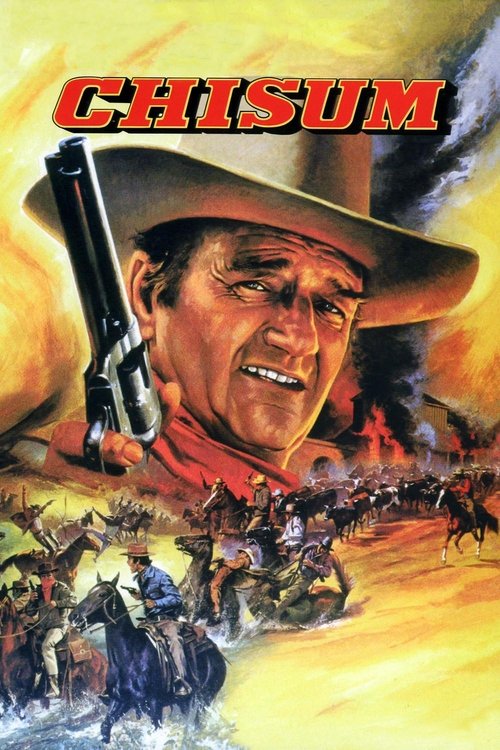
Chisum
Cattle baron John Chisum joins forces with Billy the Kid and Pat Garrett to fight the Lincoln County Land War in the New Mexico Territory of 1878.
Working with a modest budget of $4.0M, the film achieved a respectable showing with $6.0M in global revenue (+50% profit margin).


Plot Structure
Story beats plotted across runtime


Narrative Arc
Emotional journey through the story's key moments
Story Circle
Blueprint 15-beat structure
Arcplot Score Breakdown
Weighted: Precision (70%) + Arc (15%) + Theme (15%)
Chisum (1970) exemplifies deliberately positioned dramatic framework, characteristic of Andrew V. McLaglen's storytelling approach. This structural analysis examines how the film's 15-point plot structure maps to proven narrative frameworks across 1 hour and 51 minutes. With an Arcplot score of 7.5, the film showcases strong structural fundamentals.
Characters
Cast & narrative archetypes

John Chisum
Billy the Kid
Pat Garrett
Lawrence Murphy
Sallie Chisum
James Pepper
Henry Tunstall
Dan Nodeen
Main Cast & Characters
John Chisum
Played by John Wayne
A powerful cattle baron who fights to protect his ranch and the local community from a corrupt land grabber and his hired guns.
Billy the Kid
Played by Geoffrey Deuel
A young, impulsive gunfighter allied with Chisum who becomes increasingly volatile as the range war escalates.
Pat Garrett
Played by Glenn Corbett
A former buffalo hunter and ally of Chisum who enforces justice with determination and pragmatism.
Lawrence Murphy
Played by Forrest Tucker
A ruthless and calculating businessman who schemes to control all the land and commerce in Lincoln County through intimidation and violence.
Sallie Chisum
Played by Pamela McMyler
John Chisum's spirited and independent niece who provides moral support and romantic interest to Pat Garrett.
James Pepper
Played by Ben Johnson
Chisum's loyal ranch foreman and trusted friend who stands by him through the escalating conflict.
Henry Tunstall
Played by Patric Knowles
An honest English rancher and merchant who becomes a victim of Murphy's land grab schemes.
Dan Nodeen
Played by Christopher George
Murphy's chief enforcer and gunman who carries out violent orders with cold efficiency.
Structural Analysis
The Status Quo at 2 minutes (2% through the runtime) establishes John Chisum surveys his vast cattle empire in Lincoln County, New Mexico. He's the powerful "Cattle King" who built his ranch through hard work and fair dealing with neighbors and the law.. Notably, this early placement immediately immerses viewers in the story world.
The inciting incident occurs at 14 minutes when Murphy and his hired guns begin intimidating small ranchers and merchants, forcing them to sell only to Murphy's store at unfair prices. Chisum's friend Henry Tunstall is targeted, disrupting the peaceful status quo of Lincoln County.. At 12% through the film, this Disruption aligns precisely with traditional story structure. This beat shifts the emotional landscape, launching the protagonist into the central conflict.
The First Threshold at 28 minutes marks the transition into Act II, occurring at 25% of the runtime. This shows the protagonist's commitment to Henry Tunstall is murdered by Murphy's hired guns. Chisum makes the active choice to fight back against Murphy's corruption, committing himself and his resources to the Lincoln County War. He can no longer remain neutral., moving from reaction to action.
At 55 minutes, the Midpoint arrives at 50% of the runtime—precisely centered, creating perfect narrative symmetry. Significantly, this crucial beat Chisum and his allies win a major battle, driving Murphy's forces back and freeing several small ranchers from intimidation. It appears they're winning the war. False victory - Murphy is only regrouping and will use political connections to strike back harder., fundamentally raising what's at risk. The emotional intensity shifts, dividing the narrative into clear before-and-after phases.
The Collapse moment at 82 minutes (74% through) represents the emotional nadir. Here, Chisum's ranch is attacked and burned. Several of his loyal hands are killed. He's wounded and faces financial ruin. Murphy has turned the law itself against him, and it appears all is lost - the corruption has won through legal manipulation., reveals the protagonist at their lowest point. This beat's placement in the final quarter sets up the climactic reversal.
The Second Threshold at 88 minutes initiates the final act resolution at 79% of the runtime. Chisum realizes that compromise with evil is itself evil. He rallies his remaining allies with a speech about standing for what's right. Pat Garrett accepts the marshal's badge, choosing law over vengeance. They synthesize force with justice for the final confrontation., demonstrating the transformation achieved throughout the journey.
Emotional Journey
Chisum's emotional architecture traces a deliberate progression across 15 carefully calibrated beats.
Narrative Framework
This structural analysis employs structural analysis methodology used to understand storytelling architecture. By mapping Chisum against these established plot points, we can identify how Andrew V. McLaglen utilizes or subverts traditional narrative conventions. The plot point approach reveals not only adherence to structural principles but also creative choices that distinguish Chisum within the western genre.
Andrew V. McLaglen's Structural Approach
Among the 4 Andrew V. McLaglen films analyzed on Arcplot, the average structural score is 7.2, reflecting strong command of classical structure. Chisum represents one of the director's most structurally precise works. For comparative analysis, explore the complete Andrew V. McLaglen filmography.
Comparative Analysis
Additional western films include All the Pretty Horses, Lone Star. For more Andrew V. McLaglen analyses, see Shenandoah, The Wild Geese and McLintock!.
Plot Points by Act
Act I
SetupStatus Quo
John Chisum surveys his vast cattle empire in Lincoln County, New Mexico. He's the powerful "Cattle King" who built his ranch through hard work and fair dealing with neighbors and the law.
Theme
Pat Garrett tells Chisum: "A man's gotta stand for something, or he'll fall for anything." The theme of standing up for what's right versus compromising with corruption is established.
Worldbuilding
Introduction of key players: Lawrence Murphy arrives with plans to monopolize the territory through his store and corrupt land deals. Billy the Kid appears as a wild young gunfighter. Chisum's niece Sallie arrives from the East. The existing order of honest ranchers and merchants is established.
Disruption
Murphy and his hired guns begin intimidating small ranchers and merchants, forcing them to sell only to Murphy's store at unfair prices. Chisum's friend Henry Tunstall is targeted, disrupting the peaceful status quo of Lincoln County.
Resistance
Chisum debates whether to get involved in the conflict. He's reluctant to start a range war, preferring legal means. Pat Garrett warns him that Murphy won't stop. Young Billy the Kid is eager to fight but Chisum tries to restrain him, seeking peaceful solutions through the law.
Act II
ConfrontationFirst Threshold
Henry Tunstall is murdered by Murphy's hired guns. Chisum makes the active choice to fight back against Murphy's corruption, committing himself and his resources to the Lincoln County War. He can no longer remain neutral.
Mirror World
The romance between Chisum's niece Sallie and Pat Garrett deepens. Their relationship represents the theme of civilization and law versus frontier violence. Garrett embodies the choice between being a gunfighter and being a lawman.
Premise
The Lincoln County War escalates with raids, gunfights, and cattle rustling on both sides. Billy the Kid and the Regulators fight Murphy's forces. Chisum uses his resources to support the honest ranchers. The "promise of the premise" - a Western showdown between good and evil - plays out with ambushes and battles.
Midpoint
Chisum and his allies win a major battle, driving Murphy's forces back and freeing several small ranchers from intimidation. It appears they're winning the war. False victory - Murphy is only regrouping and will use political connections to strike back harder.
Opposition
Murphy uses corrupt territorial officials to declare Chisum and his allies outlaws. Legal warrants are issued for their arrest. Billy the Kid becomes increasingly violent and uncontrollable. The Governor backs Murphy. Chisum's legitimate business is threatened. His allies begin to doubt whether fighting is worth the cost.
Collapse
Chisum's ranch is attacked and burned. Several of his loyal hands are killed. He's wounded and faces financial ruin. Murphy has turned the law itself against him, and it appears all is lost - the corruption has won through legal manipulation.
Crisis
Chisum recovers from his wounds and contemplates giving up the fight. Pat Garrett must decide whether to keep fighting or accept a marshal's badge and try to bring order legally. The dark night of doubt before the final confrontation.
Act III
ResolutionSecond Threshold
Chisum realizes that compromise with evil is itself evil. He rallies his remaining allies with a speech about standing for what's right. Pat Garrett accepts the marshal's badge, choosing law over vengeance. They synthesize force with justice for the final confrontation.
Synthesis
The finale: Chisum, Pat Garrett, and their allies ride into Lincoln for a final showdown with Murphy and his guns. A massive street battle ensues. Murphy is defeated and his corrupt empire collapses. Justice is restored to Lincoln County through both force and law working together.
Transformation
Chisum rides across his land again, but now as a man who stood for principle rather than just property. Pat Garrett has become a true lawman. The closing image mirrors the opening but shows transformation - power balanced with justice, civilization coming to the frontier.