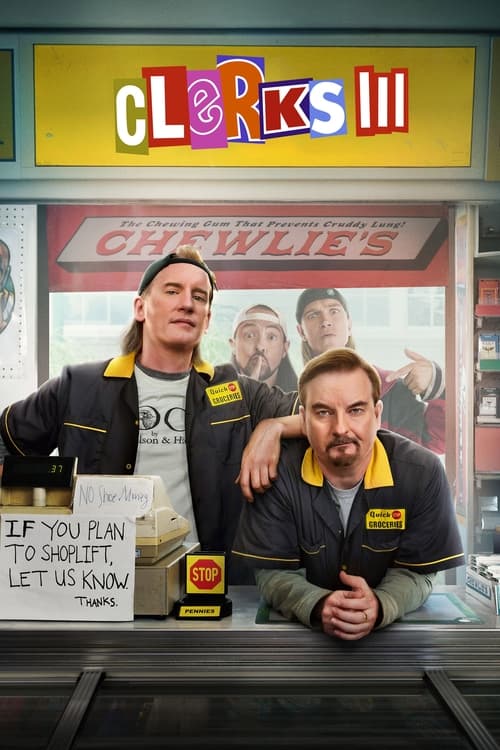
Clerks III
After narrowly surviving a massive heart attack, Randal enlists his old friend Dante to help him make a movie immortalizing their youthful days at the little convenience store that started it all.
The film struggled financially against its modest budget of $7.0M, earning $4.7M globally (-33% loss). While initial box office returns were modest, the film has gained appreciation for its compelling narrative within the comedy genre.


Plot Structure
Story beats plotted across runtime


Narrative Arc
Emotional journey through the story's key moments
Story Circle
Blueprint 15-beat structure
Arcplot Score Breakdown
Weighted: Precision (70%) + Arc (15%) + Theme (15%)
Clerks III (2022) reveals strategically placed narrative architecture, characteristic of Kevin Smith's storytelling approach. This structural analysis examines how the film's 15-point plot structure maps to proven narrative frameworks across 1 hour and 40 minutes. With an Arcplot score of 7.0, the film balances conventional beats with creative variation.
Characters
Cast & narrative archetypes

Randal Graves
Dante Hicks
Jay
Silent Bob
Elias Grover
Blockchain Coltrane
Main Cast & Characters
Randal Graves
Played by Jeff Anderson
Quick Stop clerk who suffers a heart attack and decides to make a movie about his life at the convenience store.
Dante Hicks
Played by Brian O'Halloran
Long-suffering best friend and fellow clerk who agrees to help Randal make his movie despite his own reservations.
Jay
Played by Jason Mewes
Loud-mouthed drug dealer who hangs out in front of the store and becomes involved in Randal's movie project.
Silent Bob
Played by Kevin Smith
Jay's quiet partner who offers occasional words of wisdom and supports the filmmaking endeavor.
Elias Grover
Played by Trevor Fehrman
Naive younger Quick Stop employee who is deeply religious and becomes enthusiastic about acting in Randal's movie.
Blockchain Coltrane
Played by Austin Zajur
Elias's eccentric crypto-obsessed friend who joins the movie production crew.
Structural Analysis
The Status Quo at 1 minutes (1% through the runtime) establishes Dante and Randal are still working at the Quick Stop convenience store, now as owners. They bicker and joke just like they did 30 years ago, stuck in the same routines.. Of particular interest, this early placement immediately immerses viewers in the story world.
The inciting incident occurs at 12 minutes when Randal suffers a massive heart attack behind the counter and collapses. Dante finds him unconscious. This near-death experience shatters the status quo.. At 12% through the film, this Disruption aligns precisely with traditional story structure. This beat shifts the emotional landscape, launching the protagonist into the central conflict.
The First Threshold at 24 minutes marks the transition into Act II, occurring at 24% of the runtime. This reveals the protagonist's commitment to Randal decides to make a movie about his life at the Quick Stop. He actively chooses to create something meaningful, recruiting Dante, Jay, Silent Bob, and Elias to help make "Convenience."., moving from reaction to action.
At 49 minutes, the Midpoint arrives at 49% of the runtime—precisely centered, creating perfect narrative symmetry. Significantly, this crucial beat They screen the rough cut of their movie. Everyone loves it. Randal feels validated—he's created something real. False victory: making the movie seems to have solved everything., fundamentally raising what's at risk. The emotional intensity shifts, dividing the narrative into clear before-and-after phases.
The Collapse moment at 72 minutes (72% through) represents the emotional nadir. Here, Dante has a breakdown, exploding at Randal. He reveals the depth of his grief over Becky and accuses Randal of being selfish, using everyone for his vanity project. Dante quits. Their friendship appears dead., reveals the protagonist at their lowest point. This beat's placement in the final quarter sets up the climactic reversal.
The Second Threshold at 79 minutes initiates the final act resolution at 79% of the runtime. Randal realizes the movie isn't about him—it's about their friendship. He goes to Dante and apologizes, acknowledging his selfishness. The film is a love letter to their shared life, not a monument to himself., demonstrating the transformation achieved throughout the journey.
Emotional Journey
Clerks III's emotional architecture traces a deliberate progression across 15 carefully calibrated beats.
Narrative Framework
This structural analysis employs proven narrative structure principles that track dramatic progression. By mapping Clerks III against these established plot points, we can identify how Kevin Smith utilizes or subverts traditional narrative conventions. The plot point approach reveals not only adherence to structural principles but also creative choices that distinguish Clerks III within the comedy genre.
Kevin Smith's Structural Approach
Among the 8 Kevin Smith films analyzed on Arcplot, the average structural score is 6.9, demonstrating varied approaches to story architecture. Clerks III represents one of the director's most structurally precise works. For comparative analysis, explore the complete Kevin Smith filmography.
Comparative Analysis
Additional comedy films include The Bad Guys, Ella Enchanted and The Evening Star. For more Kevin Smith analyses, see Jersey Girl, Chasing Amy and Dogma.
Plot Points by Act
Act I
SetupStatus Quo
Dante and Randal are still working at the Quick Stop convenience store, now as owners. They bicker and joke just like they did 30 years ago, stuck in the same routines.
Theme
Dante tells Randal: "You're supposed to do something with your life." The film asks: What do we leave behind? Is making art about your life enough?
Worldbuilding
Establishes the mundane rhythm of their lives. Jay and Silent Bob still deal outside. Elias works with them. Dante is mourning his wife Becky who died. Everyone is older but nothing has really changed.
Disruption
Randal suffers a massive heart attack behind the counter and collapses. Dante finds him unconscious. This near-death experience shatters the status quo.
Resistance
Randal survives surgery and confronts his mortality in the hospital. He debates what his life has meant. He realizes he's done nothing of significance and needs to leave something behind.
Act II
ConfrontationFirst Threshold
Randal decides to make a movie about his life at the Quick Stop. He actively chooses to create something meaningful, recruiting Dante, Jay, Silent Bob, and Elias to help make "Convenience."
Mirror World
Dante reluctantly agrees to be in the film. Their friendship, tested by mortality and grief, becomes the emotional core. Dante represents what Randal fears: giving up and accepting meaninglessness.
Premise
The fun of making the movie: auditioning actors, recreating classic Clerks scenes, dealing with amateur filmmaking chaos. Meta-commentary on Kevin Smith's career. The crew bonds through the creative process.
Midpoint
They screen the rough cut of their movie. Everyone loves it. Randal feels validated—he's created something real. False victory: making the movie seems to have solved everything.
Opposition
The project becomes more difficult. Dante pulls away emotionally, still grieving Becky. Creative tensions rise. Randal pushes too hard, demanding perfection. The movie stops being fun and becomes Randal's obsession.
Collapse
Dante has a breakdown, exploding at Randal. He reveals the depth of his grief over Becky and accuses Randal of being selfish, using everyone for his vanity project. Dante quits. Their friendship appears dead.
Crisis
Randal sits alone in the dark store, facing the possibility that he hurt his best friend in pursuit of meaning. He questions whether the movie matters if it cost him Dante. Dark night of the soul.
Act III
ResolutionSecond Threshold
Randal realizes the movie isn't about him—it's about their friendship. He goes to Dante and apologizes, acknowledging his selfishness. The film is a love letter to their shared life, not a monument to himself.
Synthesis
They finish the film together with renewed purpose. They premiere "Convenience" for friends and locals. The movie celebrates their ordinary life. Randal and Dante reconcile, accepting their shared history and legacy.
Transformation
Final image mirrors the opening: Dante and Randal behind the Quick Stop counter. But now they're at peace, having transformed their mundane lives into art and meaning. The store light turns off. "I'm not even supposed to be here today."