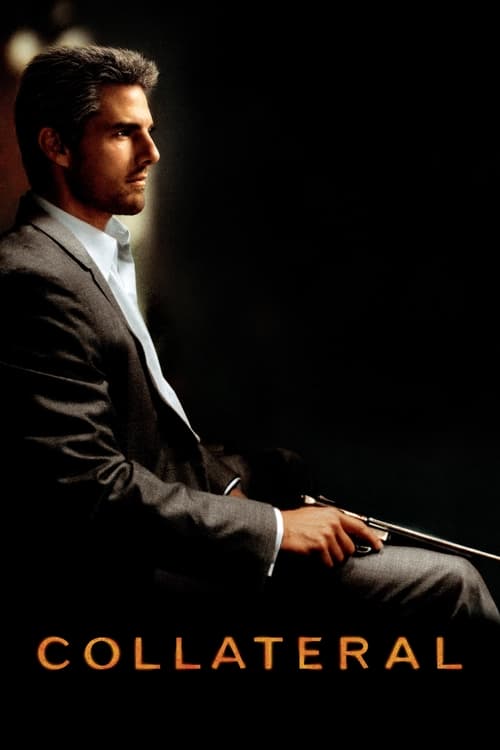
Collateral
Cab driver Max picks up a man who offers him $600 to drive him around. But the promise of easy money sours when Max realizes his fare is an assassin.
Despite a respectable budget of $65.0M, Collateral became a box office success, earning $220.2M worldwide—a 239% return.
Nominated for 2 Oscars. 22 wins & 73 nominations


Plot Structure
Story beats plotted across runtime


Narrative Arc
Emotional journey through the story's key moments
Story Circle
Blueprint 15-beat structure
Arcplot Score Breakdown
Weighted: Precision (70%) + Arc (15%) + Theme (15%)
Collateral (2004) exhibits precise story structure, characteristic of Michael Mann's storytelling approach. This structural analysis examines how the film's 15-point plot structure maps to proven narrative frameworks across 2 hours. With an Arcplot score of 6.9, the film balances conventional beats with creative variation.
Characters
Cast & narrative archetypes

Max Durocher
Vincent
Annie Farrell
Ray Fanning
Felix
Main Cast & Characters
Max Durocher
Played by Jamie Foxx
A Los Angeles cab driver with dreams of starting his own limousine service, forced to drive a hitman around the city for one fateful night.
Vincent
Played by Tom Cruise
A cold, methodical contract killer who hires Max's cab to transport him between five hits in one night, challenging Max's worldview.
Annie Farrell
Played by Jada Pinkett Smith
A federal prosecutor who has a chance encounter with Max and becomes one of Vincent's targets later that night.
Ray Fanning
Played by Mark Ruffalo
LAPD detective investigating the series of murders throughout the night, eventually crossing paths with Max and Vincent.
Felix
Played by Javier Bardem
A dangerous nightclub owner and one of Vincent's targets, who nearly exposes Max's complicity in the killings.
Structural Analysis
The Status Quo at 1 minutes (1% through the runtime) establishes Max picks up his cab for the night shift, meticulously cleaning it and organizing his workspace. He's a perfectionist cabbie who dreams of owning a limousine company but has been "preparing" for twelve years.. Significantly, this early placement immediately immerses viewers in the story world.
The inciting incident occurs at 15 minutes when Vincent, a well-dressed hitman, gets into Max's cab and offers him $600 to drive him to multiple stops throughout the night. Max reluctantly agrees to break his rule about multiple stops for the cash.. At 13% through the film, this Disruption is delayed, allowing extended setup of the story world. This beat shifts the emotional landscape, launching the protagonist into the central conflict.
The First Threshold at 30 minutes marks the transition into Act II, occurring at 25% of the runtime. This illustrates the protagonist's commitment to A body crashes onto Max's taxi from above—Vincent's first hit. Max realizes he's trapped with a contract killer. Vincent forces Max at gunpoint to help dispose of the body and continue driving, threatening to kill him if he refuses., moving from reaction to action.
At 60 minutes, the Midpoint arrives at 50% of the runtime—precisely centered, creating perfect narrative symmetry. Notably, this crucial beat Vincent visits Max's mother in the hospital, pretending to be Max. This false intimacy reveals Vincent's complexity but also raises the stakes—Vincent now knows Max's pressure points. Detectives begin connecting the murders, closing in., fundamentally raising what's at risk. The emotional intensity shifts, dividing the narrative into clear before-and-after phases.
The Collapse moment at 90 minutes (75% through) represents the emotional nadir. Here, Max crashes the taxi in desperation. Vincent retrieves his briefcase from the wreckage and discovers the final target: Annie Farrell, the prosecutor Max drove earlier. Max realizes Vincent will kill the woman he connected with. All hope seems lost., indicates the protagonist at their lowest point. This beat's placement in the final quarter sets up the climactic reversal.
The Second Threshold at 96 minutes initiates the final act resolution at 80% of the runtime. Max takes Vincent's briefcase and runs. For the first time, Max acts decisively without hesitation or excuse. He calls Annie to warn her and races to save her, finally becoming the person he claimed he would "someday" be., demonstrating the transformation achieved throughout the journey.
Emotional Journey
Collateral's emotional architecture traces a deliberate progression across 15 carefully calibrated beats.
Narrative Framework
This structural analysis employs a 15-point narrative structure framework that maps key story moments. By mapping Collateral against these established plot points, we can identify how Michael Mann utilizes or subverts traditional narrative conventions. The plot point approach reveals not only adherence to structural principles but also creative choices that distinguish Collateral within the drama genre.
Michael Mann's Structural Approach
Among the 10 Michael Mann films analyzed on Arcplot, the average structural score is 6.5, demonstrating varied approaches to story architecture. Collateral represents one of the director's most structurally precise works. For comparative analysis, explore the complete Michael Mann filmography.
Comparative Analysis
Additional drama films include After Thomas, South Pacific and Dirty Dancing: Havana Nights. For more Michael Mann analyses, see Ferrari, The Insider and Heat.
Plot Points by Act
Act I
SetupStatus Quo
Max picks up his cab for the night shift, meticulously cleaning it and organizing his workspace. He's a perfectionist cabbie who dreams of owning a limousine company but has been "preparing" for twelve years.
Theme
Annie asks Max: "Have you ever heard of the island Maldives? Someday my island will disappear." Max responds about the Maldives sinking into the ocean. The theme: we're all temporary, so seize the moment or lose it forever.
Worldbuilding
Max navigates Los Angeles at night, picking up fares including prosecutor Annie Farrell. We see his routine: knowledgeable about the city, efficient, courteous, but stuck in neutral. He deflects questions about his dreams with excuses.
Disruption
Vincent, a well-dressed hitman, gets into Max's cab and offers him $600 to drive him to multiple stops throughout the night. Max reluctantly agrees to break his rule about multiple stops for the cash.
Resistance
Max drives Vincent to the first location while they discuss jazz and life philosophies. Vincent is calm, precise, and philosophical. Max is uncomfortable but rationalizes continuing. The setup feels wrong but Max hasn't yet discovered the truth.
Act II
ConfrontationFirst Threshold
A body crashes onto Max's taxi from above—Vincent's first hit. Max realizes he's trapped with a contract killer. Vincent forces Max at gunpoint to help dispose of the body and continue driving, threatening to kill him if he refuses.
Mirror World
Vincent makes Max complicit by forcing him to impersonate him during a hit. Max must enter the building and retrieve Vincent's briefcase, confronting the murdered victim. Max is now actively participating, not just observing.
Premise
Max and Vincent drive through LA's night world, hitting multiple targets. Their philosophical debates continue—Vincent is cold efficiency incarnate while Max clings to moral ground. Vincent challenges Max's passivity and excuses. The night becomes a dark journey through Los Angeles' criminal underworld.
Midpoint
Vincent visits Max's mother in the hospital, pretending to be Max. This false intimacy reveals Vincent's complexity but also raises the stakes—Vincent now knows Max's pressure points. Detectives begin connecting the murders, closing in.
Opposition
The noose tightens. Detective Fanning identifies Max's cab. Vincent kills Fanning and his partner in a brutal alley shootout. Max realizes no one is coming to save him. Vincent becomes increasingly ruthless while Max's attempts to escape or alert authorities fail.
Collapse
Max crashes the taxi in desperation. Vincent retrieves his briefcase from the wreckage and discovers the final target: Annie Farrell, the prosecutor Max drove earlier. Max realizes Vincent will kill the woman he connected with. All hope seems lost.
Crisis
Max sits in the wreckage, devastated. Vincent walks away with the briefcase. Max must choose: remain passive as he's always done, or act. The twelve years of excuses led to this moment—someone will die because of his inaction.
Act III
ResolutionSecond Threshold
Max takes Vincent's briefcase and runs. For the first time, Max acts decisively without hesitation or excuse. He calls Annie to warn her and races to save her, finally becoming the person he claimed he would "someday" be.
Synthesis
Max warns Annie and confronts Vincent in the office building. A tense cat-and-mouse chase ensues. Max uses his knowledge of the city and newfound courage to outmaneuver Vincent. The final confrontation occurs on the subway, where Max kills Vincent.
Transformation
Max and Annie sit together on the subway as Vincent's body remains in the car. Max has become a man of action, no longer making excuses. He and Annie watch the sunrise together—a new day after the longest night.