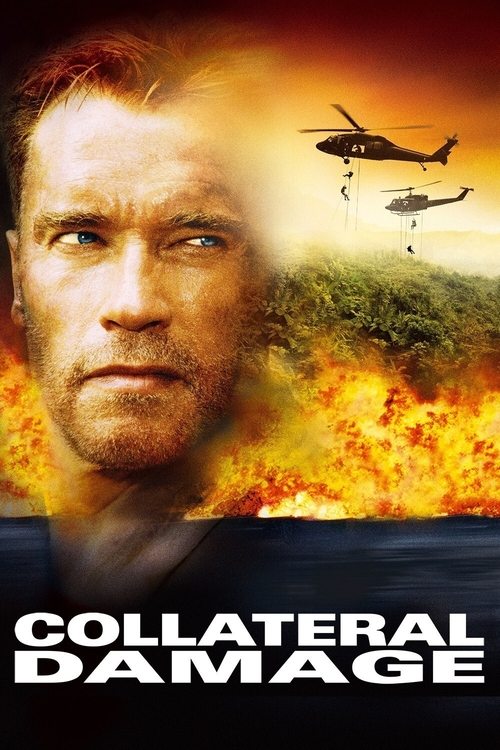
Collateral Damage
Firefighter Gordon Brewer is plunged into the complex and dangerous world of international terrorism after he loses his wife and child in a bombing credited to Claudio 'The Wolf' Perrini.
The film disappointed at the box office against its considerable budget of $85.0M, earning $78.4M globally (-8% loss).


Plot Structure
Story beats plotted across runtime


Narrative Arc
Emotional journey through the story's key moments
Story Circle
Blueprint 15-beat structure
Arcplot Score Breakdown
Weighted: Precision (70%) + Arc (15%) + Theme (15%)
Collateral Damage (2002) demonstrates deliberately positioned plot construction, characteristic of Andrew Davis's storytelling approach. This structural analysis examines how the film's 15-point plot structure maps to proven narrative frameworks across 1 hour and 48 minutes. With an Arcplot score of 7.4, the film balances conventional beats with creative variation.
Characters
Cast & narrative archetypes

Gordon Brewer
Claudio 'The Wolf' Perrini
Selena Perrini
Peter Brandt
Felix Ramirez
Sean Armstrong
Main Cast & Characters
Gordon Brewer
Played by Arnold Schwarzenegger
Los Angeles firefighter who seeks revenge after terrorists kill his wife and son in a bombing.
Claudio 'The Wolf' Perrini
Played by Cliff Curtis
Colombian guerrilla terrorist leader responsible for the bombing that kills Brewer's family.
Selena Perrini
Played by Francesca Neri
The Wolf's wife who runs a clinic in the Colombian countryside and becomes entangled with Brewer.
Peter Brandt
Played by Elias Koteas
CIA operative who monitors Perrini and initially opposes Brewer's vigilante mission.
Felix Ramirez
Played by John Leguizamo
Canadian mechanic who smuggles Brewer into Colombia and helps him navigate the dangerous terrain.
Sean Armstrong
Played by John Turturro
State Department official who tries to prevent Brewer from interfering with CIA operations.
Structural Analysis
The Status Quo at 2 minutes (1% through the runtime) establishes Gordy Brewer is introduced as an LA firefighter, a devoted family man at work, establishing his ordinary world of heroism and domesticity before tragedy strikes.. Structural examination shows that this early placement immediately immerses viewers in the story world.
The inciting incident occurs at 12 minutes when A terrorist bomb explodes outside the Colombian consulate, killing Gordy's wife and son in front of him. The status quo is shattered in an instant of devastating violence.. At 12% through the film, this Disruption aligns precisely with traditional story structure. This beat shifts the emotional landscape, launching the protagonist into the central conflict.
The First Threshold at 26 minutes marks the transition into Act II, occurring at 24% of the runtime. This demonstrates the protagonist's commitment to Gordy makes the active choice to travel to Colombia alone to find The Wolf himself. He boards a plane, leaving behind his old life and entering the dangerous world of guerrilla warfare., moving from reaction to action.
At 53 minutes, the Midpoint arrives at 49% of the runtime—precisely centered, creating perfect narrative symmetry. The analysis reveals that this crucial beat Gordy discovers that The Wolf's wife, Selena, has been playing him. The false victory of getting close to his target becomes a false defeat - he's been manipulated. Stakes raise as he realizes the conspiracy goes deeper than one terrorist., fundamentally raising what's at risk. The emotional intensity shifts, dividing the narrative into clear before-and-after phases.
The Collapse moment at 80 minutes (74% through) represents the emotional nadir. Here, Gordy is nearly killed in an explosion or confrontation. He loses hope as The Wolf appears to have won - the bomb plot is in motion and Gordy is powerless to stop it. A whiff of death as he faces his own mortality., shows the protagonist at their lowest point. This beat's placement in the final quarter sets up the climactic reversal.
The Second Threshold at 86 minutes initiates the final act resolution at 80% of the runtime. Gordy synthesizes his firefighter skills with what he's learned about terrorism and deception. He realizes how to find The Wolf and stop the attack - combining his original identity with his new knowledge. He gains critical intelligence or insight., demonstrating the transformation achieved throughout the journey.
Emotional Journey
Collateral Damage's emotional architecture traces a deliberate progression across 15 carefully calibrated beats.
Narrative Framework
This structural analysis employs proven narrative structure principles that track dramatic progression. By mapping Collateral Damage against these established plot points, we can identify how Andrew Davis utilizes or subverts traditional narrative conventions. The plot point approach reveals not only adherence to structural principles but also creative choices that distinguish Collateral Damage within the action genre.
Andrew Davis's Structural Approach
Among the 9 Andrew Davis films analyzed on Arcplot, the average structural score is 6.9, demonstrating varied approaches to story architecture. Collateral Damage represents one of the director's most structurally precise works. For comparative analysis, explore the complete Andrew Davis filmography.
Comparative Analysis
Additional action films include The Bad Guys, Puss in Boots and Venom: The Last Dance. For more Andrew Davis analyses, see Code of Silence, Steal Big Steal Little and Chain Reaction.
Plot Points by Act
Act I
SetupStatus Quo
Gordy Brewer is introduced as an LA firefighter, a devoted family man at work, establishing his ordinary world of heroism and domesticity before tragedy strikes.
Theme
A federal agent or colleague mentions that "Sometimes the innocent pay the price" - foreshadowing the film's exploration of collateral damage, revenge, and the cost of violence.
Worldbuilding
Establishment of Gordy's life as a firefighter, his loving relationship with wife Anne and son Matt, the normalcy of LA life, and the meeting at the Colombian consulate.
Disruption
A terrorist bomb explodes outside the Colombian consulate, killing Gordy's wife and son in front of him. The status quo is shattered in an instant of devastating violence.
Resistance
Gordy demands justice from the FBI and State Department. He learns the terrorist is "The Wolf" (Claudio Perrini). Officials tell him to let them handle it, but bureaucracy and politics prevent action. Gordy debates whether to take matters into his own hands.
Act II
ConfrontationFirst Threshold
Gordy makes the active choice to travel to Colombia alone to find The Wolf himself. He boards a plane, leaving behind his old life and entering the dangerous world of guerrilla warfare.
Mirror World
Gordy meets Selena, a Colombian woman who becomes his guide and eventual ally. She represents the human cost of the conflict and embodies the theme - she too has lost loved ones to violence.
Premise
Gordy navigates the Colombian jungle and guerrilla territory, using his firefighting skills in this new context. He infiltrates the guerrilla camp, searches for The Wolf, and experiences the brutal reality of the conflict. Action sequences deliver on the revenge-thriller premise.
Midpoint
Gordy discovers that The Wolf's wife, Selena, has been playing him. The false victory of getting close to his target becomes a false defeat - he's been manipulated. Stakes raise as he realizes the conspiracy goes deeper than one terrorist.
Opposition
The Wolf and Selena execute their plan to bomb Washington DC. Gordy is captured, tortured, and hunted. The bad guys close in as he struggles to escape and warn authorities. Every attempt to stop them fails.
Collapse
Gordy is nearly killed in an explosion or confrontation. He loses hope as The Wolf appears to have won - the bomb plot is in motion and Gordy is powerless to stop it. A whiff of death as he faces his own mortality.
Crisis
Gordy's dark night of the soul. He processes his failure and the impending deaths of more innocent people. He must find the will to continue despite overwhelming odds.
Act III
ResolutionSecond Threshold
Gordy synthesizes his firefighter skills with what he's learned about terrorism and deception. He realizes how to find The Wolf and stop the attack - combining his original identity with his new knowledge. He gains critical intelligence or insight.
Synthesis
The finale. Gordy races to stop the Washington DC bombing, confronts The Wolf and Selena, uses his firefighting expertise to defuse or minimize the bomb, and achieves his revenge while saving innocent lives. The climactic battle resolves both external and internal conflicts.
Transformation
Gordy stands amid the aftermath, forever changed. The closing image mirrors the opening - he's still a hero saving lives - but now he carries the weight of loss, revenge, and moral complexity. He has become someone who understands the true cost of collateral damage.