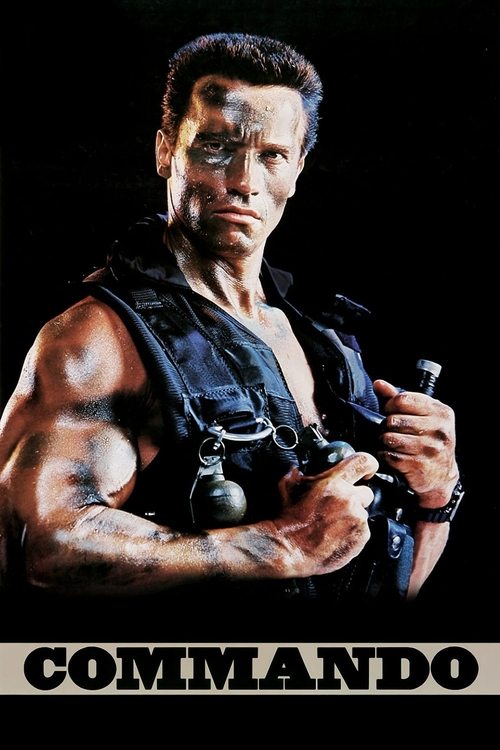
Commando
John Matrix, the former leader of a special commando strike force that always got the toughest jobs done, is forced back into action when his young daughter is kidnapped. To find her, Matrix has to fight his way through an array of punks, killers, one of his former commandos, and a fully equipped private army. With the help of a feisty stewardess and an old friend, Matrix has only a few hours to overcome his greatest challenge: finding his daughter before she's killed.
Despite its modest budget of $10.0M, Commando became a financial success, earning $57.5M worldwide—a 475% return. The film's bold vision connected with viewers, showing that strong storytelling can transcend budget limitations.


Plot Structure
Story beats plotted across runtime


Narrative Arc
Emotional journey through the story's key moments
Story Circle
Blueprint 15-beat structure
Arcplot Score Breakdown
Weighted: Precision (70%) + Arc (15%) + Theme (15%)
Commando (1985) demonstrates deliberately positioned story structure, characteristic of Mark L. Lester's storytelling approach. This structural analysis examines how the film's 15-point plot structure maps to proven narrative frameworks across 1 hour and 30 minutes. With an Arcplot score of 7.4, the film balances conventional beats with creative variation.
Characters
Cast & narrative archetypes

John Matrix
Cindy
Bennett
Arius
Jenny Matrix
Cooke
Sully
Main Cast & Characters
John Matrix
Played by Arnold Schwarzenegger
Retired Delta Force colonel who must rescue his kidnapped daughter from a deposed dictator and his mercenaries.
Cindy
Played by Rae Dawn Chong
Flight attendant who gets caught up in Matrix's mission and becomes his reluctant ally.
Bennett
Played by Vernon Wells
Former member of Matrix's unit turned villain, seeking revenge against his old commander.
Arius
Played by Dan Hedaya
Deposed dictator who kidnaps Matrix's daughter to force him to assassinate a political rival.
Jenny Matrix
Played by Alyssa Milano
John Matrix's young daughter who is kidnapped to coerce her father into action.
Cooke
Played by Bill Duke
One of Arius's henchmen who escorts Matrix on the plane before being killed.
Sully
Played by David Patrick Kelly
Sleazy mercenary working for Arius who helps kidnap Jenny.
Structural Analysis
The Status Quo at 1 minutes (1% through the runtime) establishes Retired Special Forces colonel John Matrix lives peacefully with his daughter Jenny in a remote mountain cabin, chopping wood and feeding deer. The opening establishes his idyllic post-military life and loving father-daughter relationship.. The analysis reveals that this early placement immediately immerses viewers in the story world.
The inciting incident occurs at 9 minutes when Arius's mercenaries attack Matrix's home. Despite Matrix's fierce resistance, they capture Jenny and knock him unconscious. His peaceful world is violently shattered.. At 10% through the film, this Disruption aligns precisely with traditional story structure. This beat shifts the emotional landscape, launching the protagonist into the central conflict.
The First Threshold at 19 minutes marks the transition into Act II, occurring at 22% of the runtime. This shows the protagonist's commitment to Matrix makes his active choice: he kills Henriques on the plane and escapes before takeoff, choosing to hunt down Arius's men himself rather than comply with their demands. This irreversible decision launches him into Act 2., moving from reaction to action.
At 44 minutes, the Midpoint arrives at 49% of the runtime—precisely centered, creating perfect narrative symmetry. The analysis reveals that this crucial beat False victory: Matrix locates Arius's island compound and secures weapons and equipment. He now knows where Jenny is and has the tools to rescue her. However, the stakes raise - he's racing against the 11-hour flight time before they discover he never went to Val Verde., fundamentally raising what's at risk. The emotional intensity shifts, dividing the narrative into clear before-and-after phases.
The Collapse moment at 66 minutes (74% through) represents the emotional nadir. Here, Matrix is captured and brought before Arius and Bennett. Bennett has Jenny at gunpoint. Matrix is disarmed, outnumbered, and seemingly defeated. The "whiff of death" as Bennett prepares to kill him and Jenny appears lost., demonstrates the protagonist at their lowest point. This beat's placement in the final quarter sets up the climactic reversal.
The Second Threshold at 71 minutes initiates the final act resolution at 78% of the runtime. Matrix breaks free and sends Jenny to safety. The synthesis: he combines his elite combat skills (old world) with his motivation as a protective father (new world). He tells Bennett "Let's party" - accepting the final confrontation on his terms., demonstrating the transformation achieved throughout the journey.
Emotional Journey
Commando's emotional architecture traces a deliberate progression across 15 carefully calibrated beats.
Narrative Framework
This structural analysis employs systematic plot point analysis that identifies crucial turning points. By mapping Commando against these established plot points, we can identify how Mark L. Lester utilizes or subverts traditional narrative conventions. The plot point approach reveals not only adherence to structural principles but also creative choices that distinguish Commando within the action genre.
Mark L. Lester's Structural Approach
Among the 3 Mark L. Lester films analyzed on Arcplot, the average structural score is 7.4, reflecting strong command of classical structure. Commando represents one of the director's most structurally precise works. For comparative analysis, explore the complete Mark L. Lester filmography.
Comparative Analysis
Additional action films include The Bad Guys, Puss in Boots and Venom: The Last Dance. For more Mark L. Lester analyses, see Firestarter, Armed and Dangerous.
Plot Points by Act
Act I
SetupStatus Quo
Retired Special Forces colonel John Matrix lives peacefully with his daughter Jenny in a remote mountain cabin, chopping wood and feeding deer. The opening establishes his idyllic post-military life and loving father-daughter relationship.
Theme
General Kirby warns Matrix: "They'll find you. They always do." The theme of the inescapability of one's violent past and whether redemption through peaceful living is truly possible is stated early.
Worldbuilding
Establishment of Matrix's retired life, his relationship with Jenny, Kirby's arrival warning about murdered commandos from Matrix's old unit, and the lurking threat of Bennett and Arius's mercenaries surveilling the property.
Disruption
Arius's mercenaries attack Matrix's home. Despite Matrix's fierce resistance, they capture Jenny and knock him unconscious. His peaceful world is violently shattered.
Resistance
Matrix is forced onto a plane to Val Verde where he must assassinate President Velasquez to get Jenny back. He debates compliance versus resistance, learns the full scope of Arius's coup plot, and prepares his escape. Bennett, his former teammate turned traitor, taunts him.
Act II
ConfrontationFirst Threshold
Matrix makes his active choice: he kills Henriques on the plane and escapes before takeoff, choosing to hunt down Arius's men himself rather than comply with their demands. This irreversible decision launches him into Act 2.
Mirror World
Cindy, an innocent flight attendant, is forced into Matrix's violent world when he kidnaps her after she witnesses him fighting Sully. She represents the civilian perspective and moral counterpoint to Matrix's methods, eventually becoming his willing ally.
Premise
The "promise of the premise" - Matrix tracking down Arius's henchmen one by one. High-energy action sequences including the car chase with Sully, the mall fight, the motel shootout, and interrogating Sully by dangling him off a cliff. Matrix arms himself and gathers intelligence.
Midpoint
False victory: Matrix locates Arius's island compound and secures weapons and equipment. He now knows where Jenny is and has the tools to rescue her. However, the stakes raise - he's racing against the 11-hour flight time before they discover he never went to Val Verde.
Opposition
Matrix infiltrates the island and faces escalating military opposition. The compound is heavily fortified with dozens of soldiers. The one-man assault intensifies as he fights through guard towers, barracks, and defensive positions. Time pressure mounts.
Collapse
Matrix is captured and brought before Arius and Bennett. Bennett has Jenny at gunpoint. Matrix is disarmed, outnumbered, and seemingly defeated. The "whiff of death" as Bennett prepares to kill him and Jenny appears lost.
Crisis
Matrix faces his dark night - confronting Bennett, the embodiment of his violent past. Bennett's betrayal and obsession represent what Matrix could have become. The psychological confrontation before the physical one.
Act III
ResolutionSecond Threshold
Matrix breaks free and sends Jenny to safety. The synthesis: he combines his elite combat skills (old world) with his motivation as a protective father (new world). He tells Bennett "Let's party" - accepting the final confrontation on his terms.
Synthesis
The finale: Matrix battles Bennett in brutal hand-to-hand combat in the boiler room, ultimately impaling him with a steam pipe. He eliminates Arius and the remaining mercenaries. Jenny is rescued. General Kirby arrives and Matrix declines to return to service.
Transformation
Matrix and Jenny reunite and fly away together with Cindy. Unlike the opening isolation, Matrix now has connection to the outside world (Cindy) while maintaining his bond with Jenny. He has confronted his past and can move forward, transformed from hiding from violence to having mastered and transcended it.