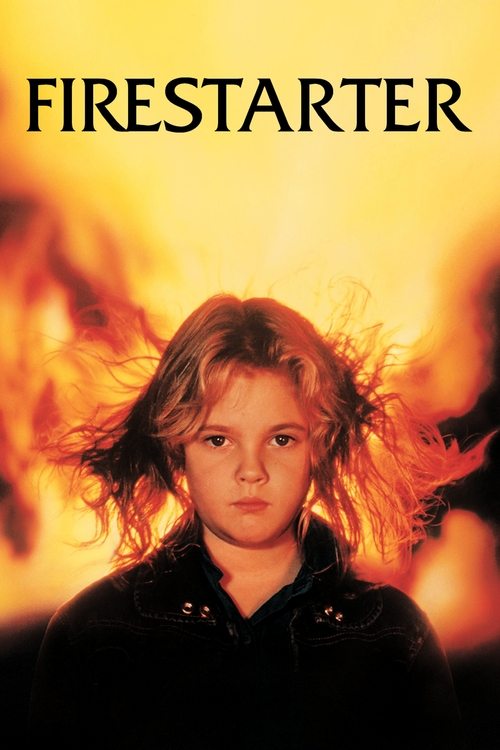
Firestarter
Charlene "Charlie" McGee has the amazing ability to start fires with just a glance. Can her psychic power and the love of her father save her from the threatening government agency which wants to destroy her?
Working with a mid-range budget of $15.0M, the film achieved a steady performer with $17.1M in global revenue (+14% profit margin).


Plot Structure
Story beats plotted across runtime


Narrative Arc
Emotional journey through the story's key moments
Story Circle
Blueprint 15-beat structure
Arcplot Score Breakdown
Weighted: Precision (70%) + Arc (15%) + Theme (15%)
Firestarter (1984) demonstrates precise dramatic framework, characteristic of Mark L. Lester's storytelling approach. This structural analysis examines how the film's 15-point plot structure maps to proven narrative frameworks across 1 hour and 55 minutes. With an Arcplot score of 6.9, the film balances conventional beats with creative variation.
Characters
Cast & narrative archetypes

Charlie McGee
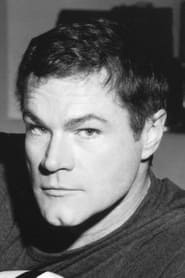
Andy McGee
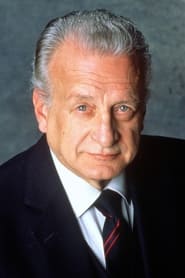
John Rainbird

Captain Hollister

Vicky McGee
Main Cast & Characters
Charlie McGee
Played by Drew Barrymore
A young girl with pyrokinetic abilities who is hunted by a government agency seeking to weaponize her powers.
Andy McGee
Played by David Keith
Charlie's protective father with telepathic abilities who will do anything to keep his daughter safe from The Shop.
John Rainbird
Played by George C. Scott
A sinister assassin and Native American mystic who becomes obsessed with Charlie and her power, seeking to be the last thing she sees.
Captain Hollister
Played by Martin Sheen
The ruthless head of The Shop who orchestrates the pursuit and capture of the McGee family.
Vicky McGee
Played by Heather Locklear
Charlie's mother with telekinetic abilities, killed early in the story while trying to protect her family.
Structural Analysis
The Status Quo at 1 minutes (1% through the runtime) establishes Andy and Charlie McGee are shown as fugitives on the run, exhausted and desperate on a city street. Andy uses his psychic 'push' power to get a cab, establishing their dangerous life fleeing from The Shop.. Notably, this early placement immediately immerses viewers in the story world.
The inciting incident occurs at 14 minutes when Shop agents attack the safe house. Andy and Charlie narrowly escape as agents kill Vicky in flashback, revealing the full horror of The Shop's methods and forcing father and daughter into active flight.. At 12% through the film, this Disruption aligns precisely with traditional story structure. This beat shifts the emotional landscape, launching the protagonist into the central conflict.
The First Threshold at 29 minutes marks the transition into Act II, occurring at 25% of the runtime. This demonstrates the protagonist's commitment to The Shop agents discover them at the Manders farm. In the violent confrontation, Charlie unleashes her pyrokinetic power to save her father, killing several agents. Andy and Charlie are captured and taken to The Shop's compound., moving from reaction to action.
At 58 minutes, the Midpoint arrives at 50% of the runtime—precisely centered, creating perfect narrative symmetry. Notably, this crucial beat Charlie agrees to demonstrate her powers for the scientists, believing Rainbird's promise that cooperation will reunite her with her father. This false victory for The Shop marks Charlie's dangerous compromise, as she begins using her fire for their tests., fundamentally raising what's at risk. The emotional intensity shifts, dividing the narrative into clear before-and-after phases.
The Collapse moment at 86 minutes (75% through) represents the emotional nadir. Here, Andy's escape attempt succeeds in reaching Charlie, but Rainbird shoots and kills Andy before her eyes. Charlie witnesses her father's murder by the man she trusted, losing her only family and protector., reveals the protagonist at their lowest point. This beat's placement in the final quarter sets up the climactic reversal.
The Second Threshold at 92 minutes initiates the final act resolution at 80% of the runtime. Charlie embraces her full power without fear or restraint. She makes the conscious choice to destroy The Shop and everyone responsible for her father's death, transforming from victim to avenger., demonstrating the transformation achieved throughout the journey.
Emotional Journey
Firestarter's emotional architecture traces a deliberate progression across 15 carefully calibrated beats.
Narrative Framework
This structural analysis employs structural analysis methodology used to understand storytelling architecture. By mapping Firestarter against these established plot points, we can identify how Mark L. Lester utilizes or subverts traditional narrative conventions. The plot point approach reveals not only adherence to structural principles but also creative choices that distinguish Firestarter within the horror genre.
Mark L. Lester's Structural Approach
Among the 3 Mark L. Lester films analyzed on Arcplot, the average structural score is 7.4, reflecting strong command of classical structure. Firestarter takes a more unconventional approach compared to the director's typical style. For comparative analysis, explore the complete Mark L. Lester filmography.
Comparative Analysis
Additional horror films include Thinner, A Nightmare on Elm Street and Mary Reilly. For more Mark L. Lester analyses, see Armed and Dangerous, Commando.
Plot Points by Act
Act I
SetupStatus Quo
Andy and Charlie McGee are shown as fugitives on the run, exhausted and desperate on a city street. Andy uses his psychic 'push' power to get a cab, establishing their dangerous life fleeing from The Shop.
Theme
Through flashback, the Lot Six experiment is shown where scientists tell participants they're pushing human potential to its limits. The theme of tampering with nature and the consequences of unchecked power is established.
Worldbuilding
The world is established through intercut flashbacks showing Andy and Vicky's Lot Six experiment, their romance, Charlie's birth and emerging powers, and their current desperate flight. The Shop's ruthless pursuit is shown as agents close in.
Disruption
Shop agents attack the safe house. Andy and Charlie narrowly escape as agents kill Vicky in flashback, revealing the full horror of The Shop's methods and forcing father and daughter into active flight.
Resistance
Andy and Charlie flee through the countryside, debating whether to use their powers. They find temporary refuge with elderly couple Irv and Norma Manders, who become protective figures. Andy struggles with the toll his 'push' takes on his mind.
Act II
ConfrontationFirst Threshold
The Shop agents discover them at the Manders farm. In the violent confrontation, Charlie unleashes her pyrokinetic power to save her father, killing several agents. Andy and Charlie are captured and taken to The Shop's compound.
Mirror World
John Rainbird is introduced as the assassin who will manipulate Charlie. He convinces Captain Hollister to let him pose as an orderly to befriend Charlie, representing the dark mirror of fatherhood and trust that will challenge Charlie's ability to discern true love from manipulation.
Premise
Charlie and Andy are held separately at The Shop compound. Rainbird befriends Charlie as "John the orderly," gaining her trust while scientists attempt to study and weaponize her abilities. Andy works to regain his mental strength while planning escape.
Midpoint
Charlie agrees to demonstrate her powers for the scientists, believing Rainbird's promise that cooperation will reunite her with her father. This false victory for The Shop marks Charlie's dangerous compromise, as she begins using her fire for their tests.
Opposition
Charlie's power demonstrations escalate as The Shop plans to weaponize her. Rainbird deepens his manipulation while secretly planning to kill her. Andy regains enough mental strength to plan an escape, using his diminishing push ability to influence guards.
Collapse
Andy's escape attempt succeeds in reaching Charlie, but Rainbird shoots and kills Andy before her eyes. Charlie witnesses her father's murder by the man she trusted, losing her only family and protector.
Crisis
Charlie holds her dying father as the betrayal fully registers. Andy's final words urge her to use her power and burn it all down. Charlie processes the loss and the depth of Rainbird's deception.
Act III
ResolutionSecond Threshold
Charlie embraces her full power without fear or restraint. She makes the conscious choice to destroy The Shop and everyone responsible for her father's death, transforming from victim to avenger.
Synthesis
Charlie unleashes apocalyptic fire throughout the compound, incinerating agents, scientists, and the entire facility. She kills Rainbird and Captain Hollister, systematically destroying The Shop. The facility is reduced to ash as Charlie walks out unharmed.
Transformation
Charlie arrives at the New York Times office to tell her story, fulfilling her father's wish to expose The Shop. No longer a frightened child, she has become a self-possessed survivor who controls her power and chooses to use truth as her weapon.