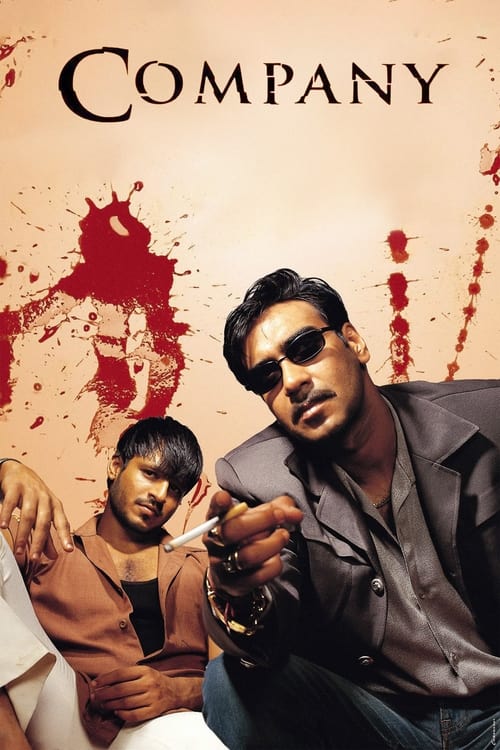
Company
Mallik is a henchman of Aslam Bhai, a Mumbai underworld kingpin. He inducts local hothead Chandu into the gang, and the two of them soon form a formidable faction within the gang, eventually displacing Aslam. As the empire grows, however, the two of them start drifting apart.
Despite its limited budget of $1.5M, Company became a solid performer, earning $6.0M worldwide—a 300% return. The film's unique voice connected with viewers, showing that strong storytelling can transcend budget limitations.

Plot Structure
Story beats plotted across runtime


Narrative Arc
Emotional journey through the story's key moments
Story Circle
Blueprint 15-beat structure
Arcplot Score Breakdown
Weighted: Precision (70%) + Arc (15%) + Theme (15%)
Company (2002) reveals precise plot construction, characteristic of Ram Gopal Varma's storytelling approach. This structural analysis examines how the film's 15-point plot structure maps to proven narrative frameworks across 2 hours and 36 minutes. With an Arcplot score of 6.5, the film balances conventional beats with creative variation.
Characters
Cast & narrative archetypes

Chandu
Malik
Saroja
ACP Sreenivasan
Guru
Main Cast & Characters
Chandu
Played by Vivek Oberoi
Young ambitious gangster who rises through the ranks of Mumbai's underworld and becomes Malik's right-hand man before their relationship fractures.
Malik
Played by Ajay Devgn
Powerful and calculating crime boss who mentors Chandu but becomes his rival when their partnership deteriorates into violent conflict.
Saroja
Played by Manisha Koirala
Chandu's love interest who represents normalcy and emotional connection outside the violent world of organized crime.
ACP Sreenivasan
Played by Mohanlal
Determined police officer committed to dismantling the criminal organization through strategic pressure and investigation.
Guru
Played by Rajpal Yadav
Malik's trusted associate and enforcer who maintains loyalty to the crime boss throughout the internal conflicts.
Structural Analysis
The Status Quo at 2 minutes (1% through the runtime) establishes Chandu and Malik operate a successful underworld empire in Mumbai with clear hierarchy and mutual respect. Their criminal organization runs smoothly with defined territories and operations.. Notably, this early placement immediately immerses viewers in the story world.
The inciting incident occurs at 19 minutes when Chandu's growing ambition becomes evident when he independently executes a high-profile contract without Malik's approval, marking the first crack in their relationship and hierarchy.. At 12% through the film, this Disruption aligns precisely with traditional story structure. This beat shifts the emotional landscape, launching the protagonist into the central conflict.
The First Threshold at 39 minutes marks the transition into Act II, occurring at 25% of the runtime. This reveals the protagonist's commitment to Chandu makes the active choice to split from Malik and form his own independent gang, publicly declaring his autonomy and dividing their territories and loyalties., moving from reaction to action.
At 78 minutes, the Midpoint arrives at 50% of the runtime—precisely centered, creating perfect narrative symmetry. Structural examination shows that this crucial beat A major assassination attempt claims innocent lives, raising the stakes dramatically. The police intensify their crackdown, and both Malik and Chandu realize the war has spiraled beyond their control into mutual destruction., fundamentally raising what's at risk. The emotional intensity shifts, dividing the narrative into clear before-and-after phases.
The Collapse moment at 117 minutes (75% through) represents the emotional nadir. Here, Malik is killed in a police encounter, engineered by political forces tired of the gang war. The death of the original boss represents the complete destruction of the old order and everything they built together., reveals the protagonist at their lowest point. This beat's placement in the final quarter sets up the climactic reversal.
The Second Threshold at 125 minutes initiates the final act resolution at 80% of the runtime. Chandu realizes that the only way forward is retreat. He understands that the underworld game has no winners, only survivors, and chooses survival over dominance, planning his exit from the life., demonstrating the transformation achieved throughout the journey.
Emotional Journey
Company's emotional architecture traces a deliberate progression across 15 carefully calibrated beats.
Narrative Framework
This structural analysis employs systematic plot point analysis that identifies crucial turning points. By mapping Company against these established plot points, we can identify how Ram Gopal Varma utilizes or subverts traditional narrative conventions. The plot point approach reveals not only adherence to structural principles but also creative choices that distinguish Company within the action genre.
Ram Gopal Varma's Structural Approach
Among the 6 Ram Gopal Varma films analyzed on Arcplot, the average structural score is 6.9, demonstrating varied approaches to story architecture. Company takes a more unconventional approach compared to the director's typical style. For comparative analysis, explore the complete Ram Gopal Varma filmography.
Comparative Analysis
Additional action films include The Bad Guys, Puss in Boots and Venom: The Last Dance. For more Ram Gopal Varma analyses, see The Attacks Of 26/11, Jungle and Department.
Plot Points by Act
Act I
SetupStatus Quo
Chandu and Malik operate a successful underworld empire in Mumbai with clear hierarchy and mutual respect. Their criminal organization runs smoothly with defined territories and operations.
Theme
A senior member warns that in the underworld, "there are no permanent friends, only permanent interests." This foreshadows the betrayal and ambition that will destroy their partnership.
Worldbuilding
Introduction to the Mumbai underworld ecosystem: Malik as the boss, Chandu as his trusted lieutenant, their network of operations including extortion and contract killings, and the police-criminal nexus that enables their power.
Disruption
Chandu's growing ambition becomes evident when he independently executes a high-profile contract without Malik's approval, marking the first crack in their relationship and hierarchy.
Resistance
Tensions simmer as Chandu begins building his own power base. Malik debates whether to confront Chandu or accommodate his ambitions. Allies pressure both sides to maintain unity while rivals sense weakness.
Act II
ConfrontationFirst Threshold
Chandu makes the active choice to split from Malik and form his own independent gang, publicly declaring his autonomy and dividing their territories and loyalties.
Mirror World
Introduction of the personal relationships that mirror the professional betrayal: wives, families, and old friendships that highlight what is being destroyed by ambition and ego.
Premise
The gang war escalates with calculated moves and counter-moves. Both factions recruit soldiers, eliminate rivals, and vie for dominance in Mumbai's underworld. The promise of the crime thriller delivers tactical violence and strategic maneuvering.
Midpoint
A major assassination attempt claims innocent lives, raising the stakes dramatically. The police intensify their crackdown, and both Malik and Chandu realize the war has spiraled beyond their control into mutual destruction.
Opposition
The conflict intensifies with increasing casualties on both sides. Police pressure mounts, territories are lost, trusted allies are killed, and paranoia grows. Both leaders face betrayal from within their own ranks as the cost of war becomes unbearable.
Collapse
Malik is killed in a police encounter, engineered by political forces tired of the gang war. The death of the original boss represents the complete destruction of the old order and everything they built together.
Crisis
Chandu processes the hollow victory of his rival's death. He sees the devastation around him: his organization decimated, his friends dead, his empire crumbling. He confronts the emptiness of his ambition.
Act III
ResolutionSecond Threshold
Chandu realizes that the only way forward is retreat. He understands that the underworld game has no winners, only survivors, and chooses survival over dominance, planning his exit from the life.
Synthesis
Chandu dismantles what remains of his organization, settles debts, and prepares to disappear. He must evade both police and remaining rivals while securing his escape, applying all the cunning that brought him power to engineer his exit.
Transformation
Chandu, now a fugitive stripped of power and glory, reflects on the ruins of his ambition. Unlike the opening's image of confident control, he is isolated and hunted, having destroyed everything he valued in pursuit of dominance.