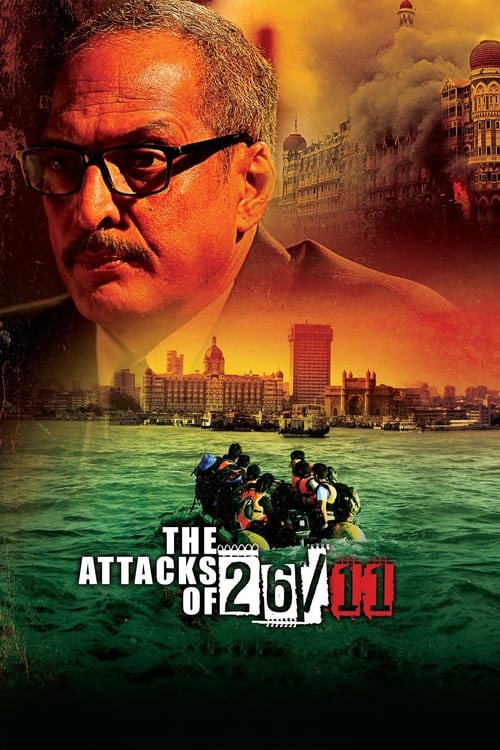
The Attacks Of 26/11
Rakesh Maria, Mumbai's Joint Commissioner, recounts the events of 26/11, where ten Pakistani terrorists attacked the city
Despite its limited budget of $3.3M, The Attacks Of 26/11 became a commercial success, earning $18.0M worldwide—a 445% return. The film's compelling narrative connected with viewers, confirming that strong storytelling can transcend budget limitations.


Plot Structure
Story beats plotted across runtime


Narrative Arc
Emotional journey through the story's key moments
Story Circle
Blueprint 15-beat structure
Arcplot Score Breakdown
Weighted: Precision (70%) + Arc (15%) + Theme (15%)
The Attacks Of 26/11 (2013) showcases carefully calibrated narrative design, characteristic of Ram Gopal Varma's storytelling approach. This structural analysis examines how the film's 15-point plot structure maps to proven narrative frameworks across 1 hour and 56 minutes. With an Arcplot score of 7.1, the film balances conventional beats with creative variation.
Characters
Cast & narrative archetypes

Joint Commissioner Rakesh Maria
Kasab
NSG Commando Major Sandeep Unnikrishnan
Havaldar Jaywant Patil
Terrorist Handler (Voice)
ATS Chief Hemant Karkare
Additional Commissioner Sadanand Date
Main Cast & Characters
Joint Commissioner Rakesh Maria
Played by Nana Patekar
Mumbai Police Joint Commissioner who leads the response to the terrorist attacks, coordinating operations and managing the crisis.
Kasab
Played by Sanjeev Jaiswal
Pakistani terrorist and one of the main attackers who participates in the Mumbai massacre and is eventually captured alive.
NSG Commando Major Sandeep Unnikrishnan
Played by Atul Kulkarni
National Security Guard commando who leads rescue operations at the Taj Hotel and sacrifices his life saving hostages.
Havaldar Jaywant Patil
Played by Ganesh Yadav
Brave police constable who confronts the terrorists despite limited resources and ultimately gives his life in service.
Terrorist Handler (Voice)
Played by Sadh Orhan
The Pakistani handler who remotely guides and commands the terrorists throughout the attacks via phone communication.
ATS Chief Hemant Karkare
Played by Jitendra Joshi
Anti-Terrorism Squad chief who leads initial response efforts and is killed in the line of duty during the attacks.
Additional Commissioner Sadanand Date
Played by Asif Basra
Senior police officer who coordinates with various agencies and manages tactical decisions during the siege.
Structural Analysis
The Status Quo at 1 minutes (1% through the runtime) establishes The film opens with the ten terrorists aboard a boat approaching Mumbai's coast, their mission briefing and final preparations establishing the calm before the storm that will devastate the city.. Of particular interest, this early placement immediately immerses viewers in the story world.
The inciting incident occurs at 14 minutes when The terrorists land at Mumbai's coast, kill a fisherman, and begin their assault. Kasab and his partner open fire at Chhatrapati Shivaji Terminus, massacring innocent civilians in a brutal attack.. At 12% through the film, this Disruption aligns precisely with traditional story structure. This beat shifts the emotional landscape, launching the protagonist into the central conflict.
The First Threshold at 29 minutes marks the transition into Act II, occurring at 25% of the runtime. This illustrates the protagonist's commitment to Rakesh Maria commits fully to stopping the attacks and hunting down the terrorists. The police engage Kasab and his partner in a firefight near Girgaum Chowpatty, capturing Kasab alive - a crucial turning point., moving from reaction to action.
At 58 minutes, the Midpoint arrives at 50% of the runtime—precisely centered, creating perfect narrative symmetry. The analysis reveals that this crucial beat NSG commandos arrive and the counter-offensive intensifies. Kasab's detailed confession reveals the Pakistani origins of the attack, but the sieges continue with hostages still trapped inside the hotels - a false defeat as the battle rages on., fundamentally raising what's at risk. The emotional intensity shifts, dividing the narrative into clear before-and-after phases.
The Collapse moment at 87 minutes (75% through) represents the emotional nadir. Here, The final terrorists are cornered at the Taj Hotel. The full death toll becomes clear: 166 innocent lives lost over 60 hours of terror. The whiff of death pervades as the city mourns its martyrs, including several police officers., reveals the protagonist at their lowest point. This beat's placement in the final quarter sets up the climactic reversal.
The Second Threshold at 93 minutes initiates the final act resolution at 80% of the runtime. The complete picture of the conspiracy emerges through Kasab's confession. India has proof of Pakistani involvement. Rakesh Maria and the authorities now have everything needed to pursue justice., demonstrating the transformation achieved throughout the journey.
Emotional Journey
The Attacks Of 26/11's emotional architecture traces a deliberate progression across 15 carefully calibrated beats.
Narrative Framework
This structural analysis employs proven narrative structure principles that track dramatic progression. By mapping The Attacks Of 26/11 against these established plot points, we can identify how Ram Gopal Varma utilizes or subverts traditional narrative conventions. The plot point approach reveals not only adherence to structural principles but also creative choices that distinguish The Attacks Of 26/11 within the action genre.
Ram Gopal Varma's Structural Approach
Among the 6 Ram Gopal Varma films analyzed on Arcplot, the average structural score is 6.9, demonstrating varied approaches to story architecture. The Attacks Of 26/11 represents one of the director's most structurally precise works. For comparative analysis, explore the complete Ram Gopal Varma filmography.
Comparative Analysis
Additional action films include The Bad Guys, Puss in Boots and Venom: The Last Dance. For more Ram Gopal Varma analyses, see Company, Jungle and Department.
Plot Points by Act
Act I
SetupStatus Quo
The film opens with the ten terrorists aboard a boat approaching Mumbai's coast, their mission briefing and final preparations establishing the calm before the storm that will devastate the city.
Theme
The handler instructs the terrorists via satellite phone about their sacred duty to kill, establishing the film's thematic exploration of radicalization, duty, and the human cost of terrorism.
Worldbuilding
The terrorists' sea journey to Mumbai is shown alongside glimpses of ordinary life in the city. The ten men are divided into pairs and given specific targets: CST station, Taj Hotel, Oberoi Hotel, Leopold Cafe, and Nariman House.
Disruption
The terrorists land at Mumbai's coast, kill a fisherman, and begin their assault. Kasab and his partner open fire at Chhatrapati Shivaji Terminus, massacring innocent civilians in a brutal attack.
Resistance
Multiple attack locations are shown simultaneously as chaos engulfs Mumbai. Police scramble to respond with inadequate resources. Joint Commissioner Rakesh Maria begins coordinating the response as the scale of the attack becomes clear.
Act II
ConfrontationFirst Threshold
Rakesh Maria commits fully to stopping the attacks and hunting down the terrorists. The police engage Kasab and his partner in a firefight near Girgaum Chowpatty, capturing Kasab alive - a crucial turning point.
Mirror World
The interrogation of Kasab begins, revealing his backstory as a poor Pakistani youth radicalized by Lashkar-e-Taiba. His confession creates a mirror reflecting the human tragedy on both sides of terrorism.
Premise
The film delivers on its docudrama premise, crosscutting between ongoing sieges at the Taj and Oberoi hotels, the police investigation, and Kasab's interrogation revealing the planning and execution of the attacks.
Midpoint
NSG commandos arrive and the counter-offensive intensifies. Kasab's detailed confession reveals the Pakistani origins of the attack, but the sieges continue with hostages still trapped inside the hotels - a false defeat as the battle rages on.
Opposition
The prolonged siege of the Taj and Oberoi hotels continues as commandos engage terrorists floor by floor. Casualties mount on both sides. The handlers in Pakistan continue directing operations, taunting their pawns.
Collapse
The final terrorists are cornered at the Taj Hotel. The full death toll becomes clear: 166 innocent lives lost over 60 hours of terror. The whiff of death pervades as the city mourns its martyrs, including several police officers.
Crisis
The emotional aftermath of the attacks weighs heavily. Rakesh Maria processes the tragedy while continuing Kasab's interrogation. The nation grieves as the scale of loss becomes fully understood.
Act III
ResolutionSecond Threshold
The complete picture of the conspiracy emerges through Kasab's confession. India has proof of Pakistani involvement. Rakesh Maria and the authorities now have everything needed to pursue justice.
Synthesis
The legal process begins as Kasab is charged and tried. The film documents the journey toward justice, showing the court proceedings and the weight of evidence gathered. Mumbai begins its recovery.
Transformation
Ajmal Kasab is sentenced to death by hanging, executed in 2012. The film closes with tributes to the victims and heroes of 26/11, transforming tragedy into a memorial of resilience and justice served.