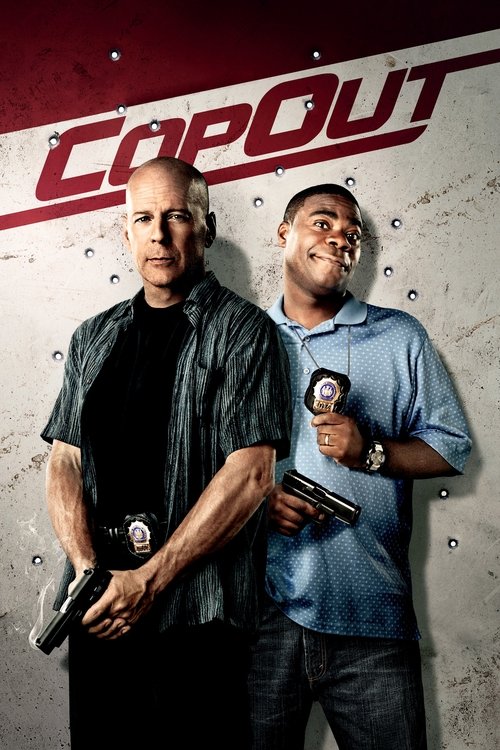
Cop Out
Detectives Jimmy and Paul, despite nine years as partners, can still sometimes seem like polar opposites—especially when Paul's unpredictable antics get them suspended without pay. Already strapped for cash and trying to pay for his daughter's wedding, Jimmy decides to sell a rare baseball card that's worth tens of thousands. Unfortunately, when the collector's shop is robbed and the card vanishes with the crook, Paul and Jimmy end up going rogue, tracking down the card and the drug ring behind its theft, all on their own time and without any backup—except for each other.
Working with a mid-range budget of $30.0M, the film achieved a steady performer with $55.6M in global revenue (+85% profit margin).


Plot Structure
Story beats plotted across runtime


Narrative Arc
Emotional journey through the story's key moments
Story Circle
Blueprint 15-beat structure
Arcplot Score Breakdown
Weighted: Precision (70%) + Arc (15%) + Theme (15%)
Cop Out (2010) exemplifies precise story structure, characteristic of Kevin Smith's storytelling approach. This structural analysis examines how the film's 15-point plot structure maps to proven narrative frameworks across 1 hour and 47 minutes. With an Arcplot score of 6.7, the film balances conventional beats with creative variation.
Characters
Cast & narrative archetypes

Jimmy Monroe
Paul Hodges
Poh Boy
Hunsicker
Debbie
Main Cast & Characters
Jimmy Monroe
Played by Bruce Willis
A veteran NYPD detective facing financial troubles while trying to pay for his daughter's wedding, partnered with Paul for nine years.
Paul Hodges
Played by Tracy Morgan
Jimmy's neurotic, insecure partner who obsesses over whether his wife is cheating on him while investigating a murder case.
Poh Boy
Played by Guillermo Diaz
A ruthless drug dealer and the main antagonist who steals Jimmy's valuable baseball card and becomes entangled in the murder investigation.
Hunsicker
Played by Adam Brody
An arrogant, by-the-book detective who mocks Jimmy and Paul while competing to solve the same case.
Debbie
Played by Rashida Jones
Paul's wife whose suspected infidelity drives Paul to paranoid distraction throughout the investigation.
Structural Analysis
The Status Quo at 1 minutes (1% through the runtime) establishes Jimmy and Paul conduct an interrogation using movie quotes, establishing their dysfunctional but long-standing partnership as NYPD detectives.. Notably, this early placement immediately immerses viewers in the story world.
The inciting incident occurs at 14 minutes when Jimmy and Paul are suspended without pay for 30 days after Paul shoots a man in cold blood during a botched arrest, threatening Jimmy's ability to pay for his daughter's wedding.. At 13% through the film, this Disruption is delayed, allowing extended setup of the story world. This beat shifts the emotional landscape, launching the protagonist into the central conflict.
The First Threshold at 27 minutes marks the transition into Act II, occurring at 25% of the runtime. This indicates the protagonist's commitment to Jimmy and Paul decide to go rogue and track down the stolen baseball card themselves, entering the criminal underworld despite being suspended., moving from reaction to action.
At 54 minutes, the Midpoint arrives at 50% of the runtime—precisely centered, creating perfect narrative symmetry. The analysis reveals that this crucial beat The partners discover the card theft is connected to dangerous drug lord Poh Boy, raising the stakes from simple theft to life-threatening criminal enterprise. Their amateur investigation becomes deadly serious., fundamentally raising what's at risk. The emotional intensity shifts, dividing the narrative into clear before-and-after phases.
The Collapse moment at 81 minutes (75% through) represents the emotional nadir. Here, Jimmy and Paul have a major falling out over Paul's obsessive jealousy. Their partnership fractures at the worst possible moment. Jimmy faces losing both his partner and his ability to honor his daughter., illustrates the protagonist at their lowest point. This beat's placement in the final quarter sets up the climactic reversal.
The Second Threshold at 86 minutes initiates the final act resolution at 80% of the runtime. Jimmy and Paul reconcile, combining their skills and renewed trust. They devise a plan to take down Poh Boy, rescue Gabriela, and recover the baseball card together., demonstrating the transformation achieved throughout the journey.
Emotional Journey
Cop Out's emotional architecture traces a deliberate progression across 15 carefully calibrated beats.
Narrative Framework
This structural analysis employs structural analysis methodology used to understand storytelling architecture. By mapping Cop Out against these established plot points, we can identify how Kevin Smith utilizes or subverts traditional narrative conventions. The plot point approach reveals not only adherence to structural principles but also creative choices that distinguish Cop Out within the action genre.
Kevin Smith's Structural Approach
Among the 8 Kevin Smith films analyzed on Arcplot, the average structural score is 6.9, demonstrating varied approaches to story architecture. Cop Out takes a more unconventional approach compared to the director's typical style. For comparative analysis, explore the complete Kevin Smith filmography.
Comparative Analysis
Additional action films include The Bad Guys, Puss in Boots and Venom: The Last Dance. For more Kevin Smith analyses, see Jersey Girl, Chasing Amy and Dogma.
Plot Points by Act
Act I
SetupStatus Quo
Jimmy and Paul conduct an interrogation using movie quotes, establishing their dysfunctional but long-standing partnership as NYPD detectives.
Theme
Paul's wife Debbie questions his trust issues and paranoia about their relationship, hinting at the film's theme about trust and partnership.
Worldbuilding
Establishment of Jimmy and Paul's world: their police work, Jimmy's financial struggles with his daughter's expensive wedding, Paul's jealousy over his wife, and their reputation as screw-ups in the department.
Disruption
Jimmy and Paul are suspended without pay for 30 days after Paul shoots a man in cold blood during a botched arrest, threatening Jimmy's ability to pay for his daughter's wedding.
Resistance
Jimmy attempts to sell his prized baseball card to pay for the wedding, but it's stolen during a robbery. The partners debate whether to pursue the thieves or accept their suspension.
Act II
ConfrontationFirst Threshold
Jimmy and Paul decide to go rogue and track down the stolen baseball card themselves, entering the criminal underworld despite being suspended.
Mirror World
The detectives meet Gabriela, a woman held captive by the thieves. Her situation mirrors their own entrapment and becomes the emotional heart that redefines their mission.
Premise
Buddy cop hijinks as Jimmy and Paul navigate the criminal underworld, tracking the baseball card through various lowlifes while discovering a larger drug smuggling operation and protecting Gabriela.
Midpoint
The partners discover the card theft is connected to dangerous drug lord Poh Boy, raising the stakes from simple theft to life-threatening criminal enterprise. Their amateur investigation becomes deadly serious.
Opposition
Poh Boy's crew closes in on Jimmy and Paul. The detectives face mounting pressure from both criminals and their own department. Paul's paranoia about his wife intensifies, straining the partnership.
Collapse
Jimmy and Paul have a major falling out over Paul's obsessive jealousy. Their partnership fractures at the worst possible moment. Jimmy faces losing both his partner and his ability to honor his daughter.
Crisis
The partners separately contemplate their failures. Paul confronts his trust issues, Jimmy faces his pride. Both realize what they're about to lose by not working together.
Act III
ResolutionSecond Threshold
Jimmy and Paul reconcile, combining their skills and renewed trust. They devise a plan to take down Poh Boy, rescue Gabriela, and recover the baseball card together.
Synthesis
The partners execute their plan, infiltrating Poh Boy's operation. Final confrontation with the drug lord, rescue of Gabriela, and recovery of the baseball card through teamwork that showcases their growth.
Transformation
At his daughter's wedding, Jimmy gives a toast celebrating partnership and trust. Paul dances with his wife, his jealousy resolved. The partners are reinstated, their bond stronger than ever.