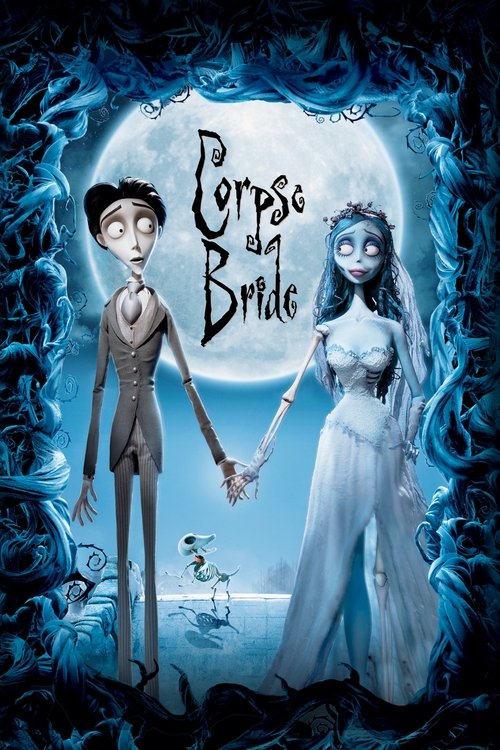
Corpse Bride
In a 19th-century European village, a young man about to be married is whisked away to the underworld and wed to a mysterious corpse bride, while his real bride waits bereft in the land of the living.
Despite a mid-range budget of $40.0M, Corpse Bride became a box office success, earning $118.1M worldwide—a 195% return.
Nominated for 1 Oscar. 9 wins & 30 nominations


Plot Structure
Story beats plotted across runtime


Narrative Arc
Emotional journey through the story's key moments
Story Circle
Blueprint 15-beat structure
Arcplot Score Breakdown
Weighted: Precision (70%) + Arc (15%) + Theme (15%)
Corpse Bride (2005) exhibits strategically placed narrative design, characteristic of Mike Johnson's storytelling approach. This structural analysis examines how the film's 15-point plot structure maps to proven narrative frameworks across 1 hour and 17 minutes. With an Arcplot score of 6.9, the film balances conventional beats with creative variation.
Characters
Cast & narrative archetypes

Victor Van Dort
Emily (Corpse Bride)
Victoria Everglot
Lord Barkis Bittern
Pastor Galswells
Main Cast & Characters
Victor Van Dort
Played by Johnny Depp
A shy, awkward young man from a nouveau riche family who accidentally proposes to a dead bride while practicing his wedding vows in the forest.
Emily (Corpse Bride)
Played by Helena Bonham Carter
A passionate, tragic figure who was murdered on her wedding day and mistakes Victor's vow practice for a genuine proposal.
Victoria Everglot
Played by Emily Watson
A gentle, proper young woman arranged to marry Victor; she develops genuine feelings for him despite their arranged marriage.
Lord Barkis Bittern
Played by Richard E. Grant
A charming but sinister aristocrat who courts Victoria and harbors a dark secret from his past.
Pastor Galswells
Played by Christopher Lee
The nervous, cowardly village pastor who is terrified of anything supernatural.
Structural Analysis
The Status Quo at 1 minutes (1% through the runtime) establishes Victor Van Dort, a nervous young man from new money, struggles with wedding rehearsal in the gloomy Victorian village. He is anxious, awkward, and clearly unprepared for marriage despite his parents' social ambitions.. Significantly, this early placement immediately immerses viewers in the story world.
The inciting incident occurs at 9 minutes when Victor fails catastrophically at the wedding rehearsal, setting Victoria's dress on fire and forgetting his vows. Pastor Galswells cancels the wedding. Victor's hopes are crushed as both families are furious, and his chance with Victoria—whom he's genuinely beginning to care for—seems lost.. At 12% through the film, this Disruption aligns precisely with traditional story structure. This beat shifts the emotional landscape, launching the protagonist into the central conflict.
The First Threshold at 16 minutes marks the transition into Act II, occurring at 21% of the runtime. This reveals the protagonist's commitment to Emily, the Corpse Bride, rises from the grave and declares Victor her husband. He is dragged screaming into the Land of the Dead through the ground. This irreversible moment throws him into a completely new world—one he never chose and desperately wants to escape., moving from reaction to action.
At 37 minutes, the Midpoint arrives at 49% of the runtime—precisely centered, creating perfect narrative symmetry. Structural examination shows that this crucial beat Victor discovers he can return to the Land of the Living if Emily meets his parents. It seems like a false victory—a way to escape and reunite with Victoria. The stakes raise as Victor lies to Emily about his intentions, setting up the deeper conflict between duty to Emily and his love for Victoria., fundamentally raising what's at risk. The emotional intensity shifts, dividing the narrative into clear before-and-after phases.
The Collapse moment at 50 minutes (64% through) represents the emotional nadir. Here, Emily, devastated by Victor's betrayal, returns to the Land of the Dead in tears. Victor realizes he's hurt someone who truly loved him. He is utterly alone, having lost both Victoria (to Barkis) and Emily (to his own deception). His selfishness and fear have cost him everything—a "death" of his hopes., demonstrates the protagonist at their lowest point. This beat's placement in the final quarter sets up the climactic reversal.
The Second Threshold at 58 minutes initiates the final act resolution at 75% of the runtime. During the wedding ceremony, Emily sees Victoria in the crowd and realizes Victor still loves her. More critically, Emily recognizes Lord Barkis as her own murderer—the man who killed her for her dowry years ago. This revelation gives Emily clarity: she can free Victor and have justice. She chooses love over possession., demonstrating the transformation achieved throughout the journey.
Emotional Journey
Corpse Bride's emotional architecture traces a deliberate progression across 15 carefully calibrated beats.
Narrative Framework
This structural analysis employs a 15-point narrative structure framework that maps key story moments. By mapping Corpse Bride against these established plot points, we can identify how Mike Johnson utilizes or subverts traditional narrative conventions. The plot point approach reveals not only adherence to structural principles but also creative choices that distinguish Corpse Bride within the romance genre.
Comparative Analysis
Additional romance films include South Pacific, Dirty Dancing: Havana Nights and The Evening Star.
Plot Points by Act
Act I
SetupStatus Quo
Victor Van Dort, a nervous young man from new money, struggles with wedding rehearsal in the gloomy Victorian village. He is anxious, awkward, and clearly unprepared for marriage despite his parents' social ambitions.
Theme
Pastor Galswells states the theme during the disastrous rehearsal: "With this hand, I will lift your sorrows. Your cup will never empty, for I will be your wine." The vows speak to devotion, sacrifice, and choosing love over fear—concepts Victor must learn.
Worldbuilding
Establishment of the drab, colorless Land of the Living with its class divisions. Victor's nouveau riche parents seek status through marriage to the aristocratic but bankrupt Everglots. Victoria is kind but trapped by duty. The world is rigid, lifeless, and governed by social obligation rather than genuine feeling.
Disruption
Victor fails catastrophically at the wedding rehearsal, setting Victoria's dress on fire and forgetting his vows. Pastor Galswells cancels the wedding. Victor's hopes are crushed as both families are furious, and his chance with Victoria—whom he's genuinely beginning to care for—seems lost.
Resistance
Victor wanders into the dark forest to practice his vows alone, encouraged briefly by Victoria's kindness. He debates whether he can actually go through with the marriage. In the woods, he finally gets the vows right and places the ring on what he thinks is a branch—but is actually a corpse's finger.
Act II
ConfrontationFirst Threshold
Emily, the Corpse Bride, rises from the grave and declares Victor her husband. He is dragged screaming into the Land of the Dead through the ground. This irreversible moment throws him into a completely new world—one he never chose and desperately wants to escape.
Mirror World
Victor meets the vibrant, colorful inhabitants of the Land of the Dead and begins to understand Emily's story. This underworld represents emotional honesty, joy, and acceptance—everything the Land of the Living lacks. Emily herself becomes the thematic mirror: she loved passionately and died for it, and she teaches Victor about genuine devotion.
Premise
Victor explores the Land of the Dead, experiencing its wild, musical vitality. He tries repeatedly to escape back to Victoria but finds himself charmed by Emily's sweetness and the dead's warmth. Meanwhile, Victoria waits in the living world, and the sinister Lord Barkis begins courting her for her family's money.
Midpoint
Victor discovers he can return to the Land of the Living if Emily meets his parents. It seems like a false victory—a way to escape and reunite with Victoria. The stakes raise as Victor lies to Emily about his intentions, setting up the deeper conflict between duty to Emily and his love for Victoria.
Opposition
Victor returns to the living world with Emily but sees Victoria with Lord Barkis, believing she's moved on. Emily discovers Victor's deception and is heartbroken. The opposition tightens: Victoria is being forced to marry Barkis, Emily feels betrayed, and Victor is caught between two worlds, his dishonesty catching up with him.
Collapse
Emily, devastated by Victor's betrayal, returns to the Land of the Dead in tears. Victor realizes he's hurt someone who truly loved him. He is utterly alone, having lost both Victoria (to Barkis) and Emily (to his own deception). His selfishness and fear have cost him everything—a "death" of his hopes.
Crisis
Victor descends into despair and decides to truly commit to Emily by dying to be with her permanently. He drinks poison in preparation for their wedding in the Land of the Dead. This is his dark night—choosing death over life, sacrifice over selfishness, finally understanding what the vows meant.
Act III
ResolutionSecond Threshold
During the wedding ceremony, Emily sees Victoria in the crowd and realizes Victor still loves her. More critically, Emily recognizes Lord Barkis as her own murderer—the man who killed her for her dowry years ago. This revelation gives Emily clarity: she can free Victor and have justice. She chooses love over possession.
Synthesis
The dead crash the wedding in the Land of the Living. Barkis is exposed as Emily's murderer and accidentally drinks the poison meant for Victor, dying and facing justice from the dead. Emily releases Victor from his vow, finally able to let go. She transforms into butterflies and ascends, free at last. Victor and Victoria are reunited.
Transformation
Victor and Victoria stand together in the moonlight as Emily's butterflies swirl around them, one landing on Victor's hand. He has transformed from a fearful, duty-bound boy into someone who understands real love, sacrifice, and courage. The living world is touched by color and life for the first time.