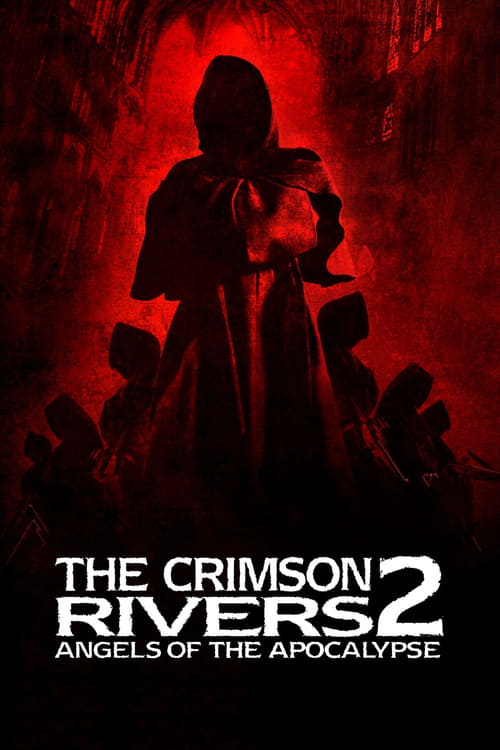
Crimson Rivers II: Angels of the Apocalypse
No one is safe when seemingly random killings emerge as a deadly pattern intended to usher in the end of the world. A murder victim with the same DNA as Christ. A serial killer mimicking the deaths of the 12 Apostles. Inspector Niemans and a young, rebellious detective team up with a beautiful expert in religion to crack the case before their elusive suspect completes the cycle of terror, paving the way to an even bigger bloody catastrophe.
The film earned $40.2M at the global box office.


Plot Structure
Story beats plotted across runtime


Narrative Arc
Emotional journey through the story's key moments
Story Circle
Blueprint 15-beat structure
Arcplot Score Breakdown
Weighted: Precision (70%) + Arc (15%) + Theme (15%)
Crimson Rivers II: Angels of the Apocalypse (2004) showcases deliberately positioned dramatic framework, characteristic of Olivier Dahan's storytelling approach. This structural analysis examines how the film's 15-point plot structure maps to proven narrative frameworks across 1 hour and 37 minutes. With an Arcplot score of 7.0, the film balances conventional beats with creative variation.
Characters
Cast & narrative archetypes

Commissaire Pierre Niémans
Lieutenant Reda
Marie
Heinrich von Garten
The Abbot
Main Cast & Characters
Commissaire Pierre Niémans
Played by Jean Reno
Methodical detective investigating mysterious murders at a monastery with links to the Apocalypse
Lieutenant Reda
Played by Benoît Magimel
Niémans' younger partner, a skilled and modern detective who provides a fresh perspective
Marie
Played by Camille Natta
Young woman connected to the monastery's secrets who aids the investigation
Heinrich von Garten
Played by Christopher Lee
Former Nazi officer and monk harboring dark secrets from World War II
The Abbot
Played by Philippe Bas
Leader of the monastery who knows more about the murders than he reveals
Structural Analysis
The Status Quo at 1 minutes (1% through the runtime) establishes Commissaire Niemans investigates a routine case, established as a brilliant but isolated detective in his ordinary world of criminal investigations.. Of particular interest, this early placement immediately immerses viewers in the story world.
The inciting incident occurs at 12 minutes when A murder occurs with bizarre religious symbolism involving the Four Horsemen of the Apocalypse, transforming a simple investigation into something far more sinister.. At 12% through the film, this Disruption aligns precisely with traditional story structure. This beat shifts the emotional landscape, launching the protagonist into the central conflict.
The First Threshold at 24 minutes marks the transition into Act II, occurring at 25% of the runtime. This indicates the protagonist's commitment to Niemans and Reda commit to investigating the conspiracy fully, crossing into a dangerous world of religious extremists and buried wartime secrets., moving from reaction to action.
At 49 minutes, the Midpoint arrives at 50% of the runtime—precisely centered, creating perfect narrative symmetry. Notably, this crucial beat The investigators discover the true scope of the conspiracy: a fanatical plan to trigger an apocalyptic event, raising the stakes from murder investigation to preventing mass catastrophe., fundamentally raising what's at risk. The emotional intensity shifts, dividing the narrative into clear before-and-after phases.
The Collapse moment at 73 minutes (75% through) represents the emotional nadir. Here, A key ally is killed, the conspiracy seems unstoppable, and the detectives are isolated, discredited, and running out of time as the apocalyptic plan nears completion., demonstrates the protagonist at their lowest point. This beat's placement in the final quarter sets up the climactic reversal.
The Second Threshold at 78 minutes initiates the final act resolution at 80% of the runtime. A crucial piece of evidence or insight reveals the conspirators' final target and timing, giving Niemans and Reda the knowledge needed for a final confrontation., demonstrating the transformation achieved throughout the journey.
Emotional Journey
Crimson Rivers II: Angels of the Apocalypse's emotional architecture traces a deliberate progression across 15 carefully calibrated beats.
Narrative Framework
This structural analysis employs systematic plot point analysis that identifies crucial turning points. By mapping Crimson Rivers II: Angels of the Apocalypse against these established plot points, we can identify how Olivier Dahan utilizes or subverts traditional narrative conventions. The plot point approach reveals not only adherence to structural principles but also creative choices that distinguish Crimson Rivers II: Angels of the Apocalypse within the action genre.
Olivier Dahan's Structural Approach
Among the 3 Olivier Dahan films analyzed on Arcplot, the average structural score is 7.2, reflecting strong command of classical structure. Crimson Rivers II: Angels of the Apocalypse takes a more unconventional approach compared to the director's typical style. For comparative analysis, explore the complete Olivier Dahan filmography.
Comparative Analysis
Additional action films include The Bad Guys, Puss in Boots and Venom: The Last Dance. For more Olivier Dahan analyses, see Grace of Monaco, La Vie en Rose.
Plot Points by Act
Act I
SetupStatus Quo
Commissaire Niemans investigates a routine case, established as a brilliant but isolated detective in his ordinary world of criminal investigations.
Theme
A character mentions that some secrets are buried for a reason, introducing the theme of confronting dangerous historical truths versus maintaining willful ignorance.
Worldbuilding
Introduction to the monastery setting, the religious community, and the mysterious deaths that hint at a deeper conspiracy involving apocalyptic symbolism.
Disruption
A murder occurs with bizarre religious symbolism involving the Four Horsemen of the Apocalypse, transforming a simple investigation into something far more sinister.
Resistance
Niemans is paired with Reda, a younger investigator. They resist working together, debate the significance of the religious symbols, and uncover connections to WWII Nazi operations.
Act II
ConfrontationFirst Threshold
Niemans and Reda commit to investigating the conspiracy fully, crossing into a dangerous world of religious extremists and buried wartime secrets.
Mirror World
The partnership between Niemans and Reda develops, representing the thematic need for collaboration and trust to overcome isolation and uncover truth.
Premise
The detectives explore the monastery, decode apocalyptic clues, pursue suspects, and uncover a plot involving stolen Nazi gold and a secret society preparing for judgment day.
Midpoint
The investigators discover the true scope of the conspiracy: a fanatical plan to trigger an apocalyptic event, raising the stakes from murder investigation to preventing mass catastrophe.
Opposition
The conspirators close in, targeting the detectives. More murders occur following the apocalyptic pattern. Evidence is destroyed, witnesses are killed, and time runs out.
Collapse
A key ally is killed, the conspiracy seems unstoppable, and the detectives are isolated, discredited, and running out of time as the apocalyptic plan nears completion.
Crisis
Niemans and Reda face their darkest moment, questioning whether they can stop the conspiracy. They process the loss and nearly give up on exposing the truth.
Act III
ResolutionSecond Threshold
A crucial piece of evidence or insight reveals the conspirators' final target and timing, giving Niemans and Reda the knowledge needed for a final confrontation.
Synthesis
The detectives race to stop the apocalyptic plan, confront the leader of the conspiracy, and expose the historical crimes while preventing mass casualties in a climactic finale.
Transformation
Niemans, once isolated and cynical, has learned to trust his partner. The conspiracy is defeated, showing that collaboration and facing uncomfortable truths prevails over secrecy.